Handfasting for Your Irish Elopement: History, Meaning and What to Expect
Handfasting is one of Ireland's oldest wedding traditions and one of the most requested additions to a modern elopement. Here is everything you need to know before you decide if it is right for you.
In this post
What is Handfasting?
The Ancient Ritual That Still Gives Me Goosebumps
I have stood at cliff edges, in castle ruins, on harbour walls in horizontal rain, and watched couples say their vows in every way imaginable. But there is something about a handfasting that gets me every single time. Something about the physicality of it. The cord around the hands. The knot that holds.
If you have ever wondered what handfasting actually is, where it comes from, and whether it might be right for your elopement, this is for you.
The Tradition of Handfasting
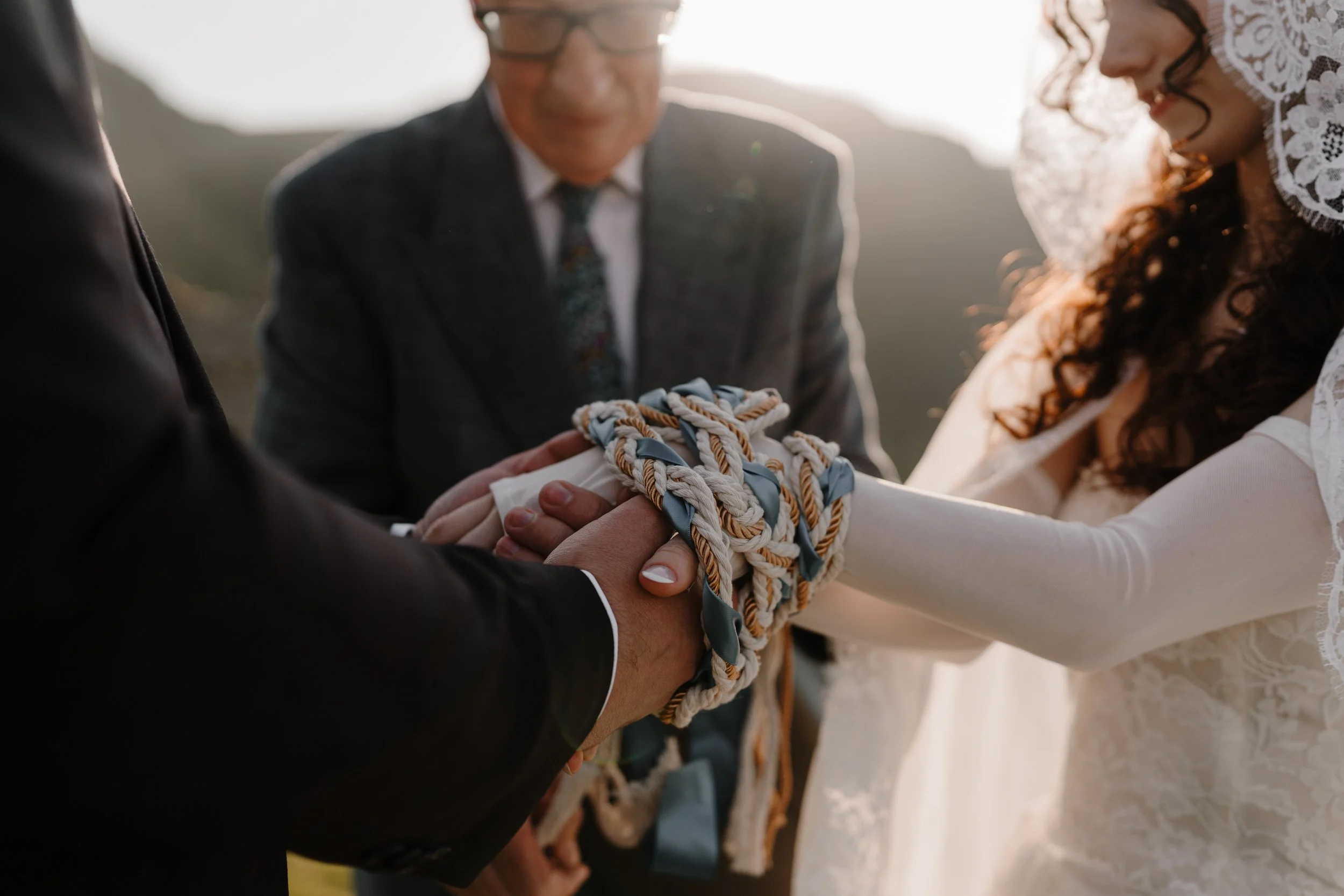
Handfasting is an ancient Celtic tradition. When Ireland was governed by Brehon law, from roughly the 7th to the 17th century, handfasting was a recognised and legitimate form of marriage. No church. No clergy required. Just two people, their hands bound together, and the declaration of their intent in front of witnesses.
It is also, quite literally, where the phrase "tying the knot" comes from.
In its earliest form, handfasting could serve as a trial marriage. A couple would bind themselves together for a year and a day. At the end of that period, they could choose to make it permanent or walk away without shame or dishonour. There is something quietly radical about that. A culture that understood commitment as a choice you keep making, not a contract signed once.
What actually happens
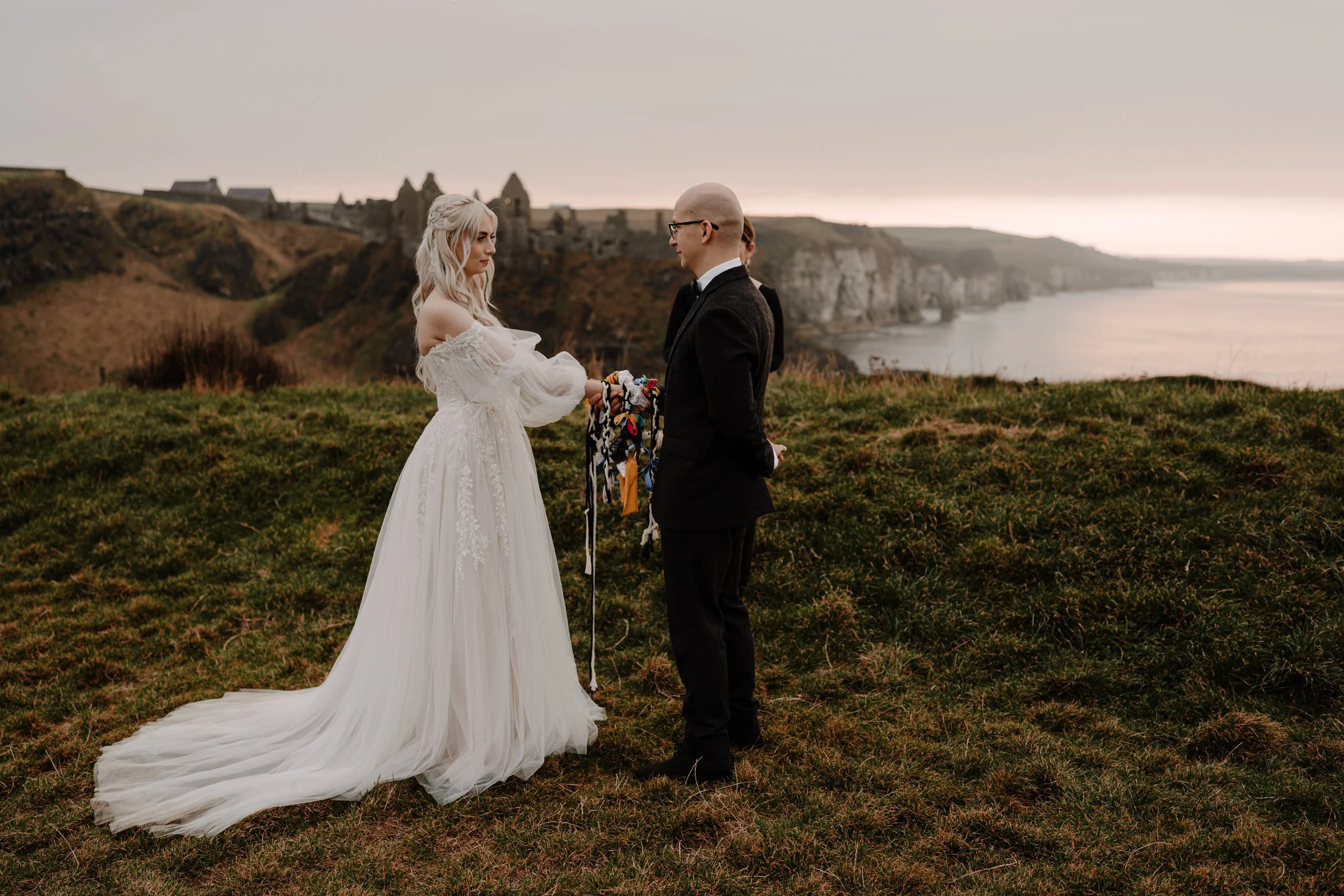
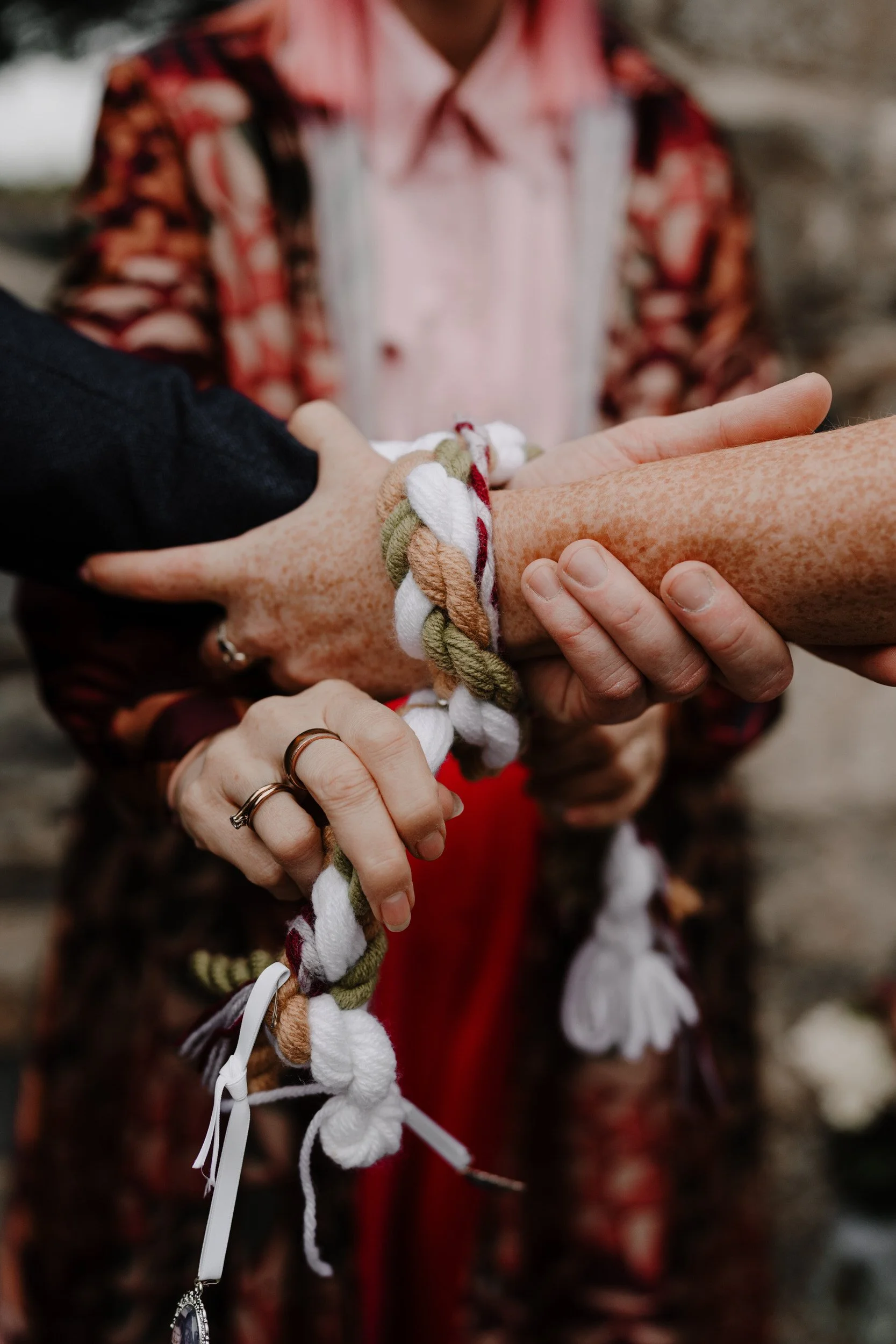
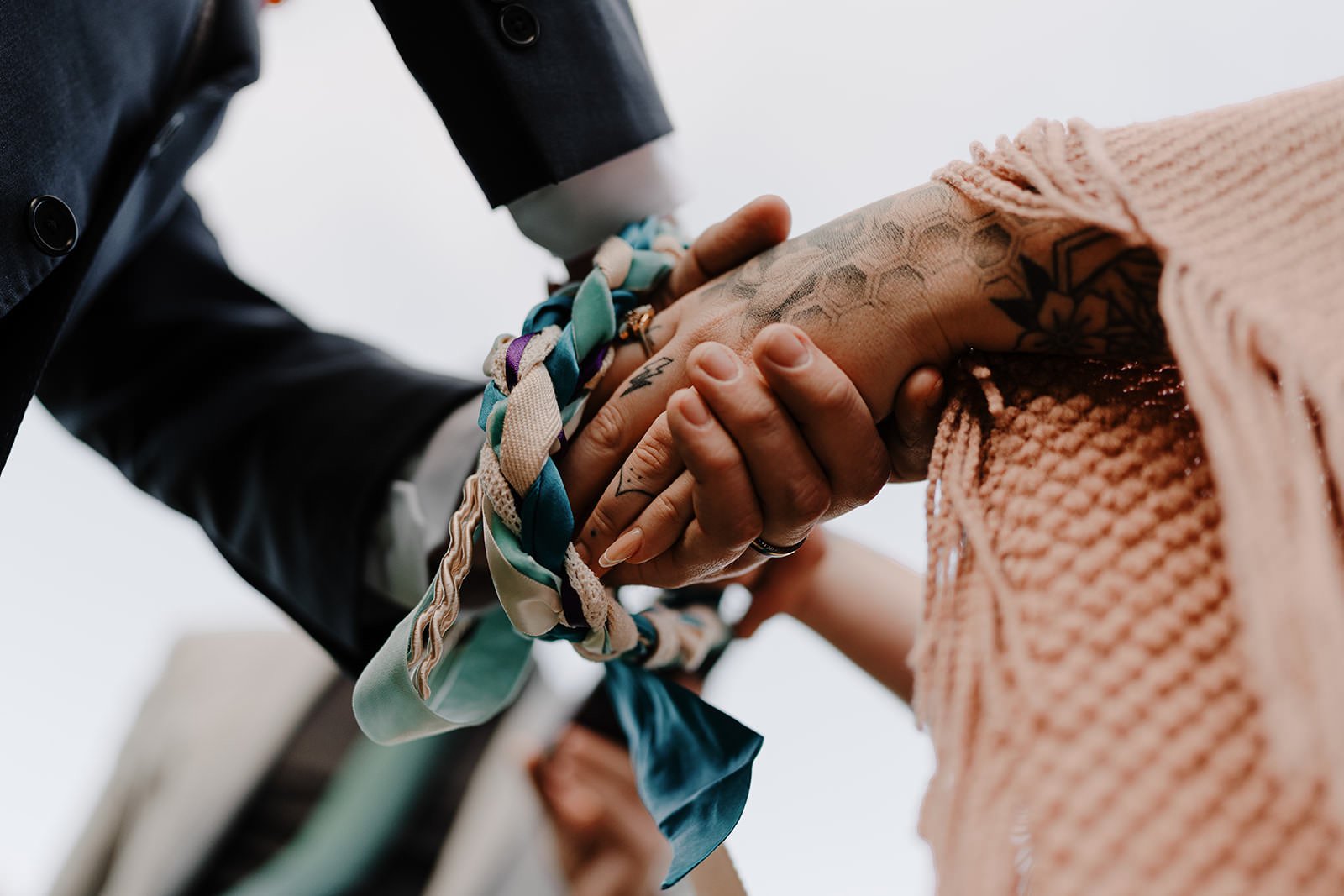
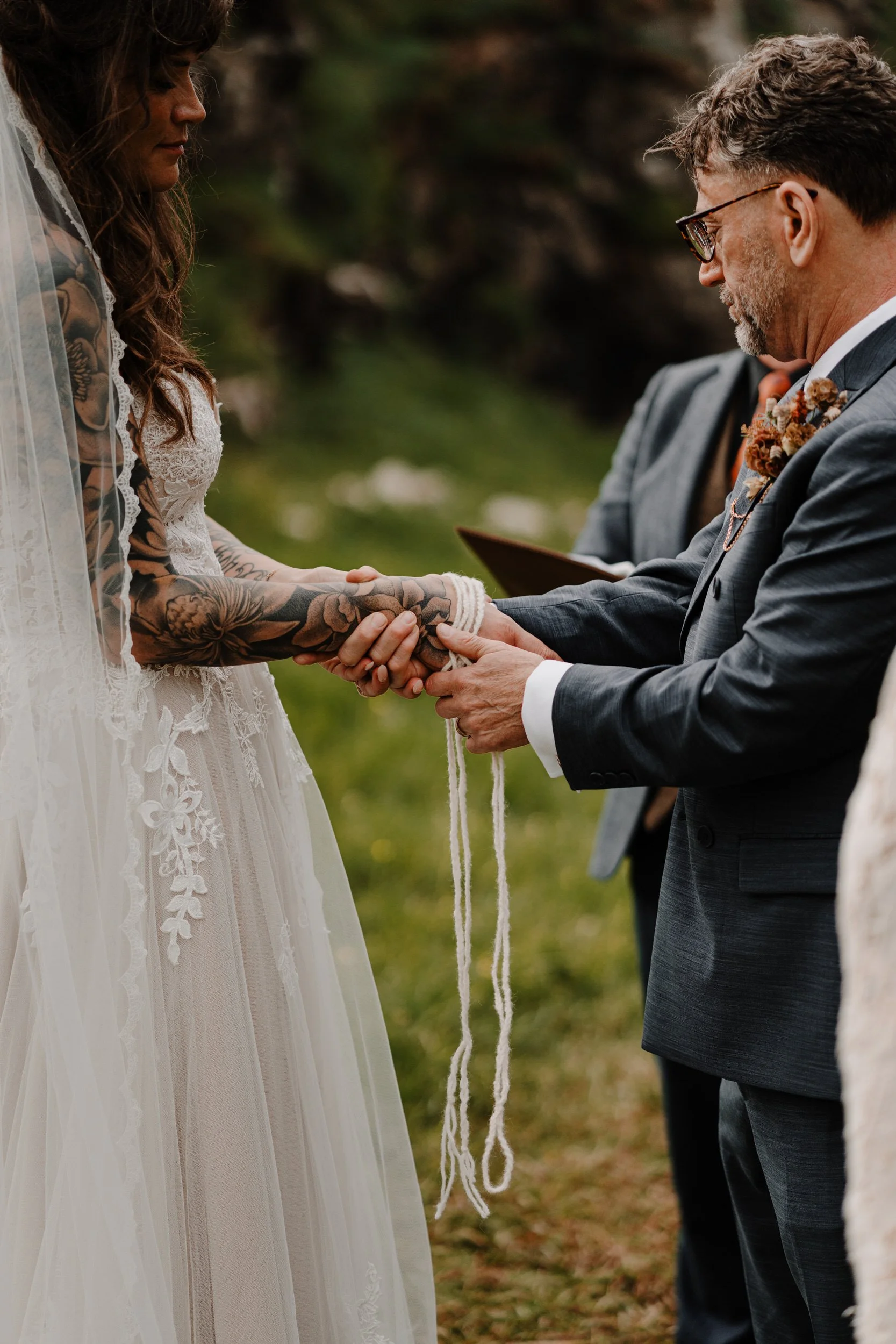
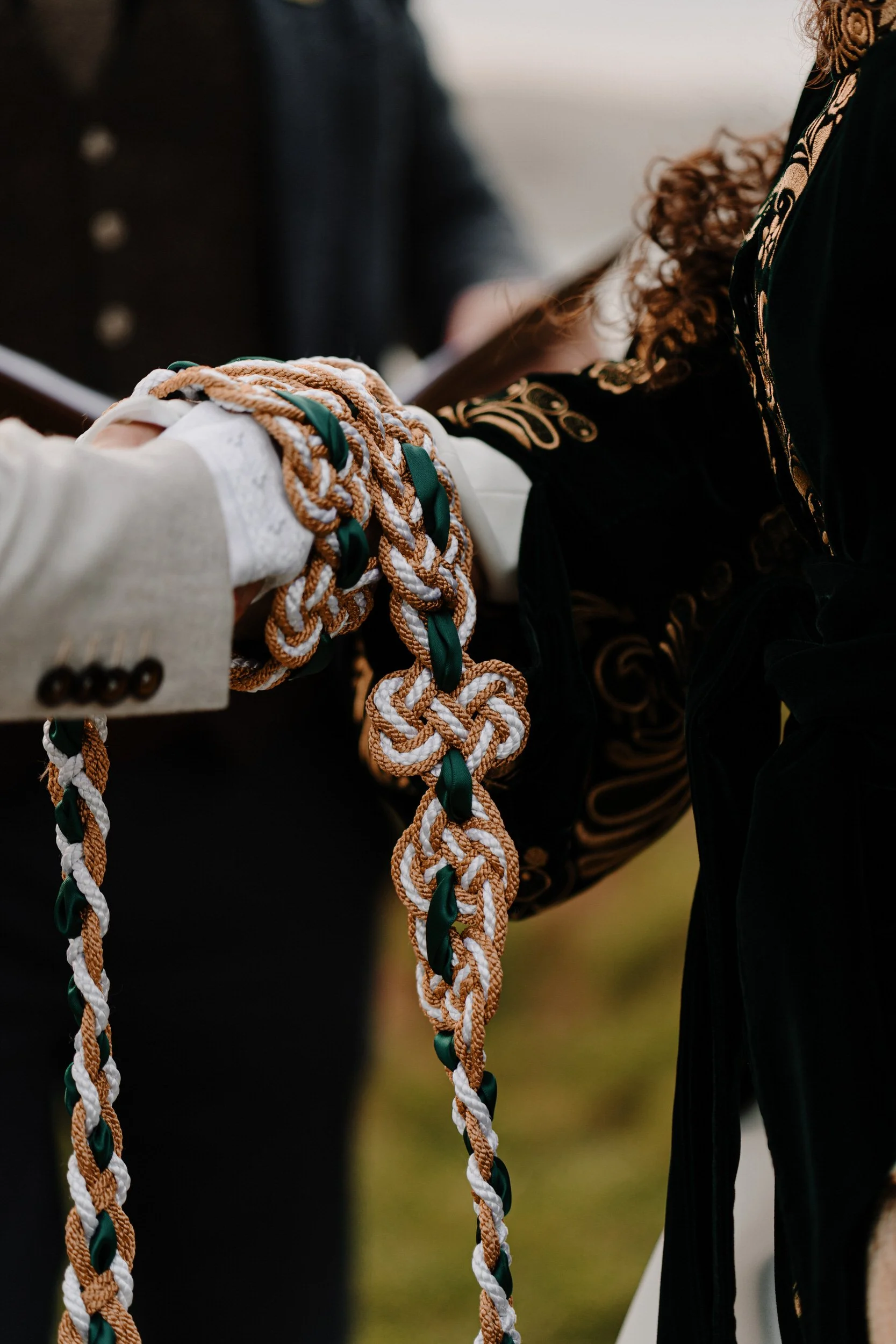
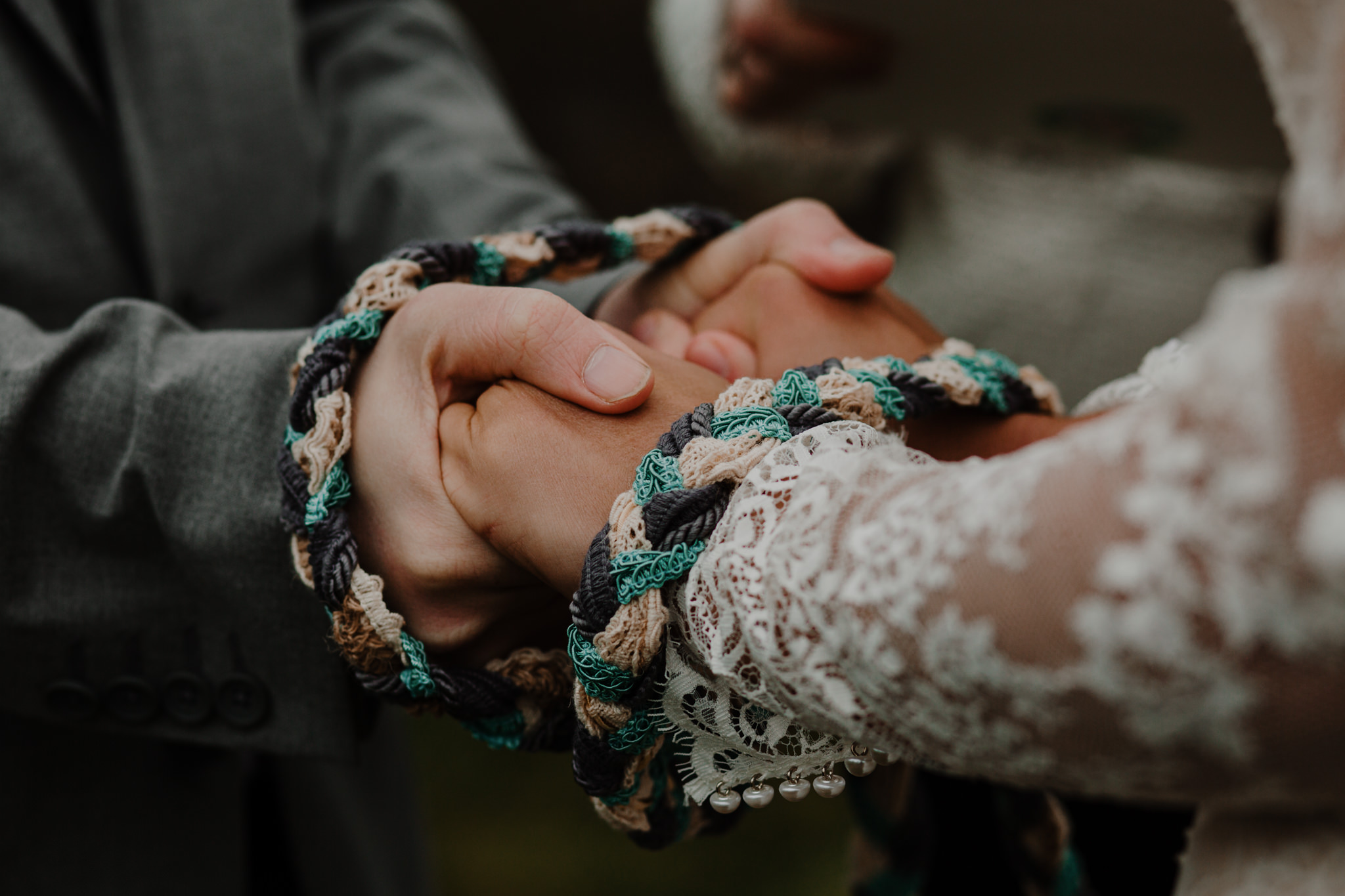
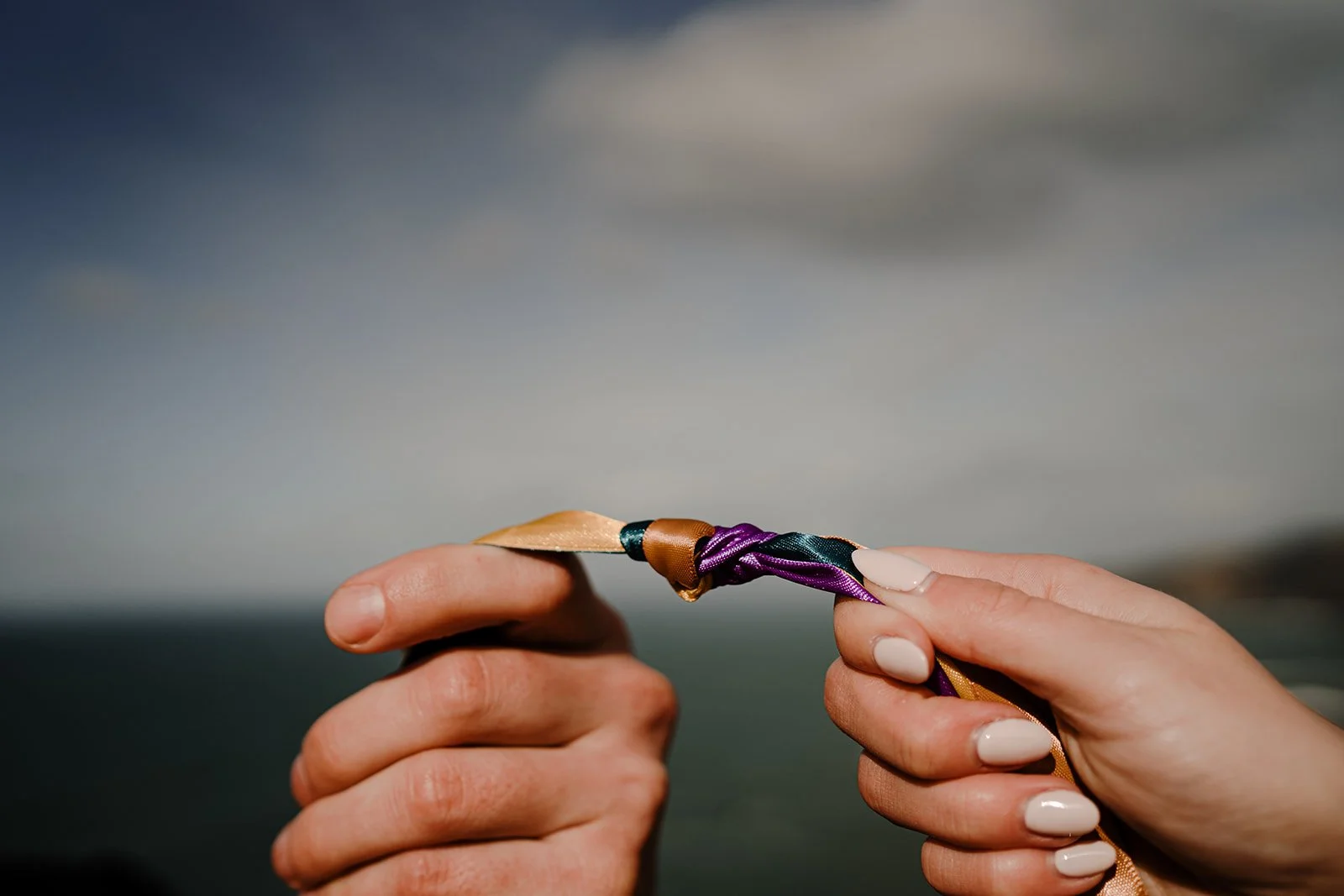
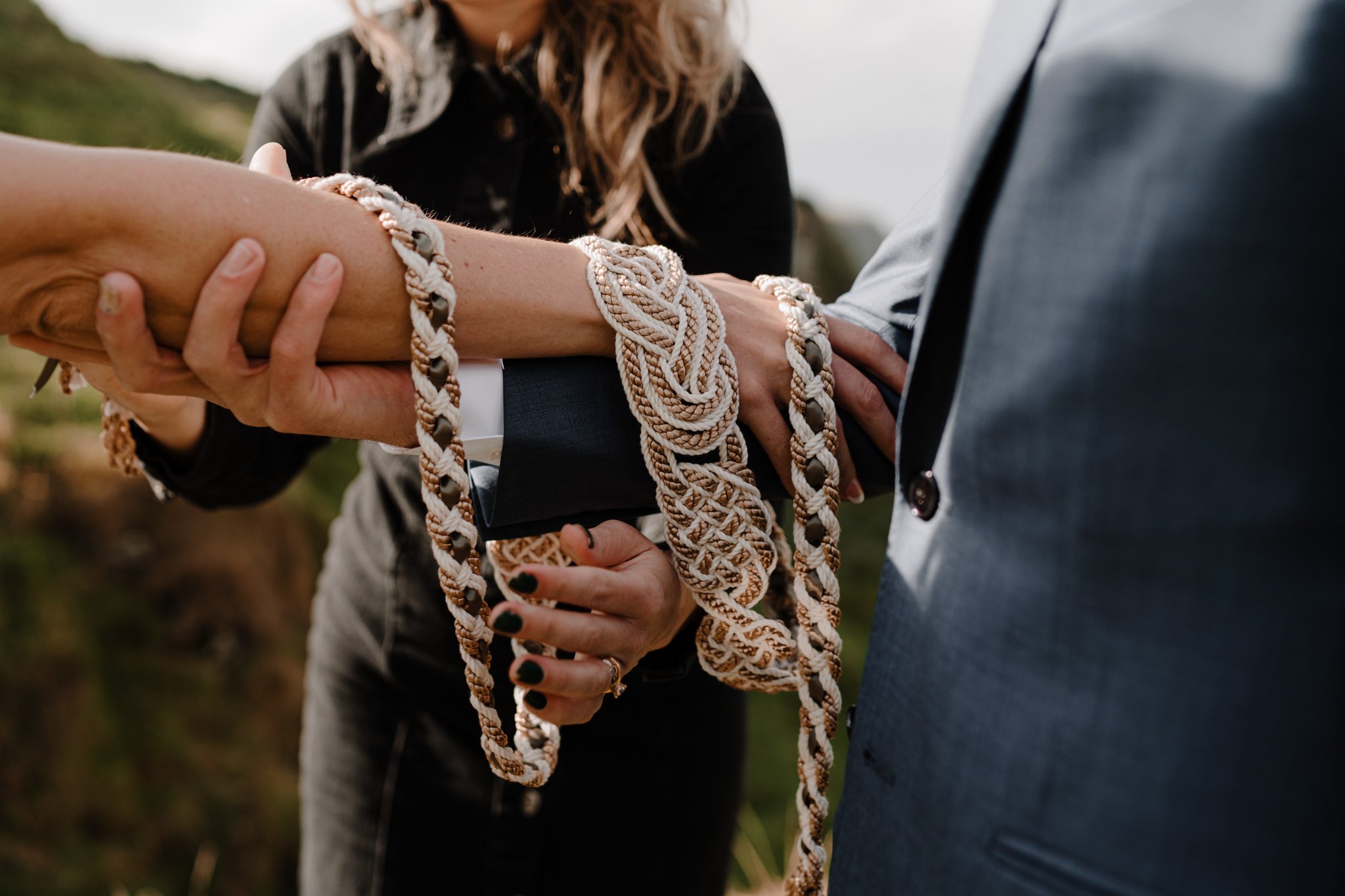
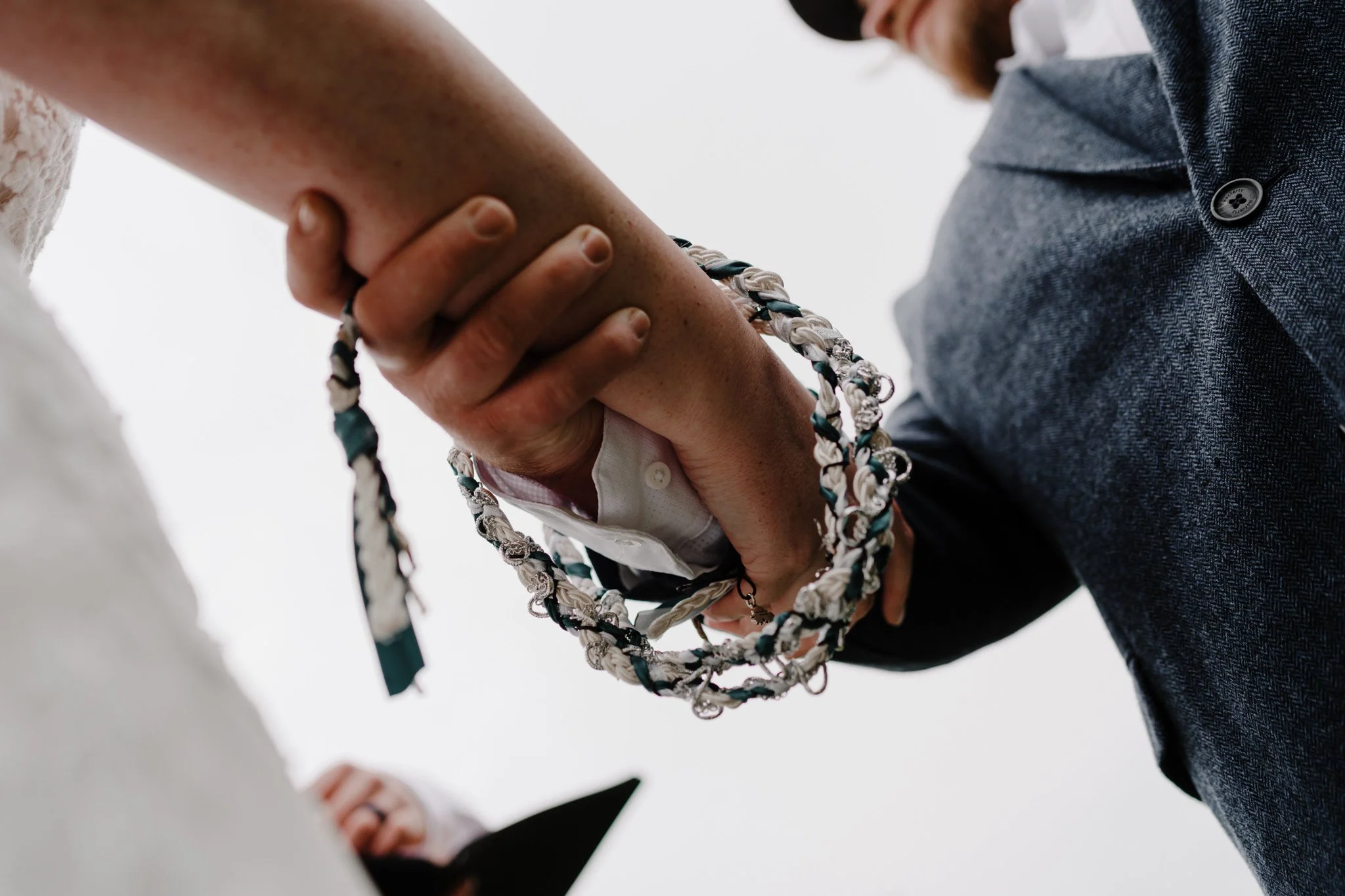
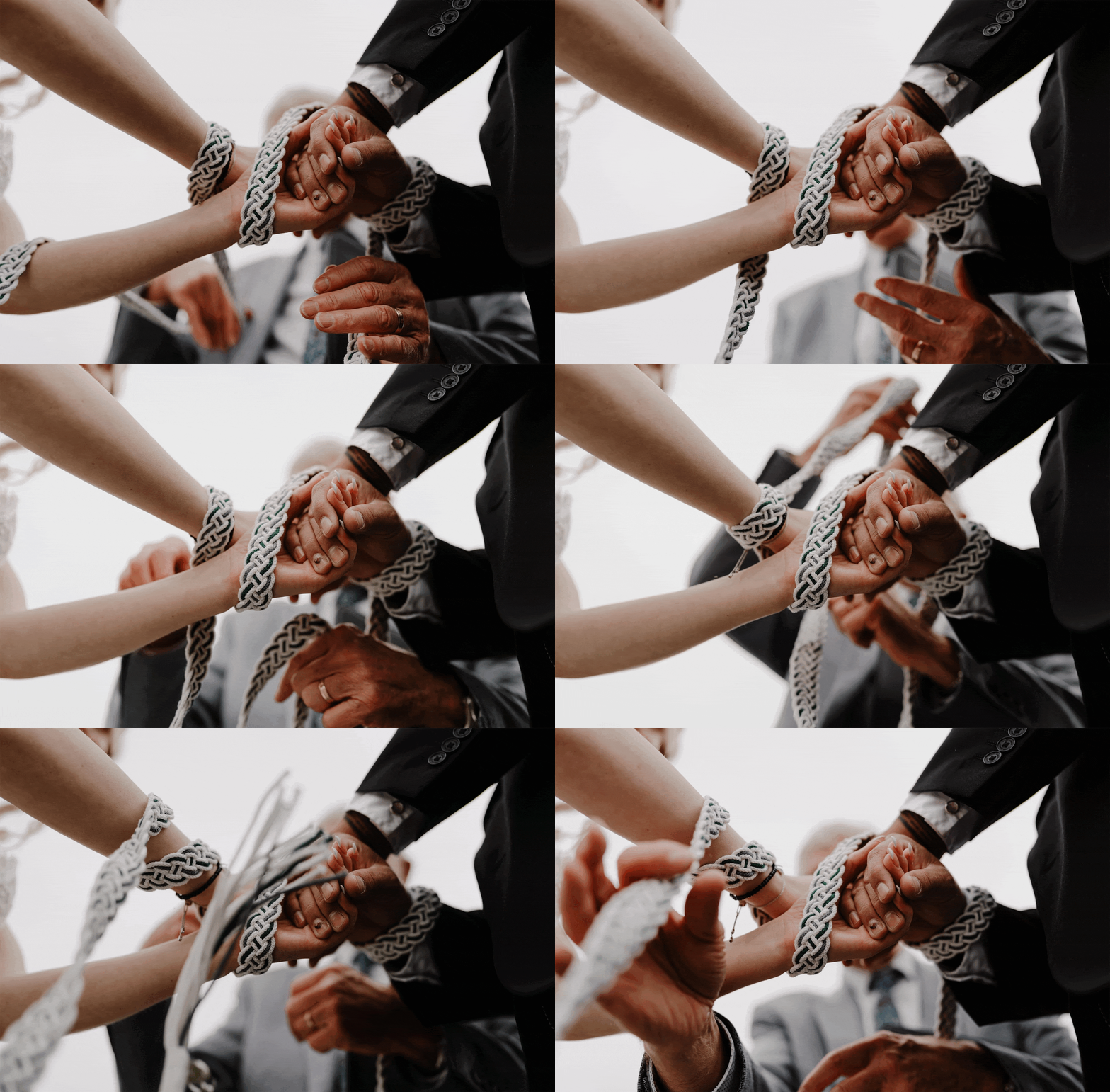
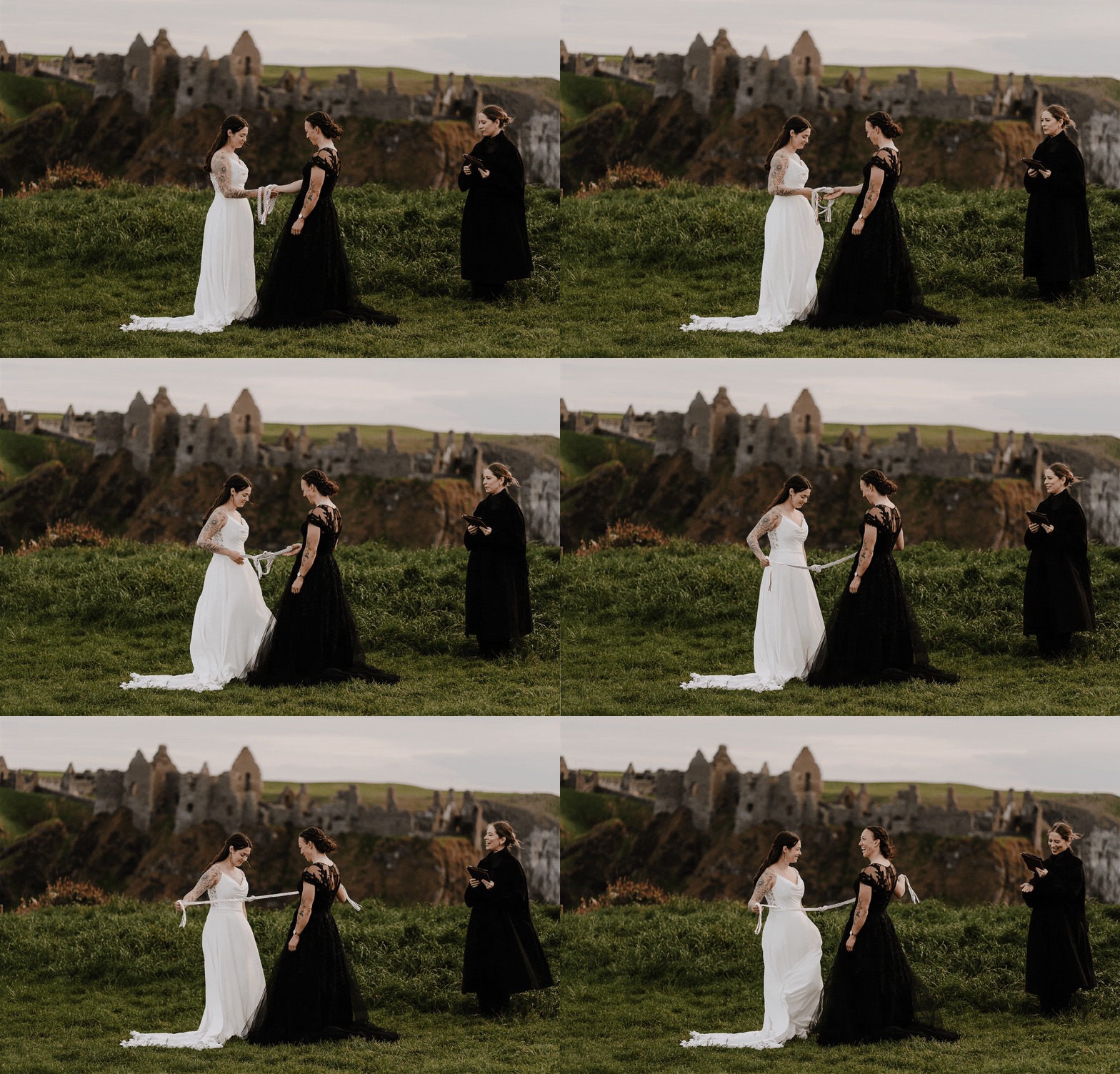
The couple stands facing each other. Hands clasped, right to right and left to left, forming the shape of an infinity symbol. The officiant loops the cord or cords around the joined hands. Some couples choose a single cord. Some choose multiple ribbons, each colour carrying its own meaning. Loyalty. Love. Strength. Whatever feels true to them.
The binding happens slowly. Deliberately. And then the vows or blessing are spoken, hands still held together, the cord still wrapped around them both. Once the words have been spoken, the couple pull their ends of the cords, and as they tighten, they form a knot.
It is one of the most intimate things I have ever photographed.


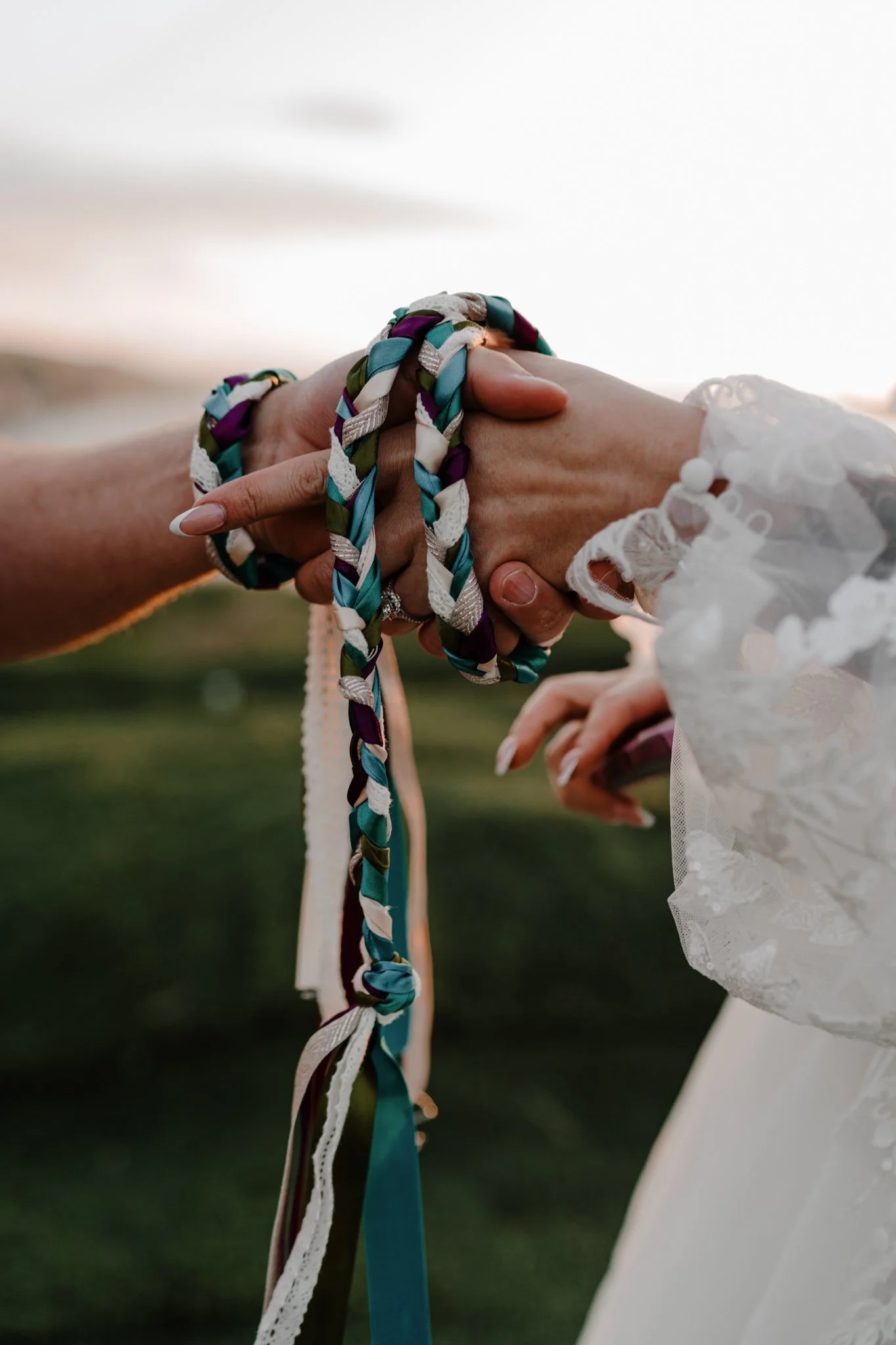
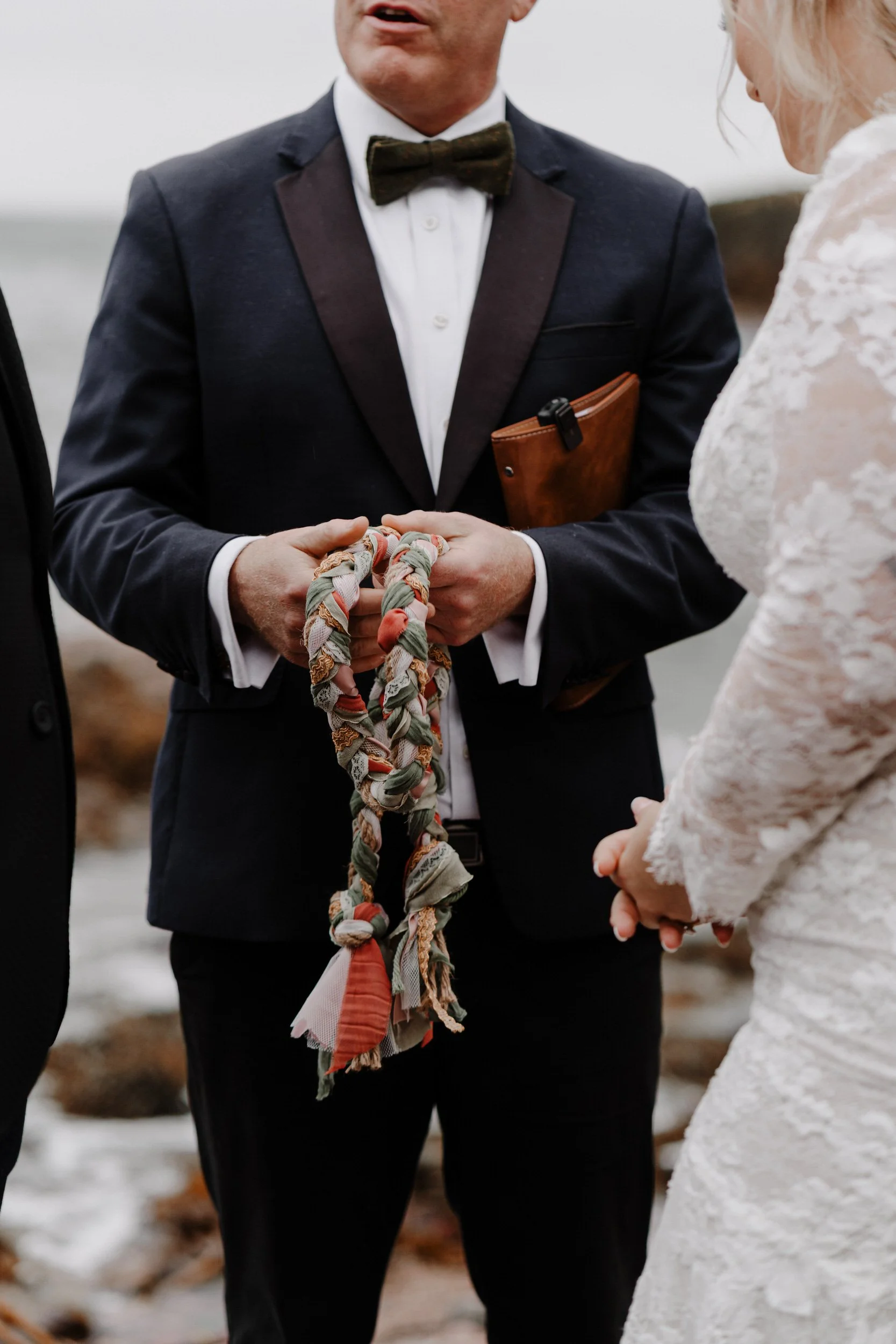

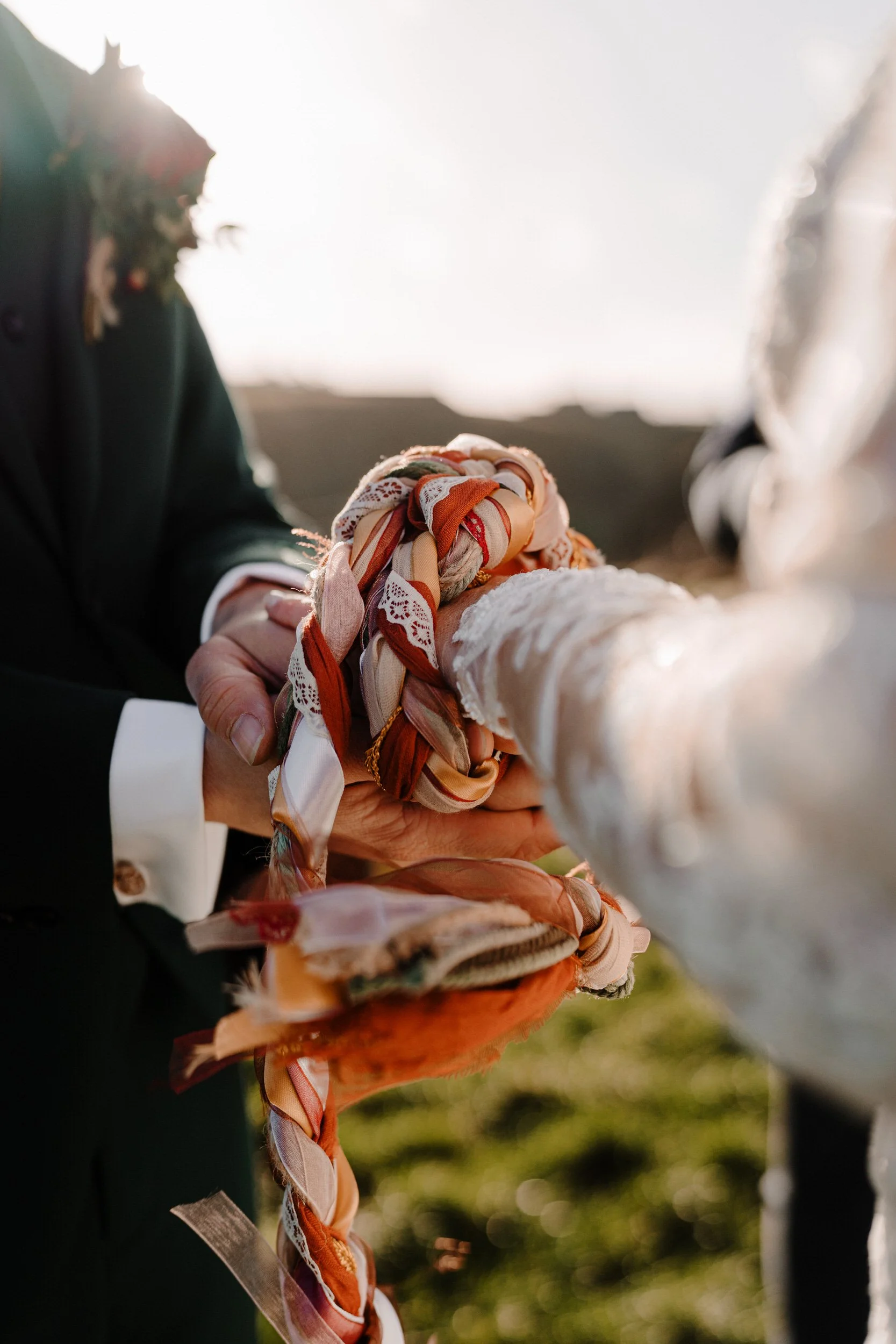
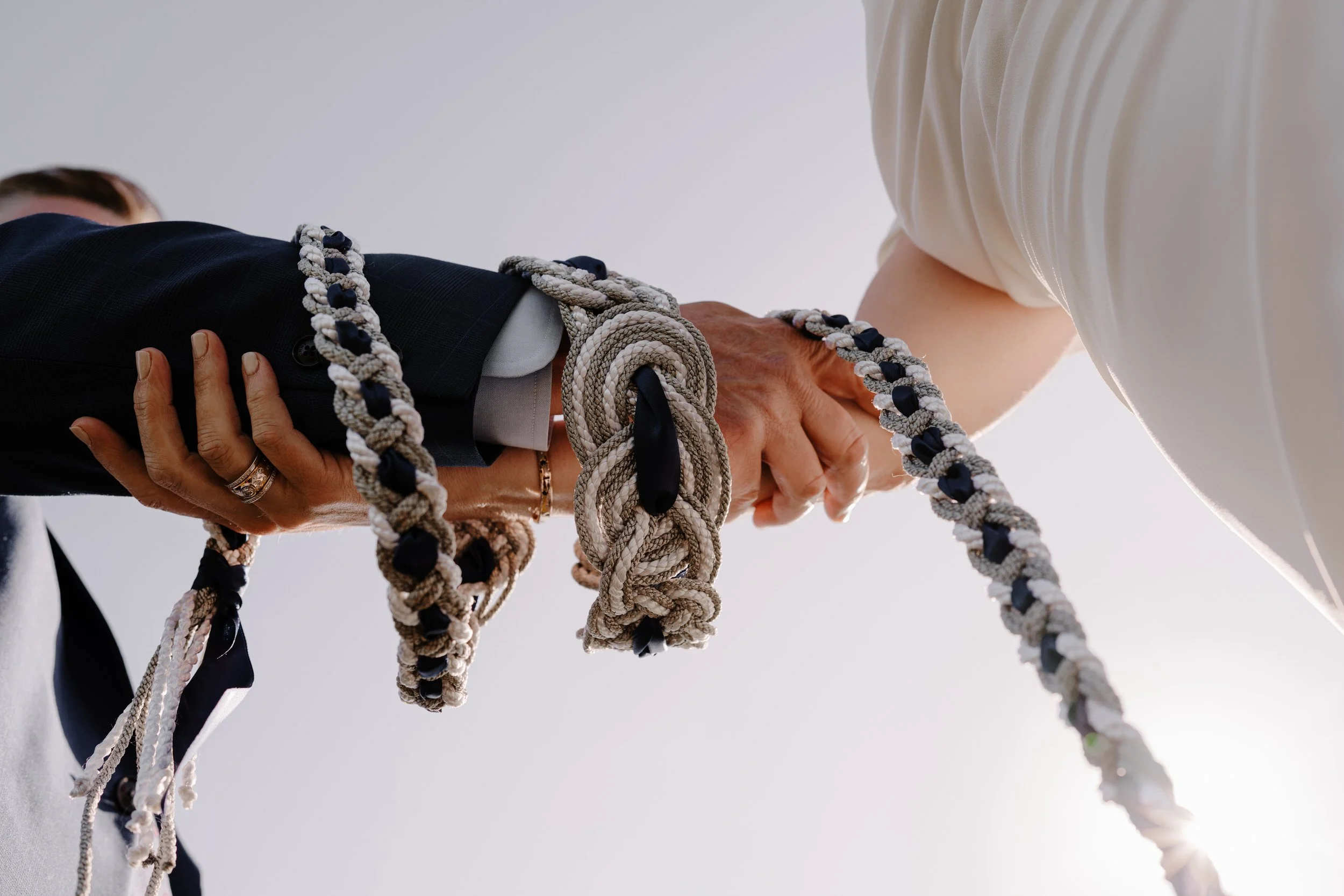







The cords
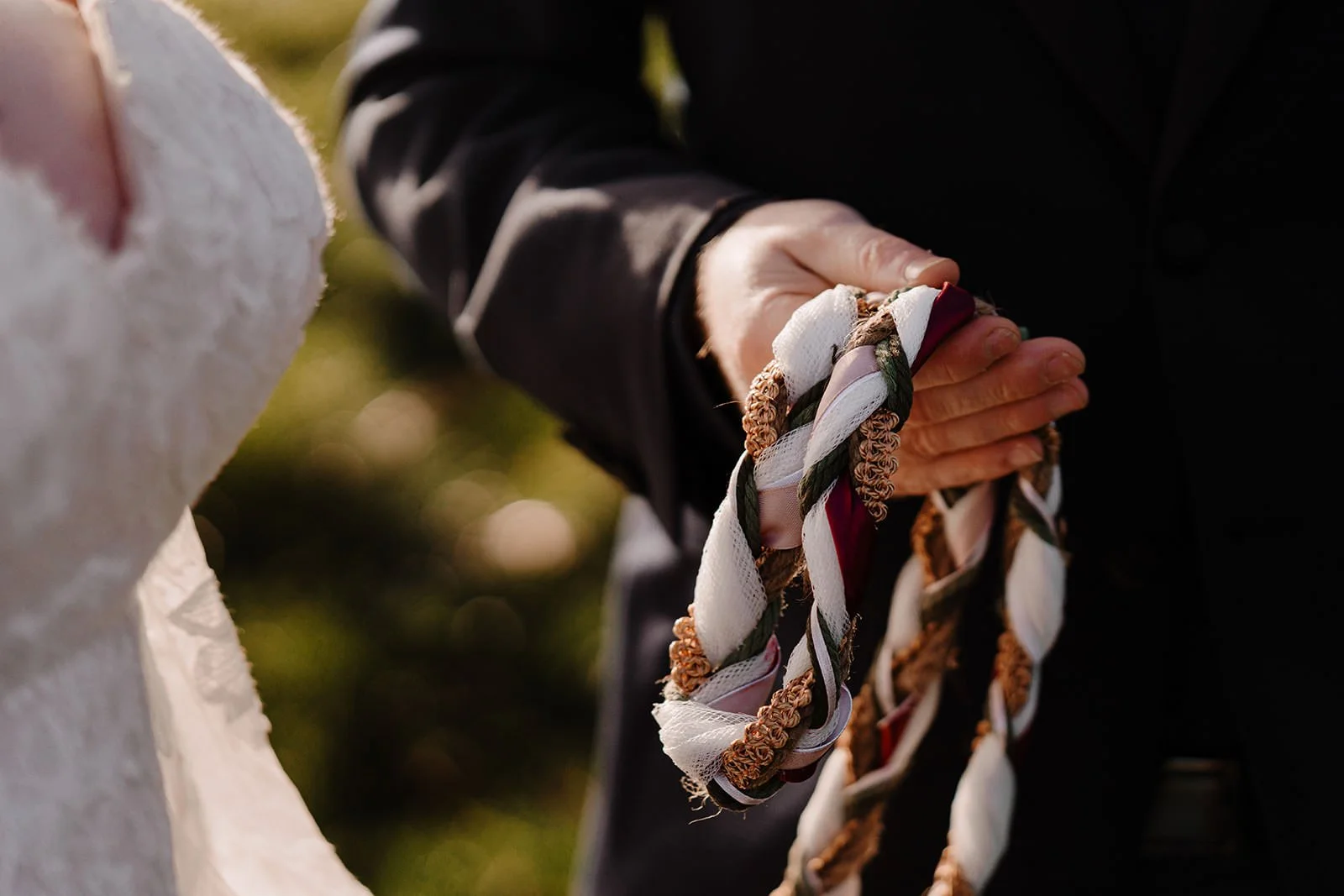
Traditionally a simple rope or cord was used. Today couples often choose ribbons in colours that mean something to them, hand-dyed cords, fabric from something meaningful, or cords made specifically for the ceremony. You can make your own or you can find beautiful handmade handfasting cords crafted from Celtic knotwork and natural fibres online.
The cord is usually kept afterwards and framed, stored, or passed down.
Is it legal?
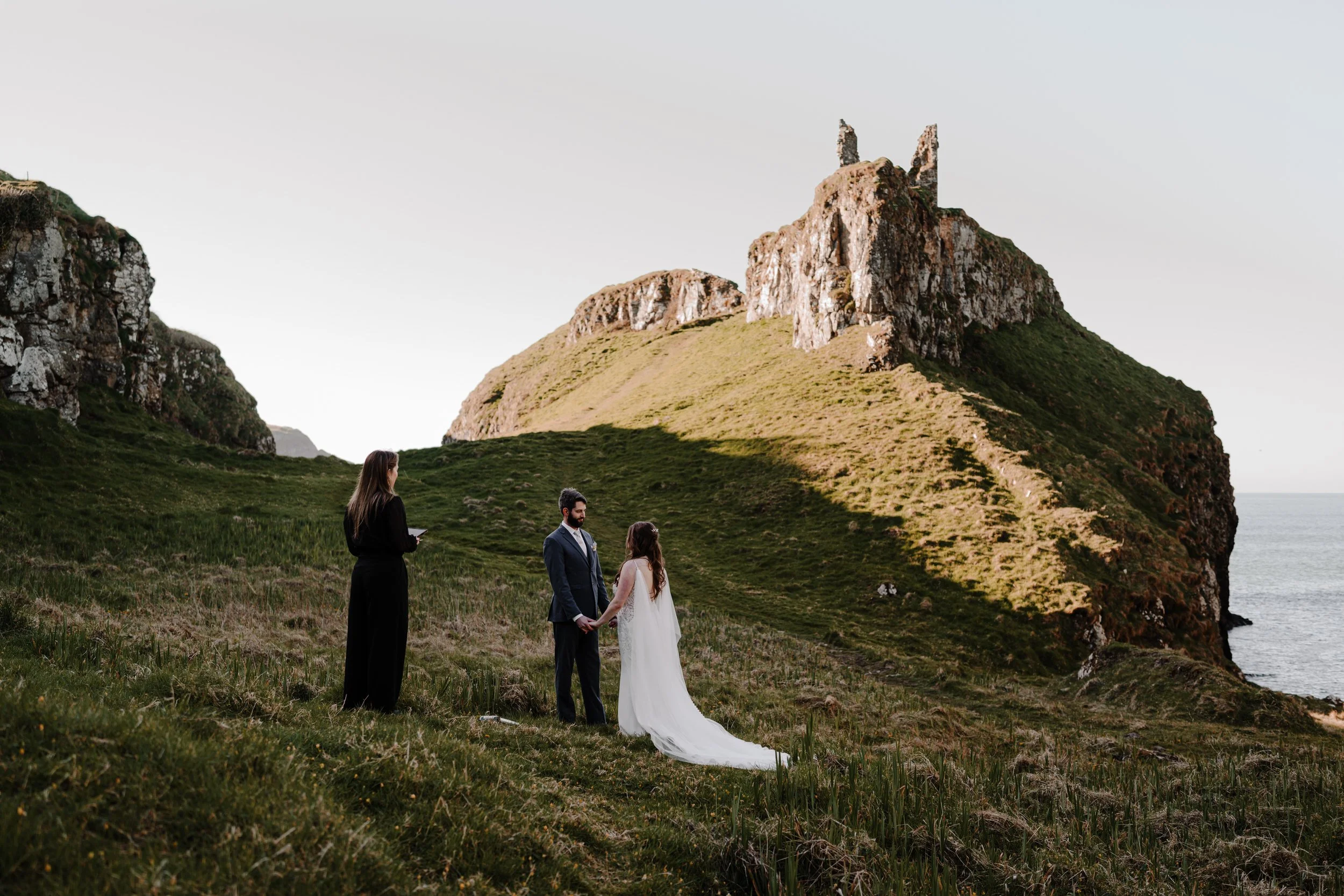
In Northern Ireland and most of the UK and Ireland, handfasting on its own is symbolic rather than legally binding. You would still sign the register or complete a civil ceremony separately. Most couples who elope with a handfasting either do the legal part quietly beforehand or combine the symbolic ceremony with the legal vows in the same moment.
The good news is that for an elopement, it does not matter either way. The moment is real. The commitment is real. The photographs are real. The paperwork can happen on a Tuesday.
Why it works so well for elopements
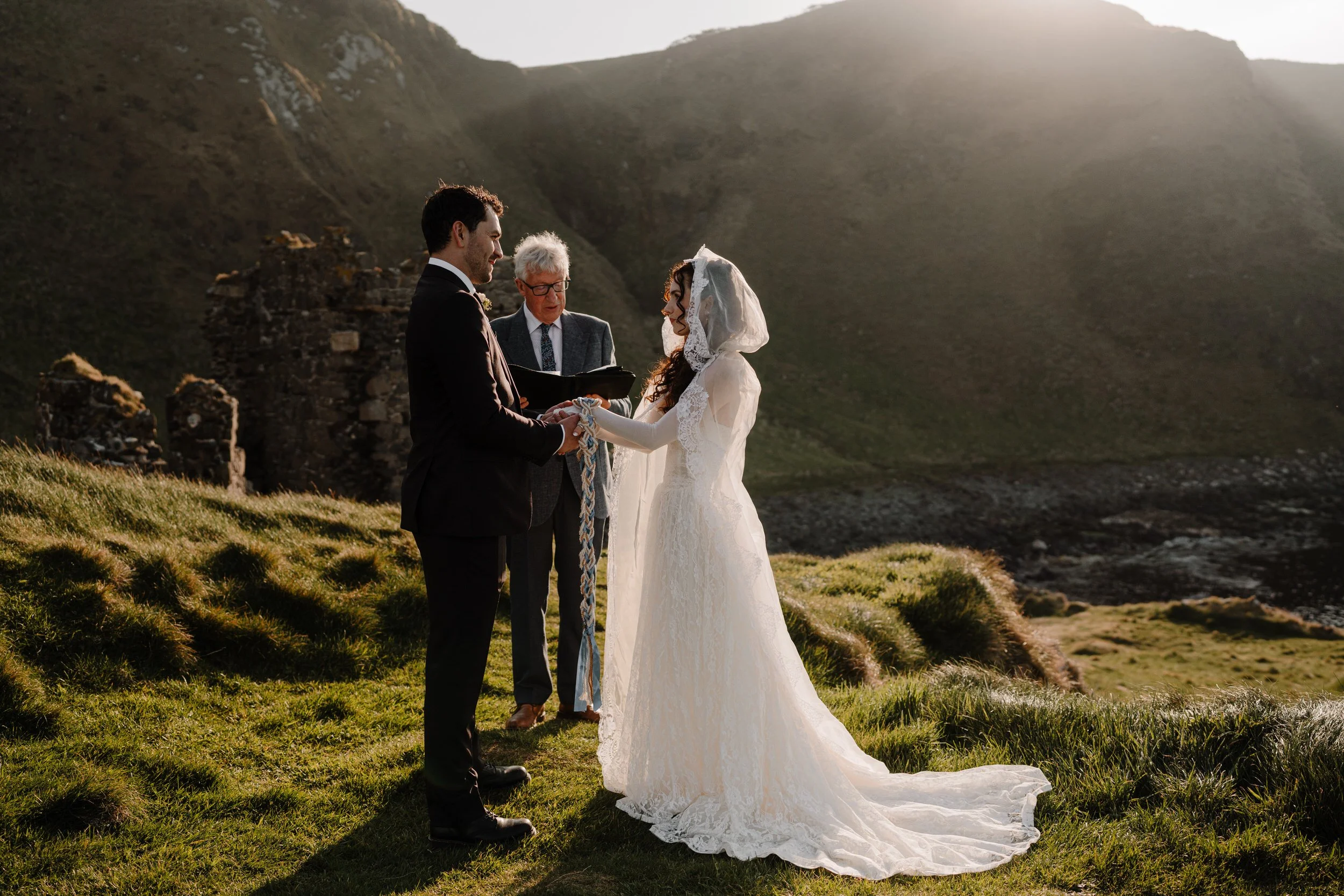
A handfasting strips everything back to what a wedding actually is. Two people choosing each other. No performance. No audience to manage. Just hands bound together at a cliff edge while the Atlantic does whatever the Atlantic wants to do.
It is tactile in a way that a standard ceremony is not. Your hands are physically connected. You are not just saying words into a room. You are held.
Every couple I have photographed doing a handfasting has cried. Most of them did not expect to.
If you are thinking about it
You do not need to be Celtic. You do not need to be spiritual. You do not need to have any particular beliefs. A handfasting works because it is human. The act of binding your hands to someone else's and making a promise out loud is as old as people have been making promises.
If you are planning an elopement along the North Coast and want to include a handfasting, I can point you towards officiants who do this beautifully and makers who create stunning cords. Just get in touch.
The knot is worth tying.
Planning your own Elopement, check out more elopement tips and inspo on the blog

Hi I’m Christin
An elopement Photographer, based in Northern Ireland.
For the last 11 years I’ve been documenting and helping couples plan their dream elopements in Ireland