Fuck it Lets Elope! Your guide to Eloping in Northern Ireland 2026
Not a fan of big wedding drama? Have you found yourself thinking – ”Fuck it, let’s just elope”?
If you’re planning on eloping in Northern Ireland, I get you! I am all about getting hitched intimately with the good vibes – epic backdrops and iconic I DOs! Plus, at the end of the day, you’re not alone. More and more couples stray away from the conventional and go for an intimate affair. Big traditional weddings come with their fair share of stressful tasks, so it is only natural for some couples to elope and avoid being overwhelmed by the whole notion. In essence – that’s the beauty of it! Elopements are a great way to get married in a stress-free and meaningful way, and even tick off some epic bucket list experiences in the meantime.
The part that matters, the vows, the person standing in front of you, the feeling of the day, none of that requires a venue deposit, a seating chart, a buffet argument, or eighteen months of decisions you don’t care about. Those things were added. They’re not the wedding. They’re the industry that grew up around it.
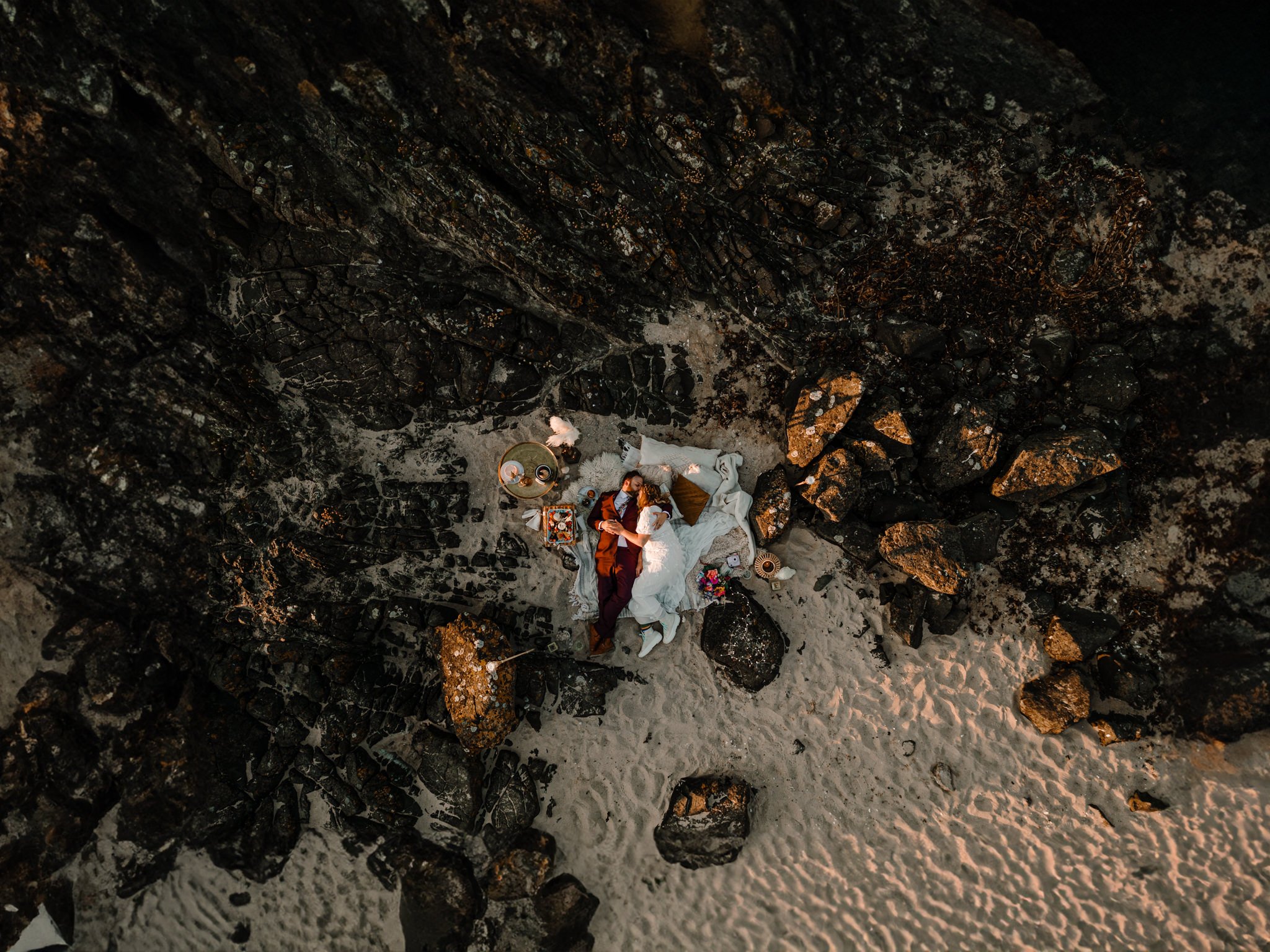
An elopement strips all of that back. You go to a place that means something. You say your words. You mean them. You come home married.
That’s it. That’s the whole thing.
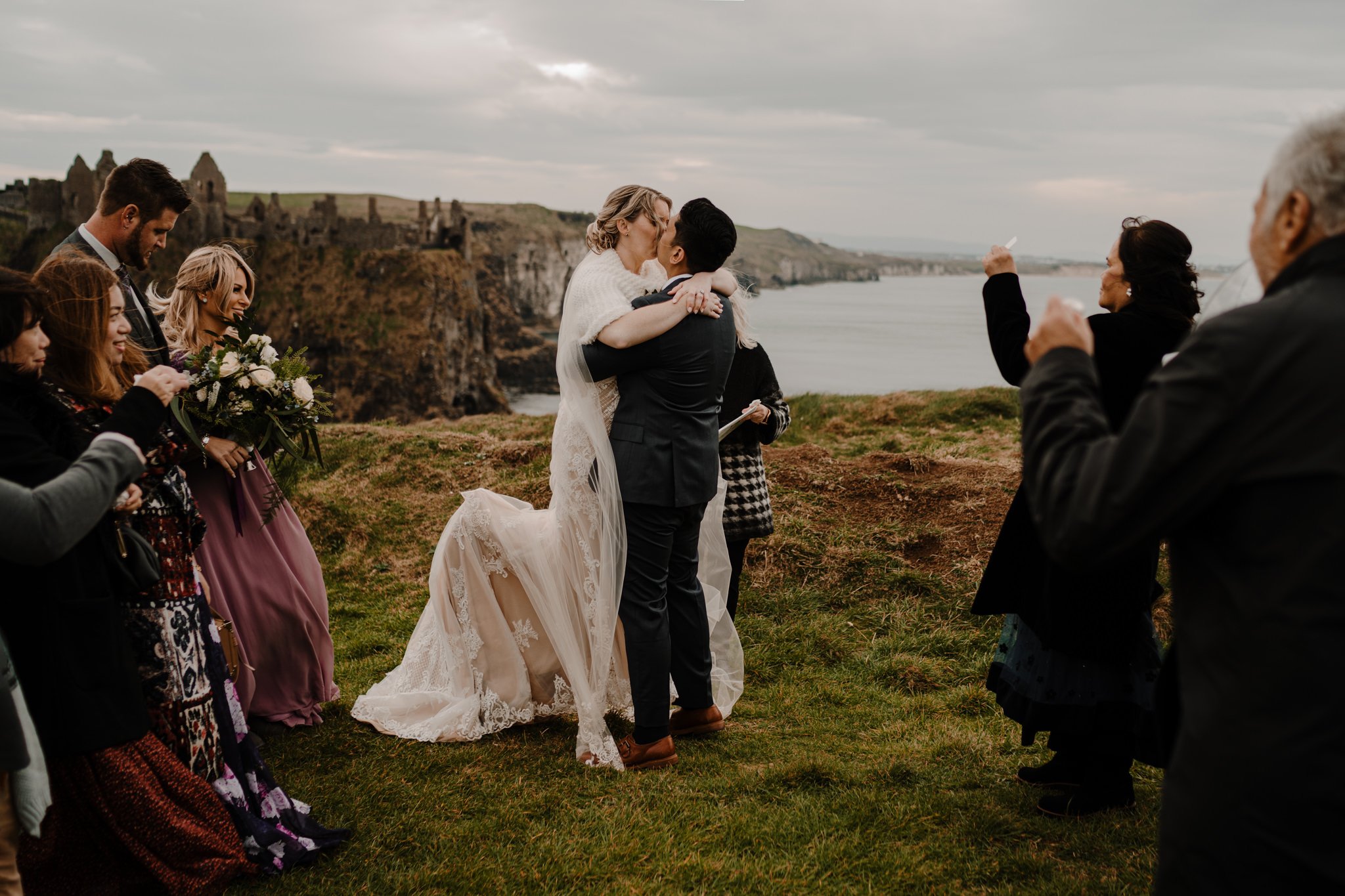
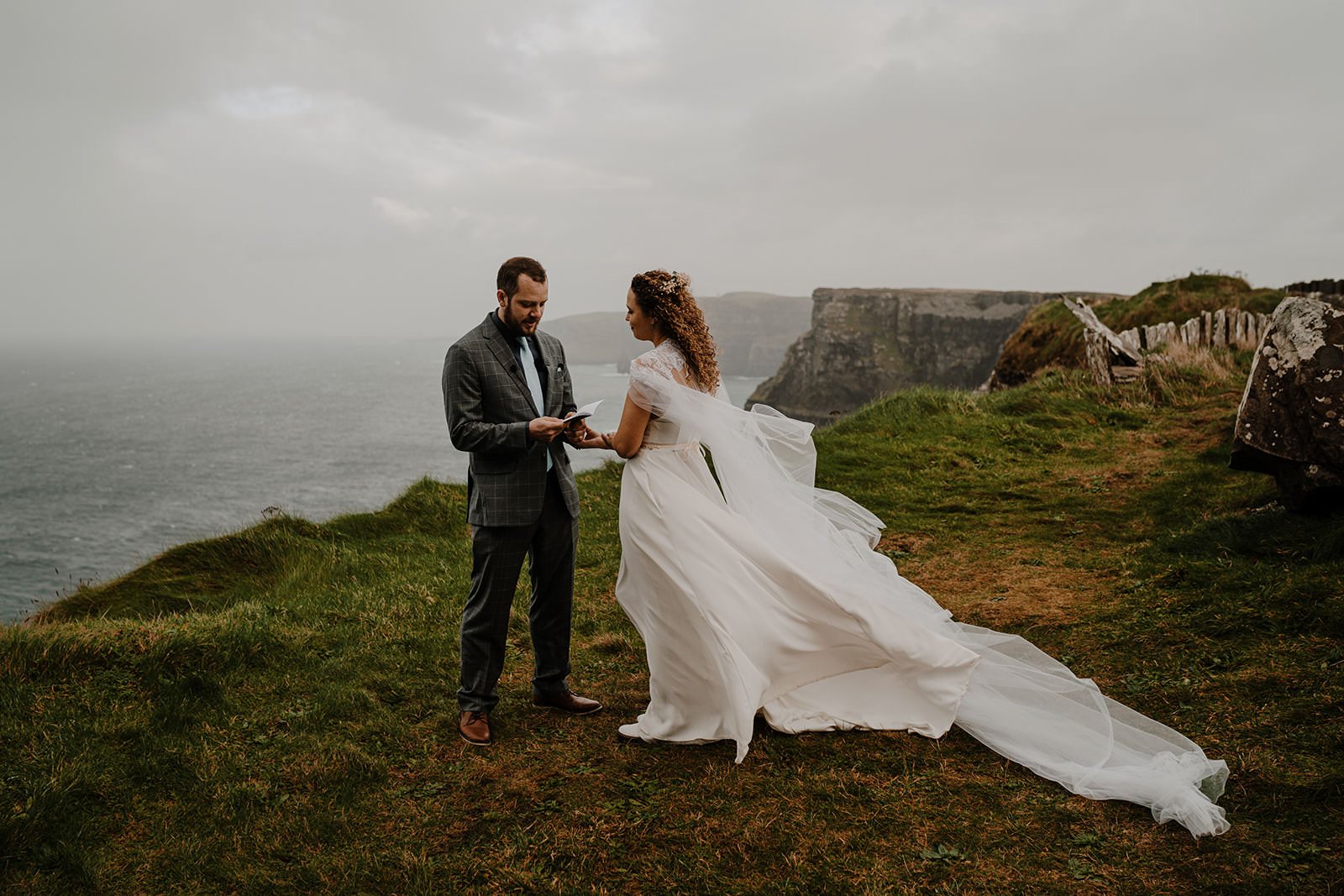
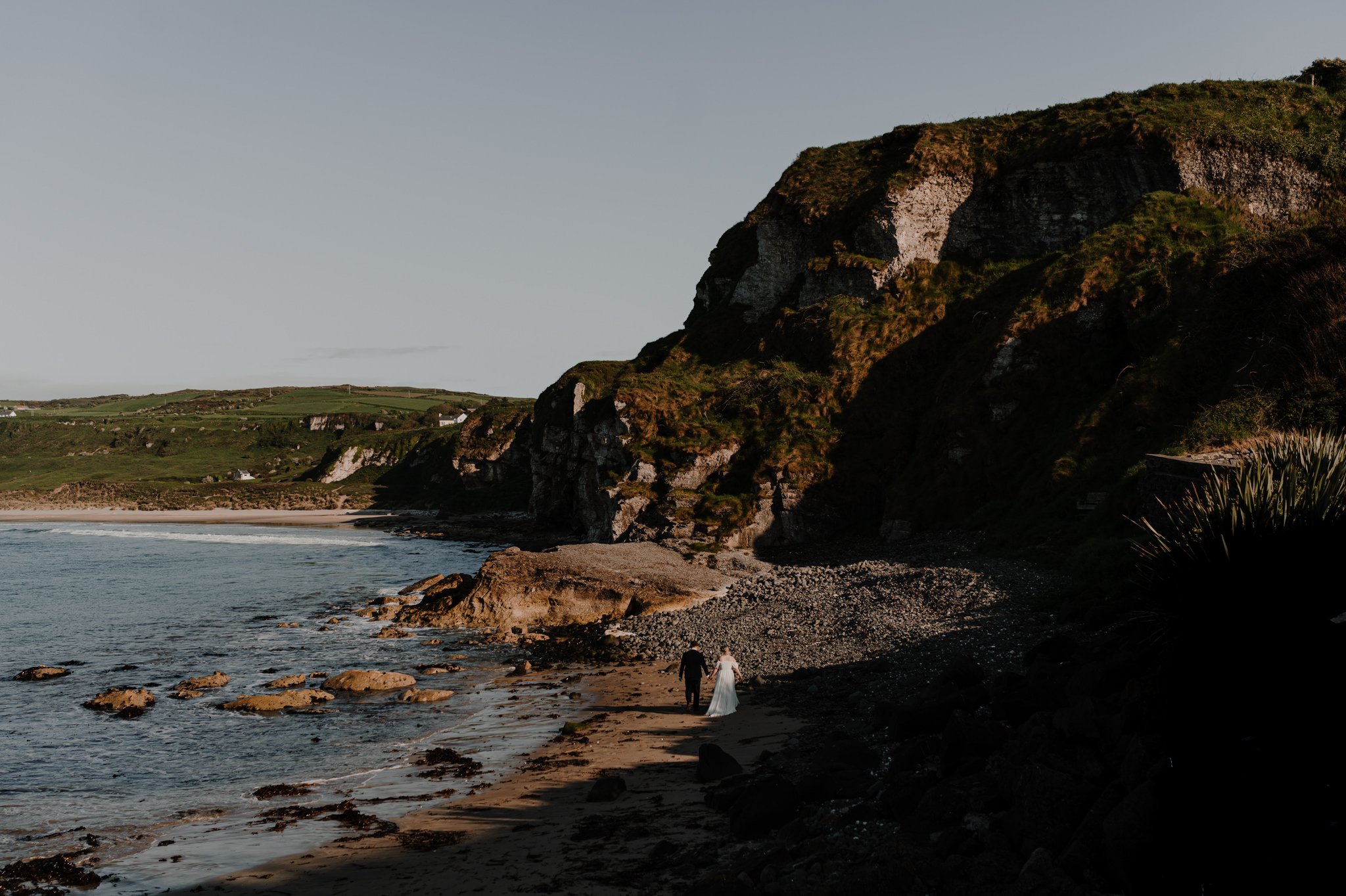
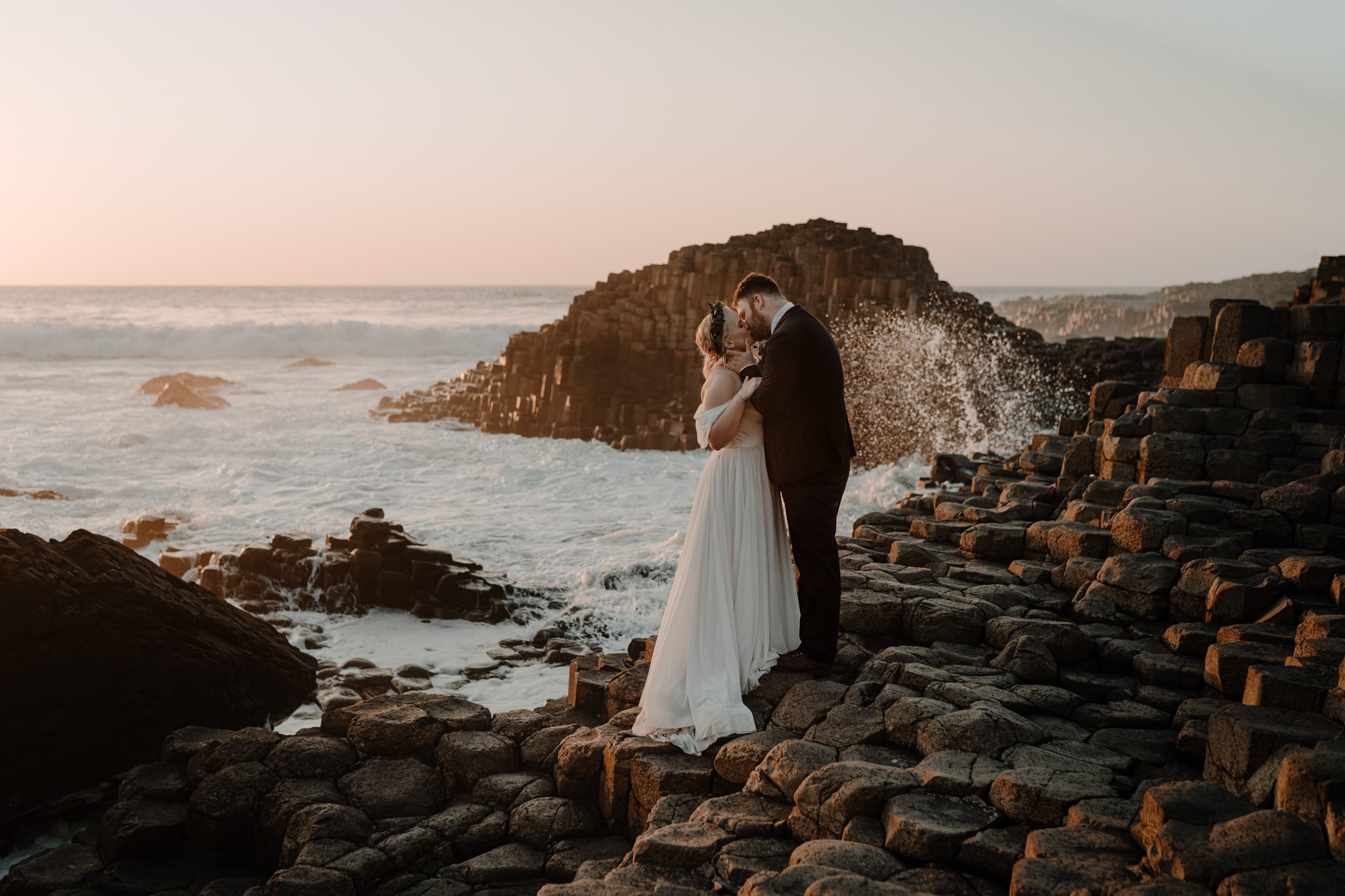
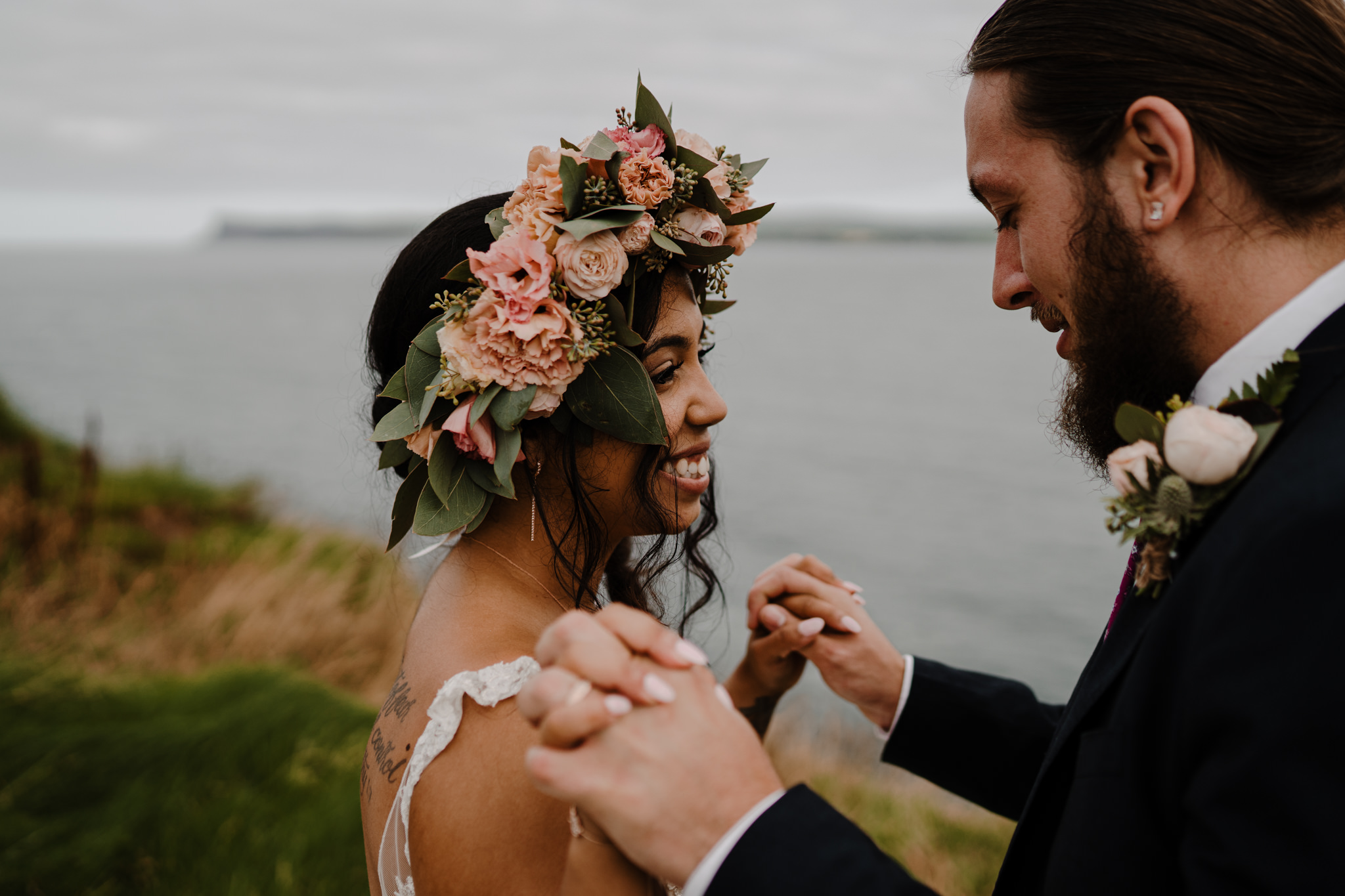
Northern Ireland, specifically the North Antrim coast, is where I photograph these days. I’ve watched couples from Belfast, Boston and Berlin stand on cliffs above the Atlantic and say things to each other that no hotel ballroom would ever have produced. The landscape does something. The intimacy does something. The absence of an audience does something.
This is the guide I wish every couple had before they started planning, everything you need to know, honest, in order, with no upselling.
In this post
elope
to run away secretly with the intention of getting married usually without parental consent
long ago, it usually meant running away, just the two of you, and getting married in secret. Thankfully, we have all moved away from that age-old thinking because elopements have evolved. Now, elopements can even take elements of small intimate weddings without the hustle and bustle of big traditional celebrations.
Why Northern Ireland
There are a lot of places you could spend this money on flights. Here’s why this stretch of coastline keeps making the list.
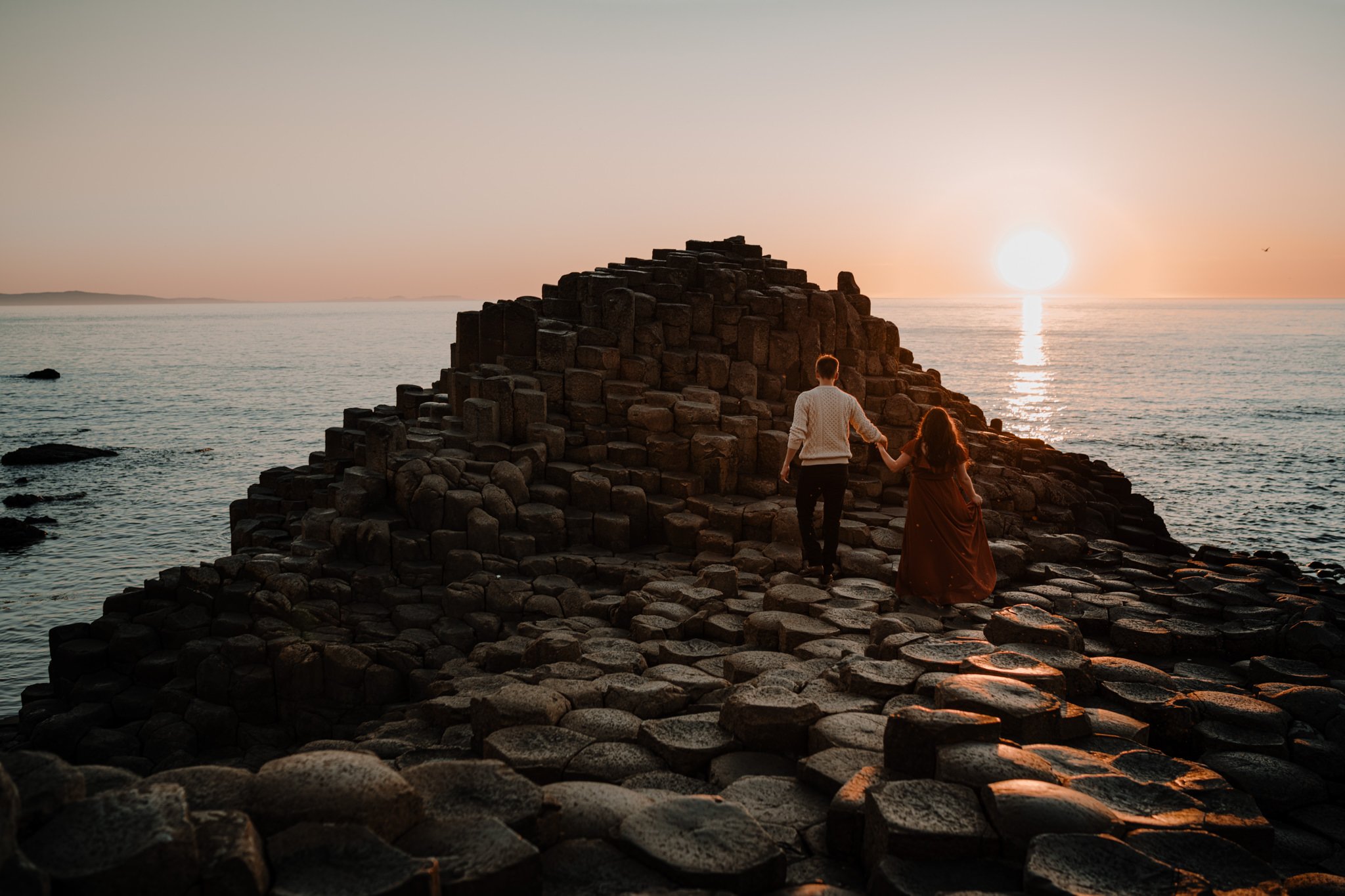
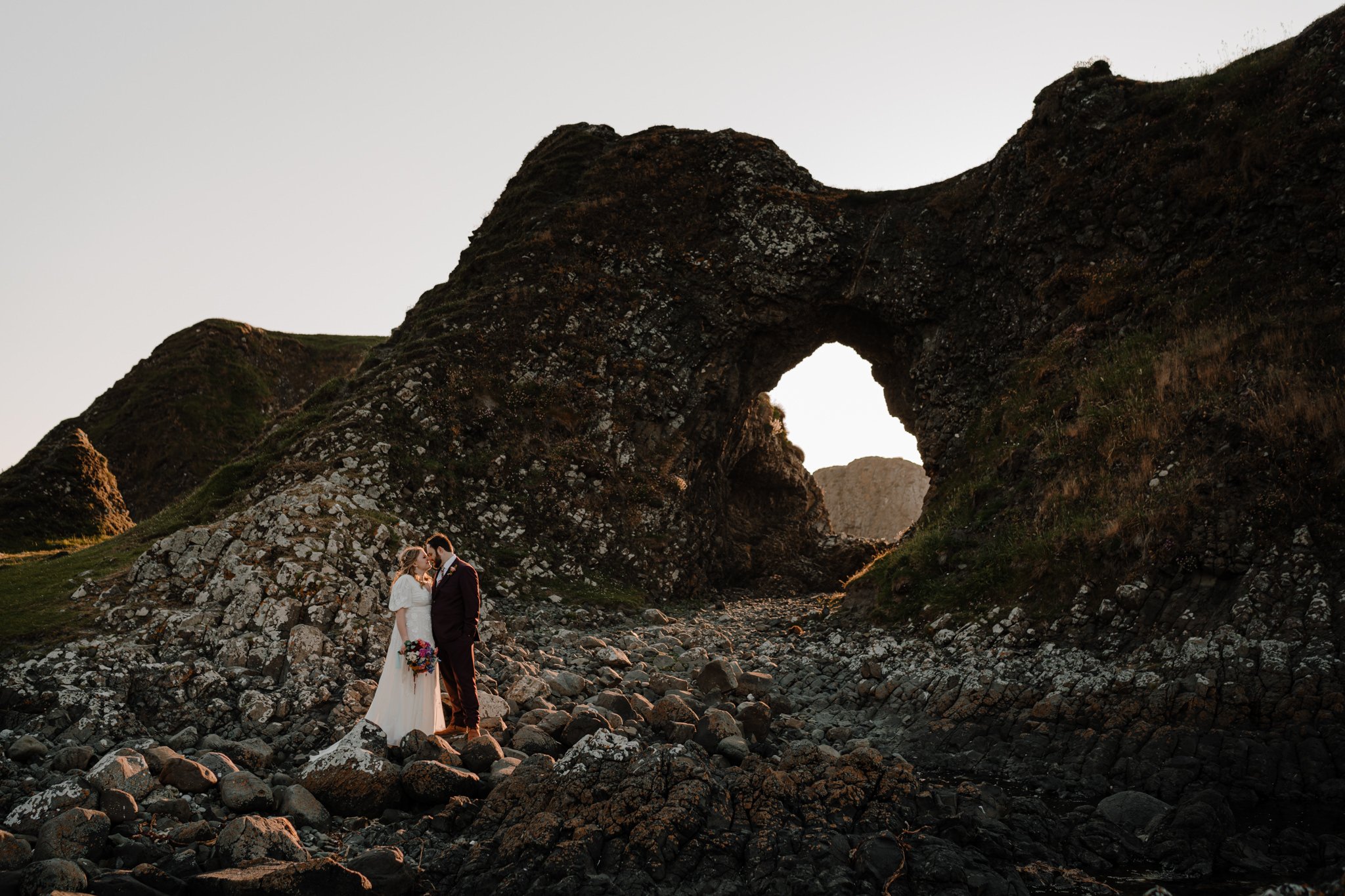
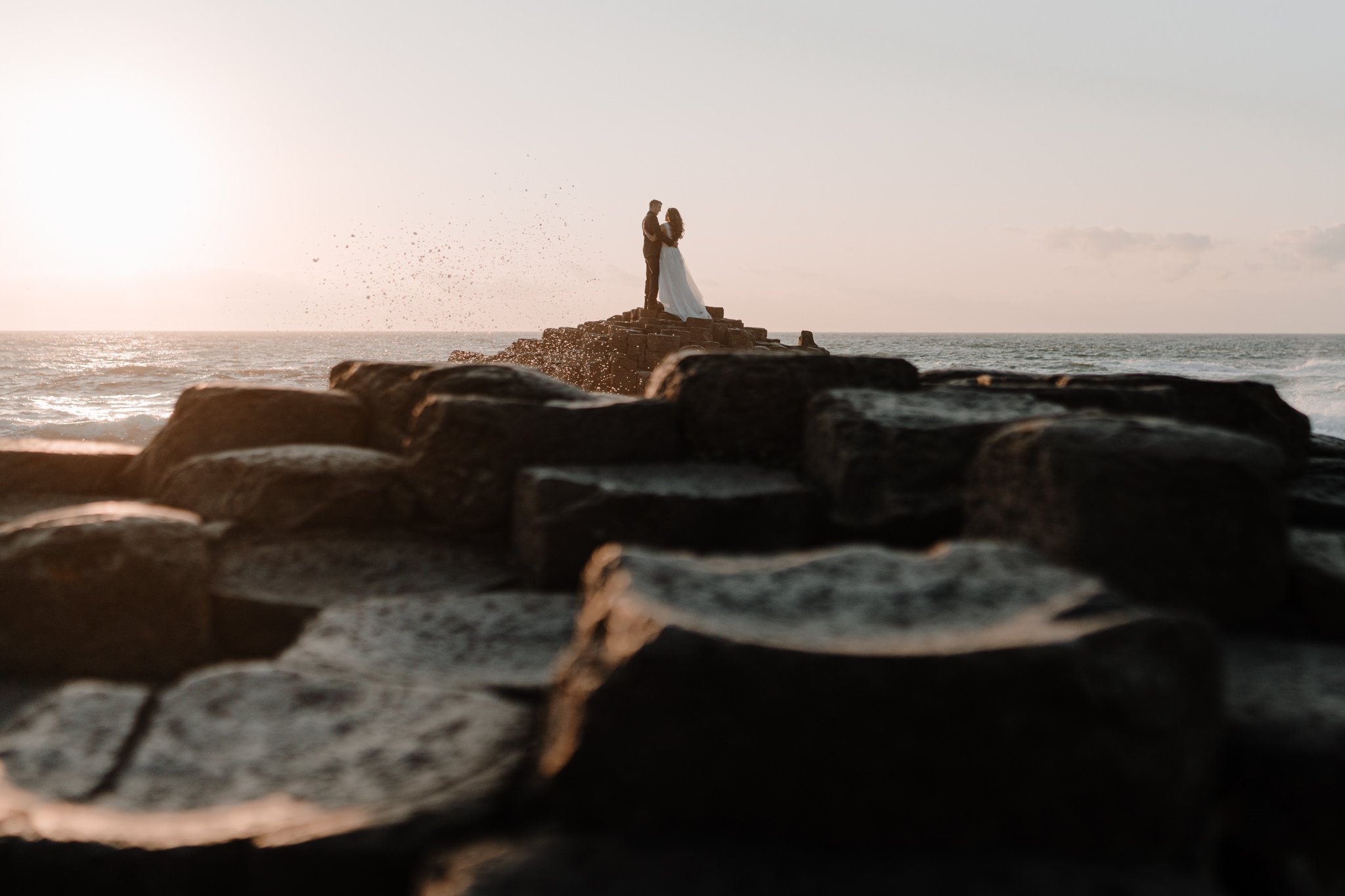
The landscape is genuinely unlike anything else. The Causeway Coast is 46,000-year-old basalt columns, medieval castle ruins hanging over the sea, single-track roads through green hedgerows, and hidden coves you reach by climbing down steps cut into limestone cliffs. It photographs like nothing you’ve seen because it doesn’t look like anywhere you’ve been. The scale is intimate rather than vast: not the Grand Canyon, but a headland above the Atlantic where you feel like you’re standing at the edge of something. That intimacy is what makes it work so well for elopement photography.
The legal framework is unusually good. Humanist ceremonies have been legally recognised in Northern Ireland since 2018. A registered humanist celebrant can conduct a fully legal marriage almost anywhere, with landowner permission, which means you can be married in a cliff field above a castle ruin and have it be legally binding, internationally recognised, and valid for US name changes and immigration purposes. The minimum notice period is 28 days, compared to three months in the Republic of Ireland. If you’re planning from abroad, that difference matters.
It’s far less expensive than a traditional wedding, even with the flights. Flying two people from New York, renting a car, staying in a Causeway Coast cottage for four nights, hiring a photographer, a celebrant, hair and makeup, and flowers runs somewhere between $6,000 and $9,000 total. The average American wedding costs over $35,000. The comparison is stark.
The coast is quiet when it matters. Summer tourists exist, yes, but they’re a daytime phenomenon that evaporates after 6pm. From October through April, you can have the most famous landmarks almost entirely to yourselves.
Game of Thrones brought a lot of you here first. Ballintoy Harbour, the areas around Dunluce, significant portions of the show were filmed within 20 minutes of each other on this coast. If you fell in love with those landscapes on screen, eloping among them is the most committed possible way of closing that loop.
It rewards the couple who shows up. I’ve photographed elopements here in driving rain, in November fog, at 7am before the world woke up. Every single time, the landscape gave us something. The Causeway Coast in any condition is better than most places on their best day.
The Honest Case for Eloping
If you’re reading this, you probably don’t need convincing. But if you’re still holding the wedding-you’re-supposed-to-want alongside the wedding-you-actually-want, here is what I want to say to you.
The couples who elope are not the ones who couldn’t pull off a big wedding. They’re the ones who looked at a big wedding and thought: this isn’t us. They’re the ones who want the marriage, not the performance of it. Who would rather spend what would have been the catering budget on flights to Belfast and two nights in a cottage in Portballintrae and a day on the Atlantic coast that they’ll remember every detail of for the rest of their lives.
Every couple I’ve photographed eloping has, at some point during the day, said some version of: I’m so glad we did it this way. I’ve never once heard the opposite.
If the large wedding is genuinely what you want, have it. But if you’re here, reading this, I suspect it isn’t. And that’s not a problem. It’s a decision.

Getting Here: Flights
Your airport options
Belfast International Airport (BFS) is the one you want for a Causeway Coast elopement. It’s 46 miles from the Giant’s Causeway, roughly an hour’s drive. International connections via London Heathrow (British Airways), Amsterdam Schiphol (KLM), Paris CDG (Air France), and others. Most US and Canadian routes connect through London.
George Best Belfast City Airport (BHD) is smaller and closer to Belfast city centre, 61 miles from the Causeway.
Dublin Airport (DUB) is a viable and popular alternative. From Dublin to the Causeway Coast is a 2.5 to 3 hour drive, mostly on motorways. It often gives you more direct flight options and lower fares. Important: you still need a UK ETA to enter Northern Ireland from Dublin. You’re crossing an international border when you drive north, even though there’s no visible checkpoint.
What flights cost
Return fares from New York to Belfast run approximately $500 to $750 in shoulder season (May, September). Summer fares are higher. November is the cheapest month to fly, typically $400 to $500 return. From the West Coast, add another $200 to $300 and a connection through a European hub. From Canada, Toronto and Vancouver both connect through London; fares are broadly similar to US East Coast prices.
Book flights and accommodation before anything else. Popular Causeway Coast cottages and the best humanist celebrants both fill months ahead for summer and early autumn dates.
The UK ETA: Do This Before Anything Else
US, Canadian and EU citizens now need a valid UK Electronic Travel Authorisation (ETA) to enter the United Kingdom, including Northern Ireland. Full enforcement began 25 February 2026, meaning you cannot board a flight to the UK without one.
What it is: A pre-travel authorisation linked electronically to your passport. Not a visa. Similar to the US ESTA. You apply once and it covers multiple trips to the UK for two years, or until your passport expires, whichever comes first.
Cost: £16 per person, roughly $20. A rise to £20 has been announced, apply now to pay the current rate.
How to apply: gov.uk/eta or the UK ETA app. Most applicants get an automatic decision in minutes. Allow at least three working days before travel to be safe. Use the same passport to travel as you used to apply.
When to apply: As soon as you book your flights. Do not leave it until the week before.
The Dublin catch: If you’re flying into Dublin and driving north, you cross from the Republic of Ireland into Northern Ireland. The Republic is not the UK. You do not need an ETA to enter the Republic. You do need one before you cross north. In practice: sort it before you leave home and there’s nothing to think about. There is no visible border checkpoint.
Critical if you want a legal ceremony: marrying and registering civil partnerships are not permitted activities under the ETA. If you plan to have a legally binding ceremony in Northern Ireland, check whether you need a Marriage Visitor visa before you book. This is exactly why so many of the couples i work with choose a symbolic ceremony in Northern Ireland and handle the legal piece at a county clerk’s office back home. The ceremony is no less real, and it removes the immigration complexity entirely. Just make sure to check out the legal requirements on the government website so you can legally tie the knot without a hitch
Getting Around: Driving in Northern Ireland
You need a car. The Causeway Coast is not served by meaningful public transport. There are no Ubers between Dunluce and Kinbane. Everything is better by car and many of the best spots require driving.
Driving on the left
You’ll drive on the left. The driver’s seat is on the right side of the car. This sounds terrifying and is almost always fine within twenty minutes of leaving the airport. The hardest moments are roundabouts (give way to traffic coming from your right, go clockwise), turning left out of a car park (your instinct is to drift right, consciously hug the left kerb), and single-track roads (pull into the wider passing places on your left and let oncoming traffic through).
The Causeway Coast has sections of very narrow road with hedgerows on both sides. The hedgerows look soft. They are not soft. Behind every hedgerow is a stone wall. Drive slowly, and you’ll be fine. These roads are part of the experience.
Book an automatic
This is not optional advice. Manual (stick shift) transmission dominates rental fleets in Northern Ireland. If you’ve never driven a manual, do not attempt it here while managing an unfamiliar road side, unfamiliar roads, and jet lag simultaneously. Book an automatic specifically when you reserve, early: automatics are limited and the good ones at Belfast International get booked months ahead in peak season.
Licence, cross-border coverage, and parking
Your US or Canadian driving licence is valid in Northern Ireland. Some rental companies also require an International Driving Permit (IDP). Check your specific rental agreement. IDPs are available from AAA (US) or CAA (Canada), cost around $20, and take about ten minutes.
If you’re renting from Dublin Airport and driving north, confirm Northern Ireland coverage explicitly before you sign anything. Many Republic-based rental agreements exclude Northern Ireland or charge extra for it. Hertz and Enterprise are generally reliable for cross-border coverage; check the small print regardless. If renting from Belfast International, this isn’t an issue.
Most of the locations you’ll want have free car parks. The Giant’s Causeway charges for on-site parking. Bushmills, Ballycastle, Portrush, and Portstewart all have town centre car parks, mostly free or with a small hourly charge.
Currency: It’s Pounds, Not Euros
Northern Ireland uses GBP, British pounds sterling. Not euros. This catches almost every couple who has been simultaneously researching eloping in the Republic of Ireland, which uses euros.
Your US or Canadian debit and credit cards will work almost everywhere. Contactless payment is universal. But your bank will charge a foreign transaction fee (typically 1 to 3%) unless you have a travel card that waives these (Chase Sapphire, Capital One Venture, and most travel-focused cards do).
Wise or Revolut are both worth downloading before you travel. Either lets you hold pounds in an account and spend without conversion fees. ATMs are widely available in Portrush, Coleraine, Ballycastle, and Bushmills. Less so at remote location car parks: draw cash before you head to the coast.
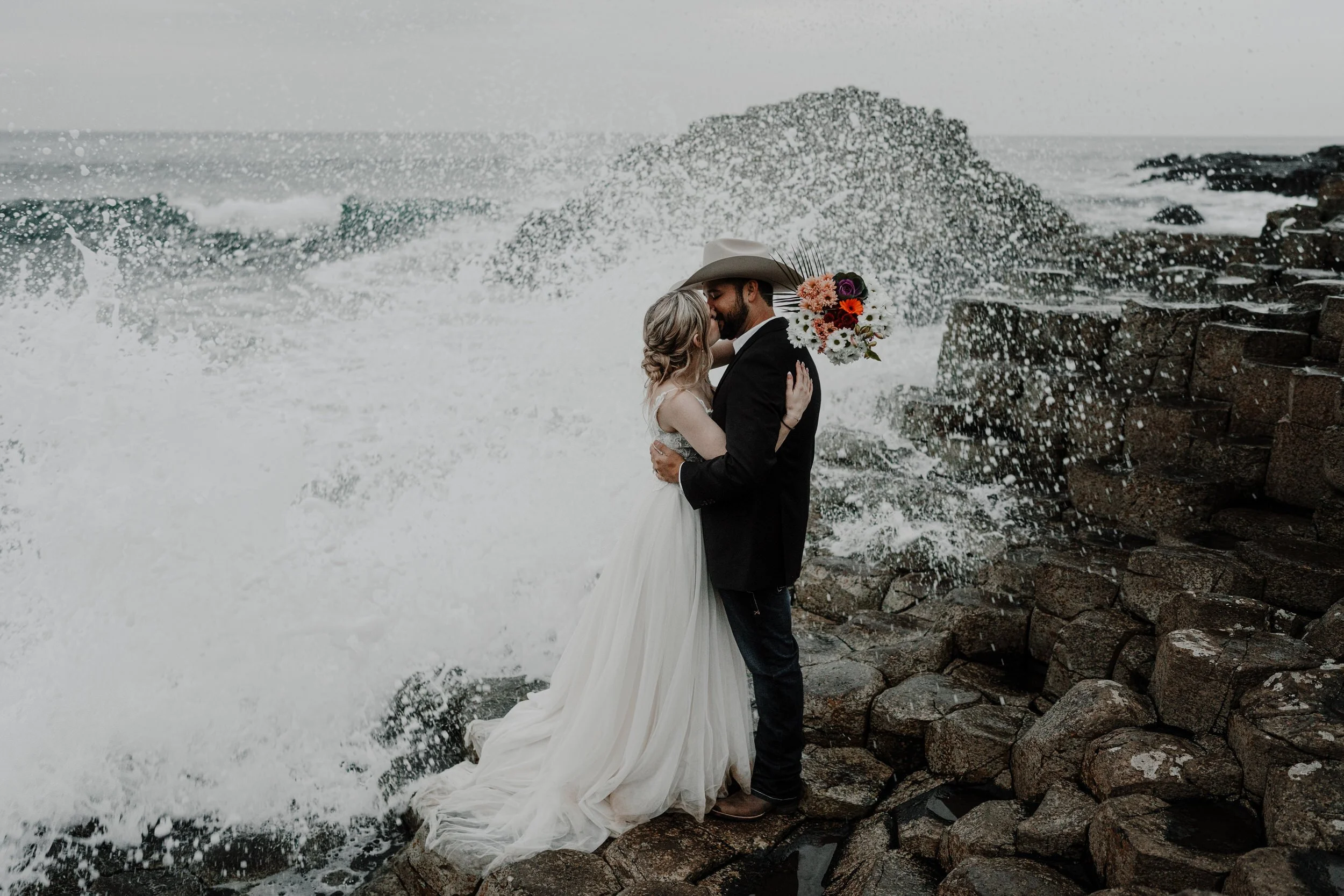

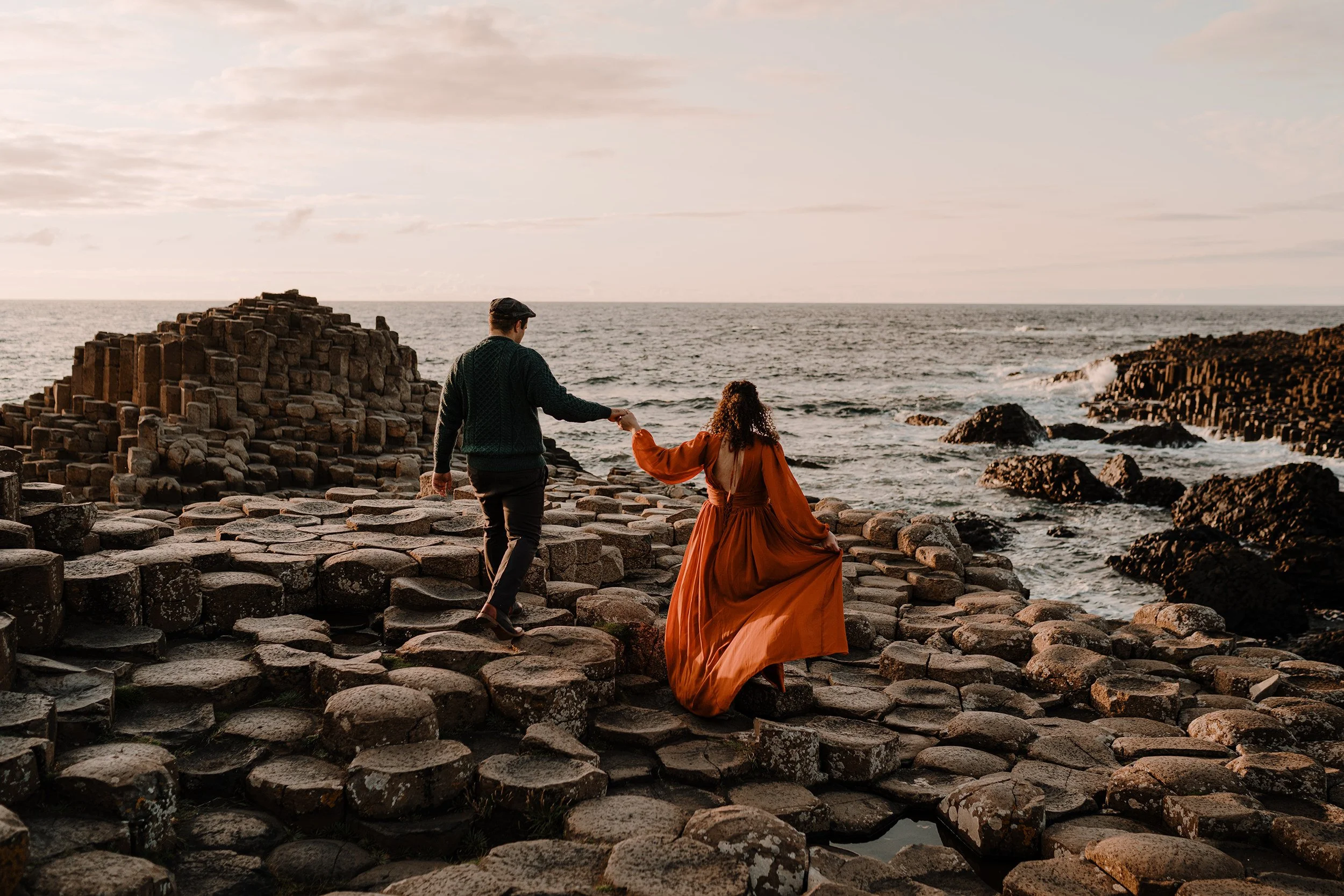
The Weather: An Honest Briefing
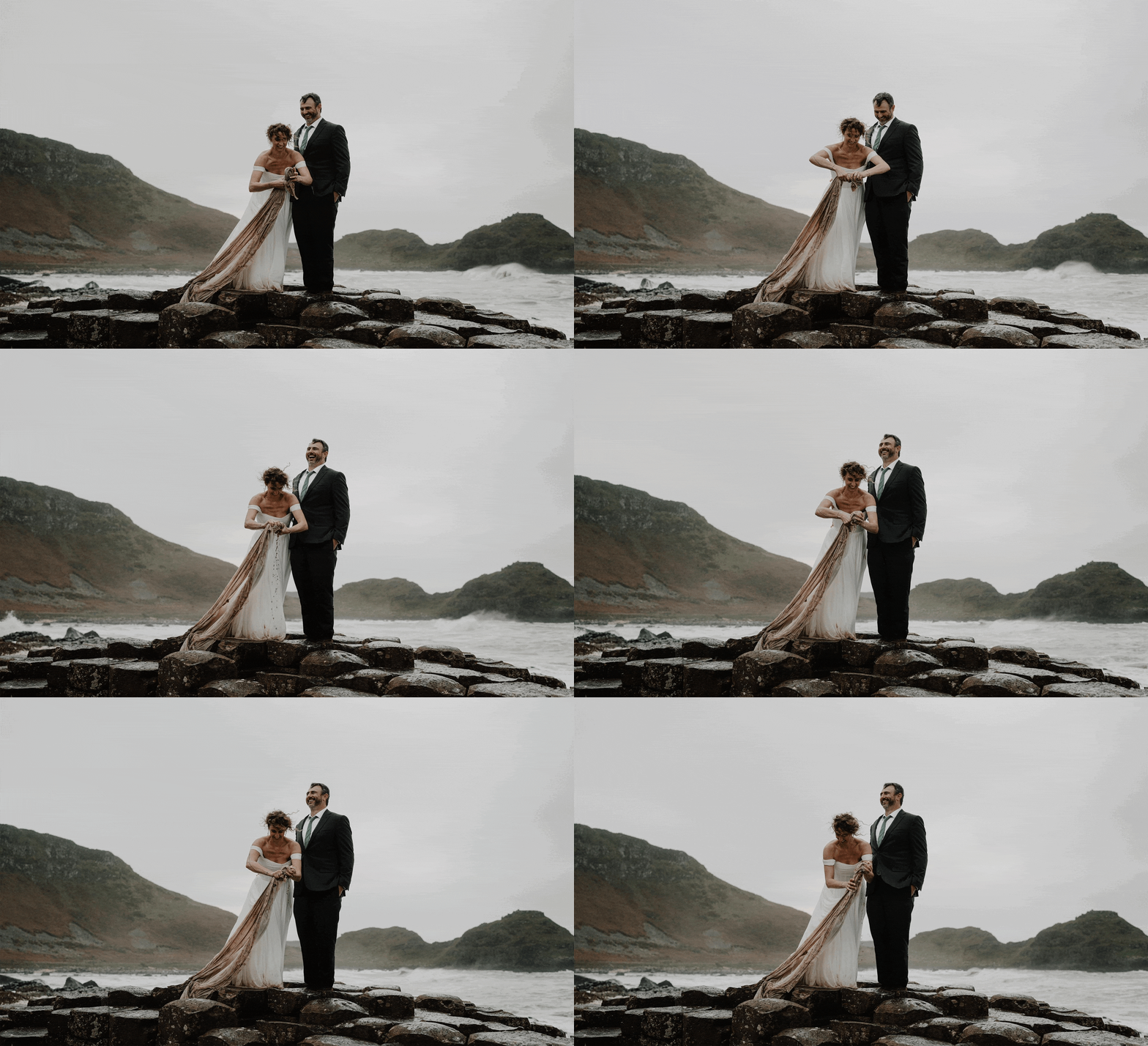
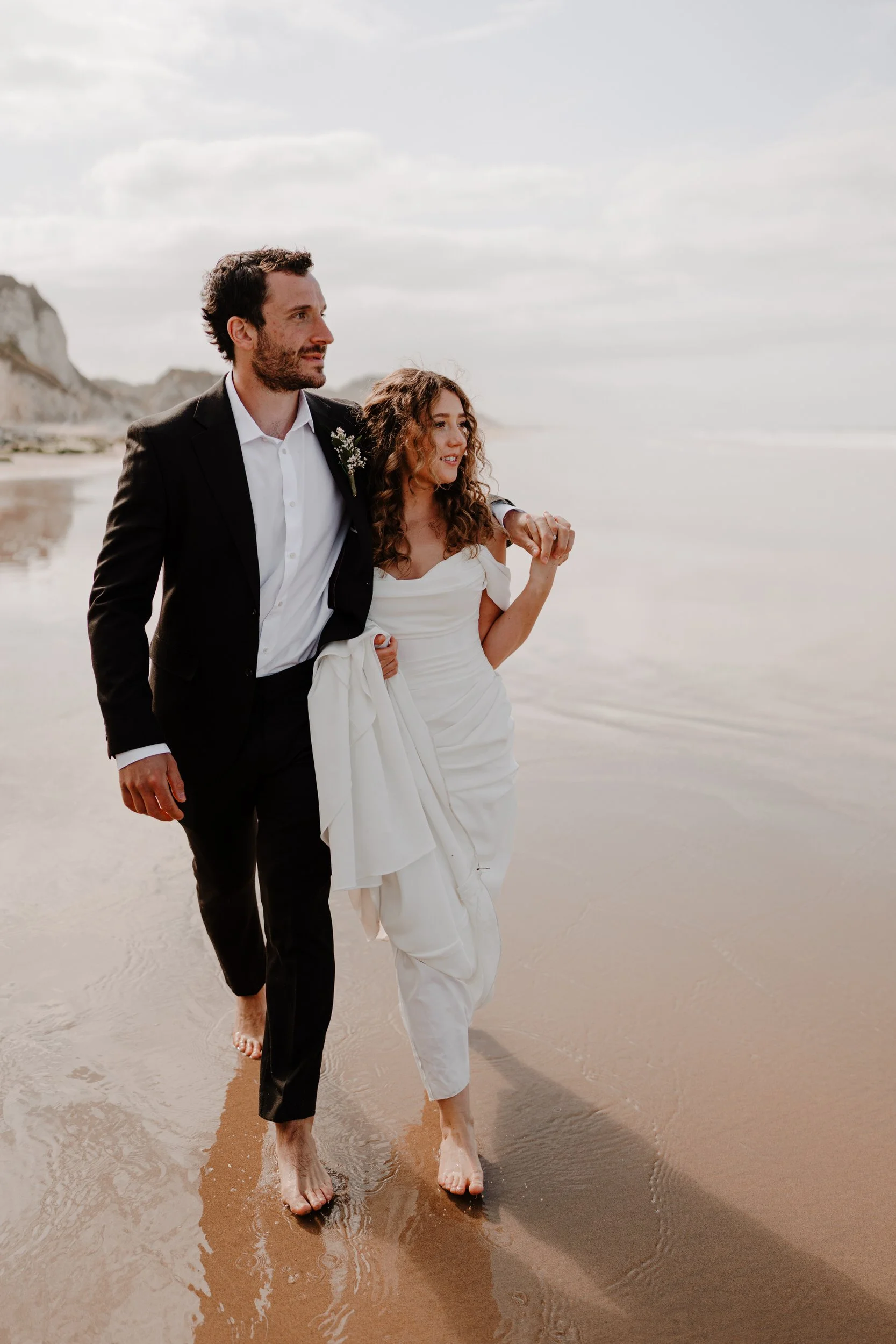
Northern Ireland is not warm. Let’s reset expectations before you start thinking about a strapless dress.
Summer (June to August): Average highs of 18 to 19°C (64 to 66°F). That’s a cool spring day by most US and Canadian standards. It will rain. It will also be beautiful. Overcast skies produce soft, flattering light that photographers pray for.
September and October: My personal recommendation. Temperatures similar to summer, often less rain than peak summer, golden light hitting the cliffs at an angle June can’t match, and significantly fewer tourists. September on the Causeway Coast is genuinely one of the finest places on earth.
May: Long bright evenings, wildflowers, increasingly warm. The shoulder season sweet spot before the summer crowds arrive.
Winter (November to February): For the couple who wants the most dramatic version of this. Short days, yes, but the sun never climbs high enough to lose that golden quality, which means the entire day from roughly 10am is photographically extraordinary. The cost is the lowest of the year and the coast is completely, wonderfully empty.
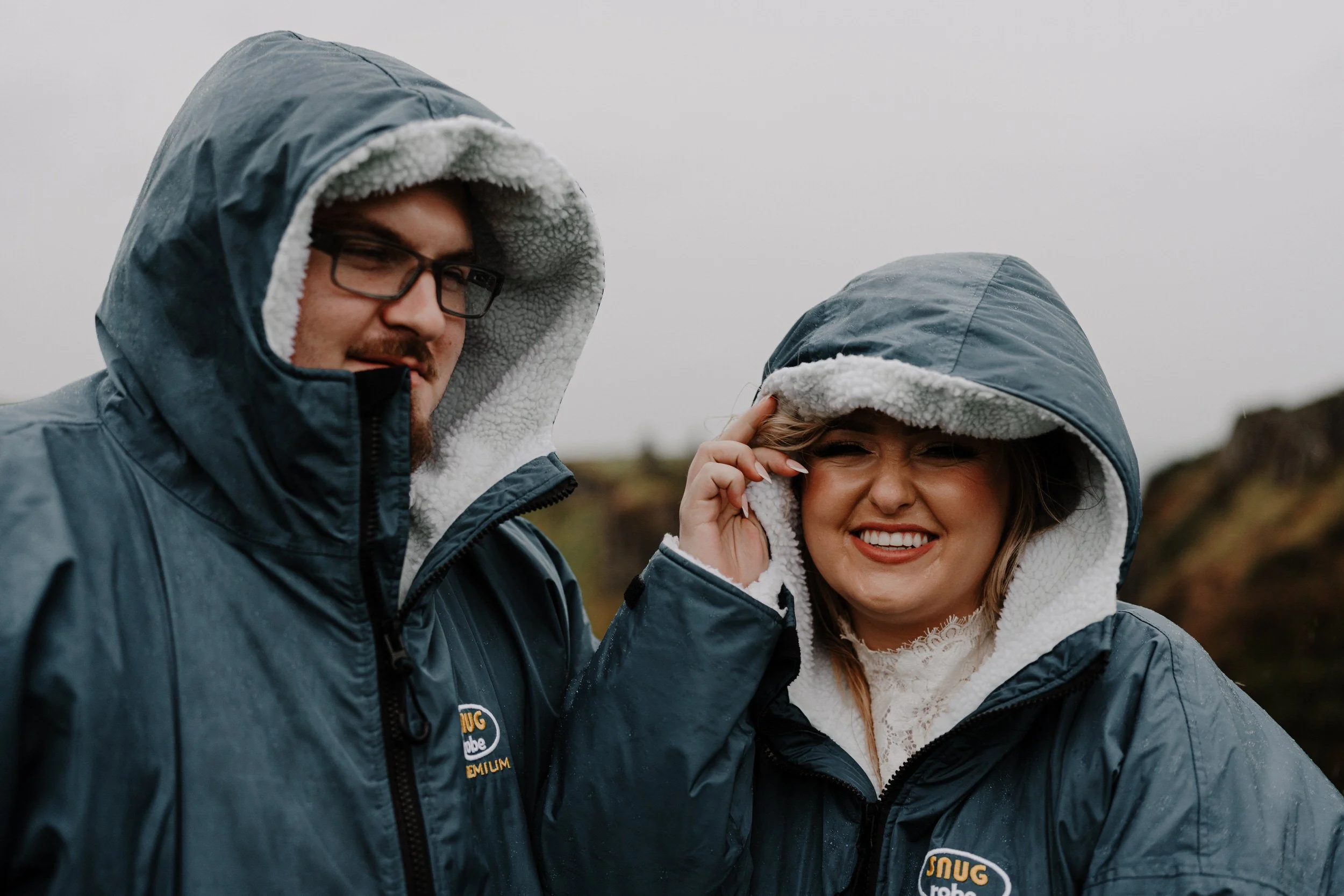
Pack a waterproof outer layer that photographs well: a structured wool coat, a leather jacket, a tailored trench. Layers underneath. Footwear that handles wet grass and uneven surfaces. If you’re from a warm climate used to 80°F, dress for 65°F with wind and the possibility of rain at any moment and you’ll be correctly equipped.
The rain is not a problem. I want to say this clearly. I’ve photographed some of my best sessions in light rain and mist. The light goes soft and directional. The greens saturate. The cliffs look like something from another world. On the Causeway Coast, weather is atmosphere, not obstacle.
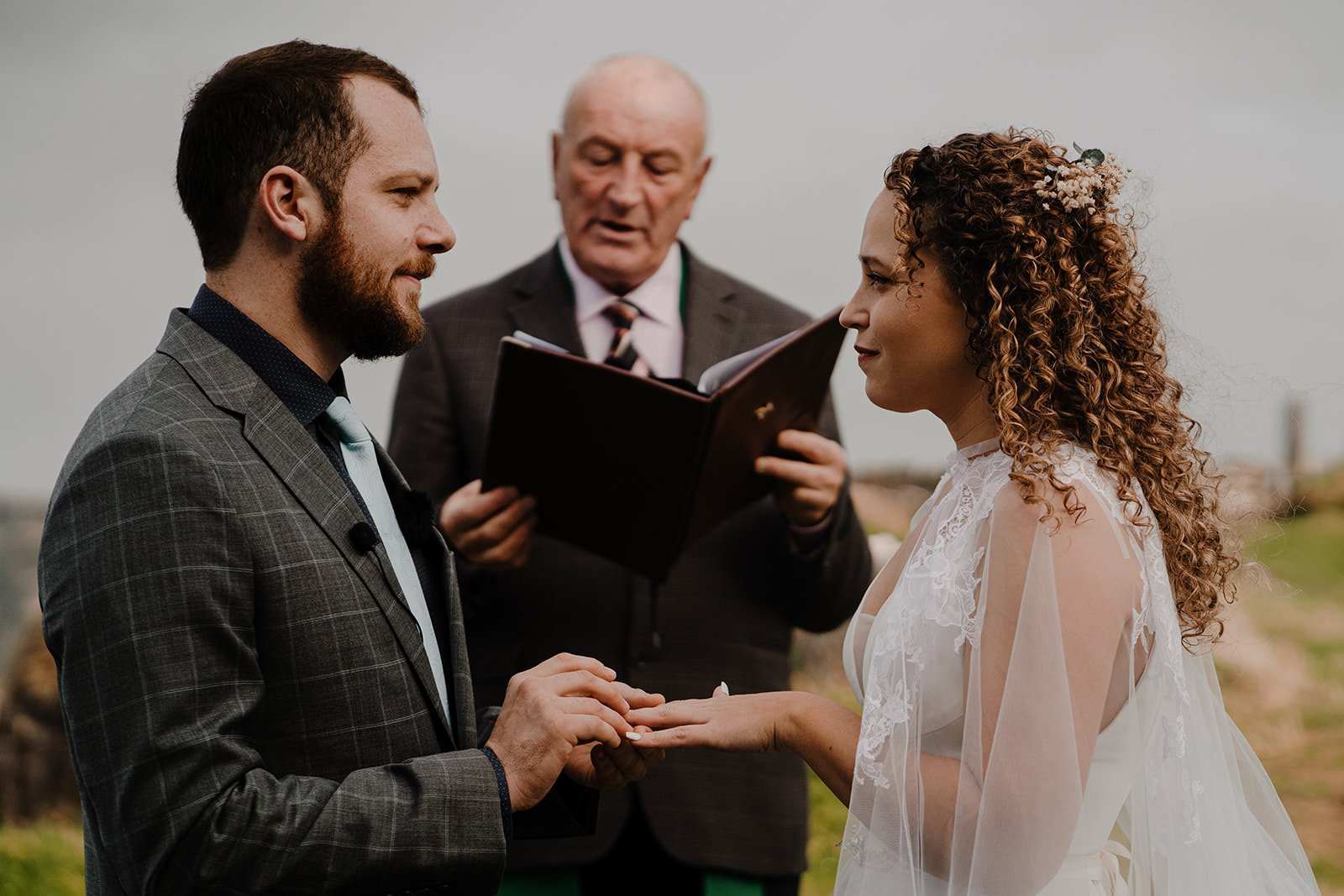
The Legal Picture: How to Make It Official
Northern Ireland is one of the easiest places in the world for a North American couple to have a fully legal ceremony on location. Here’s the overview.
The three routes
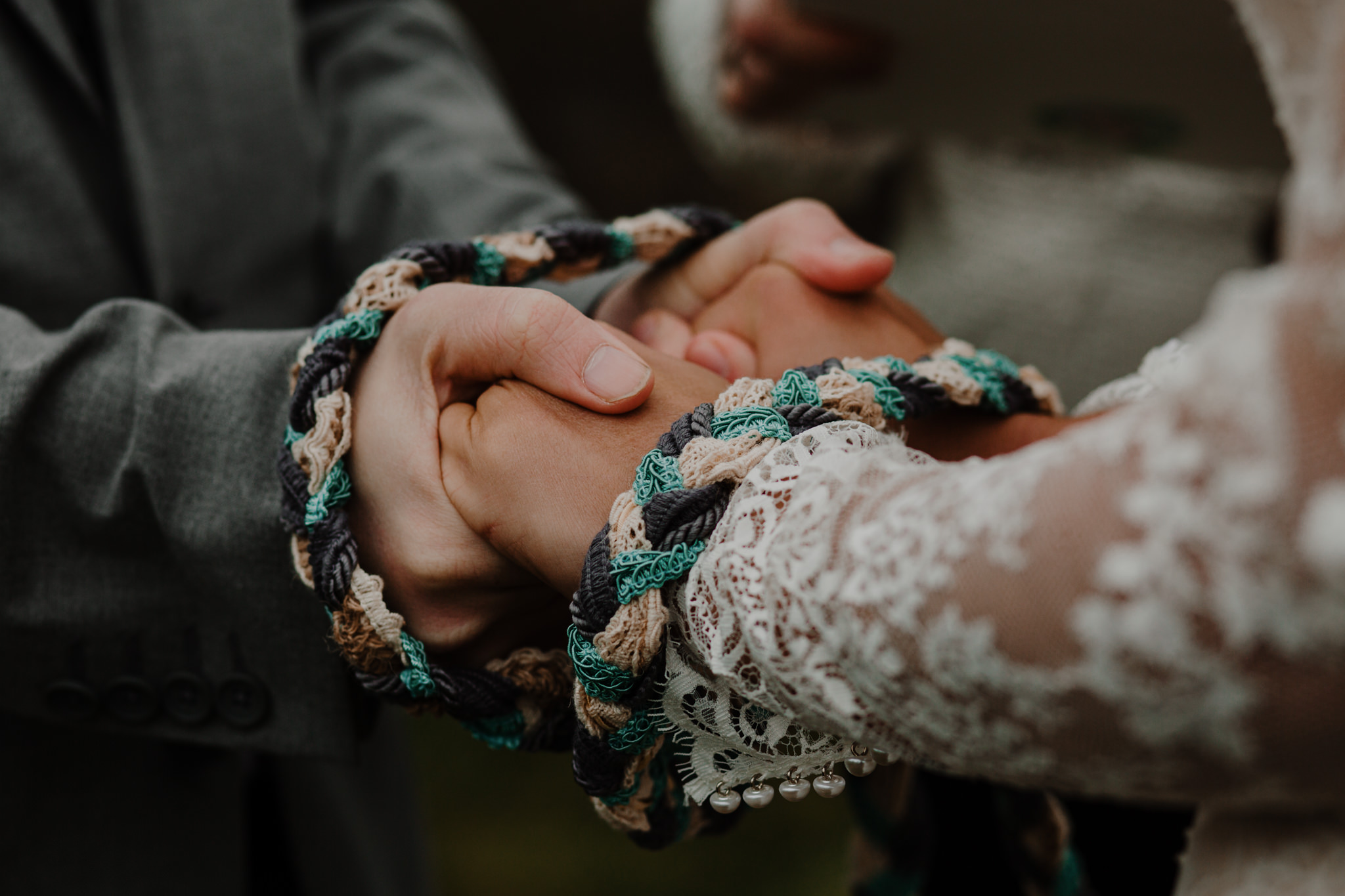
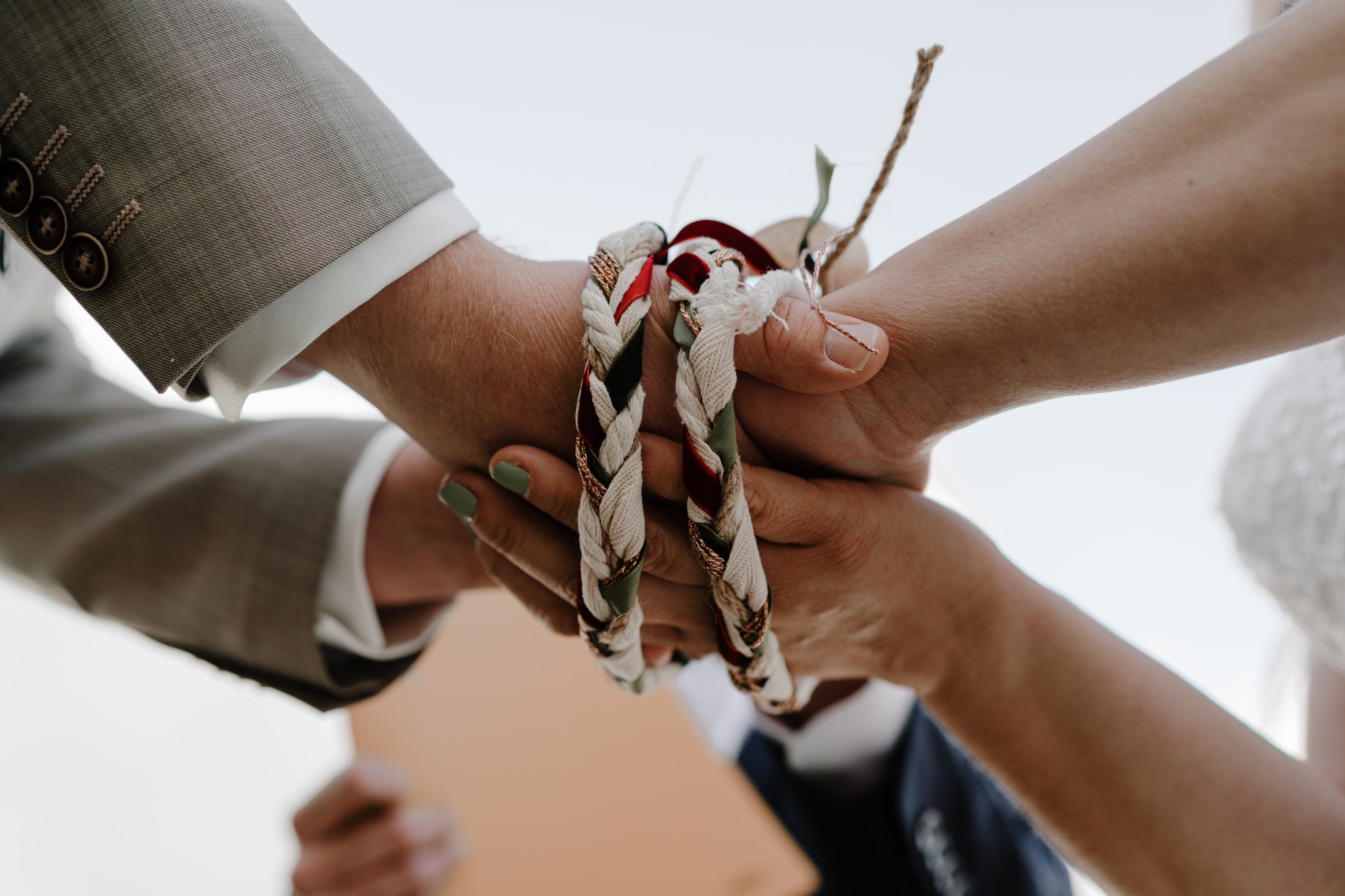
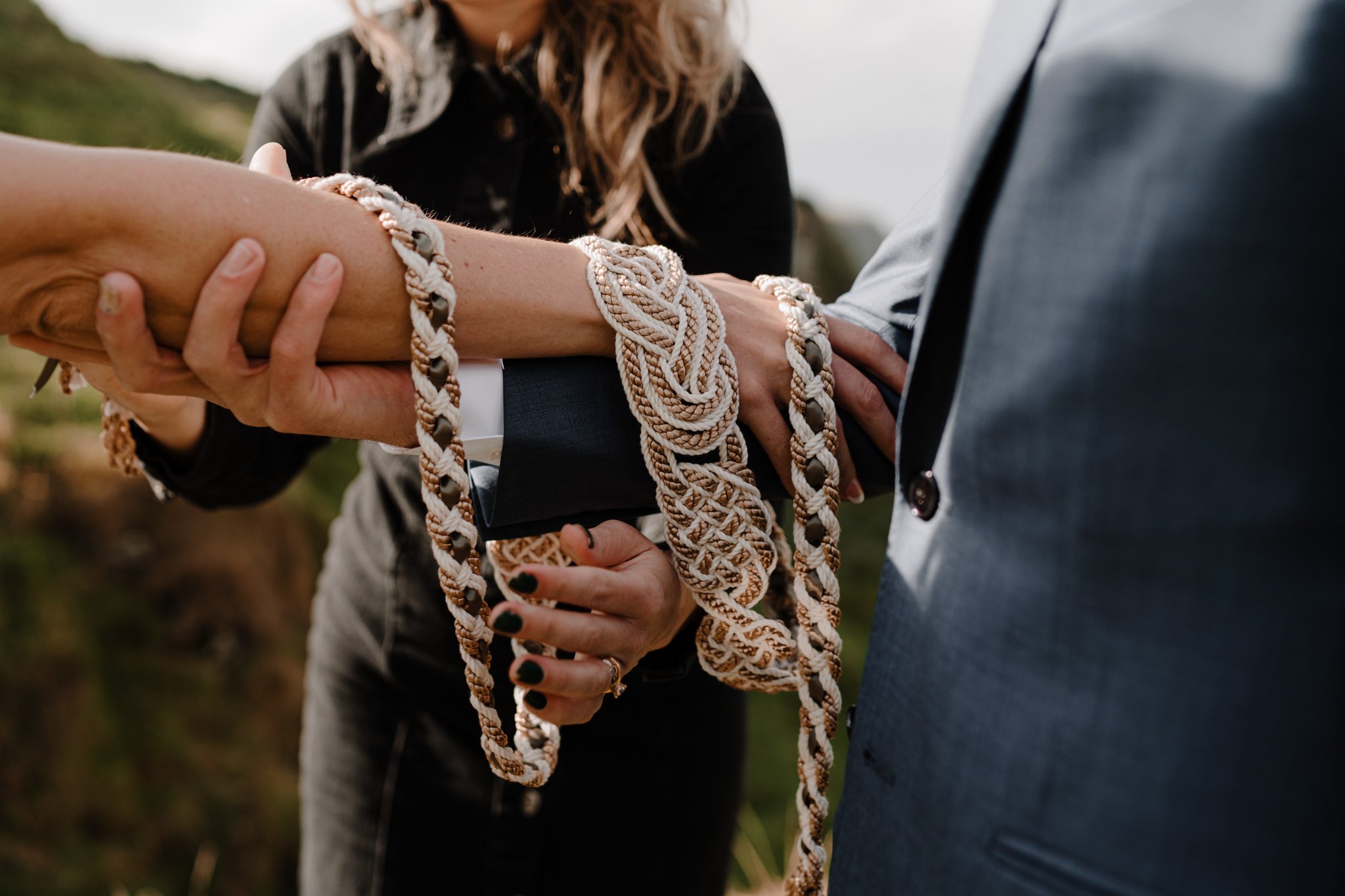
Route 1: Legal humanist ceremony (recommended). A registered humanist celebrant can marry you anywhere in Northern Ireland with landowner permission. No approved venue list, no registry office, no church. You give notice to the District Registrar at least 28 days in advance (8 weeks recommended), collect the marriage schedule before the ceremony, and drop it back the next working day to get your certificate, Fully legal. A Northern Ireland marriage certificate is accepted by the Social Security Administration for name changes, by USCIS for immigration applications, and by state and provincial vital records offices. No apostille, no embassy registration, no consular notification required.
Route 2: Symbolic ceremony in Northern Ireland, legal paperwork at home (popular with a lot of couples). The ceremony, the vows, the rings, the photographs, all happen on the Causeway Coast. The legal piece happens at a county clerk’s office near your home, before you travel or when you return. In the US this typically costs $25 to $100 and takes about 15 minutes. In Canada it varies by province but is similarly simple. No advance notice required in Northern Ireland, no document gathering, no schedule collection. And as noted above, it also sidesteps the Marriage Visitor visa question entirely. The ceremony is identical in every way that matters.
Route 3: Civil ceremony with a registrar. Fully legal, led by a registrar from the district council. Must take place at an approved licensed venue, which limits location options. For most elopement couples, Route 1 is strictly better.
Entry requirements for a legal ceremony
If you want a legally binding ceremony in Northern Ireland, check whether you need a Marriage Visitor visa (gov.uk/marriage-visitor-visa) rather than relying on the ETA alone. The gov.uk ETA page states that marriage and civil partnership registration are not permitted activities under the ETA. Confirm with the District Registrar before booking. This is the main reason many couples opt for Route 2 and handle the legal paperwork at home.
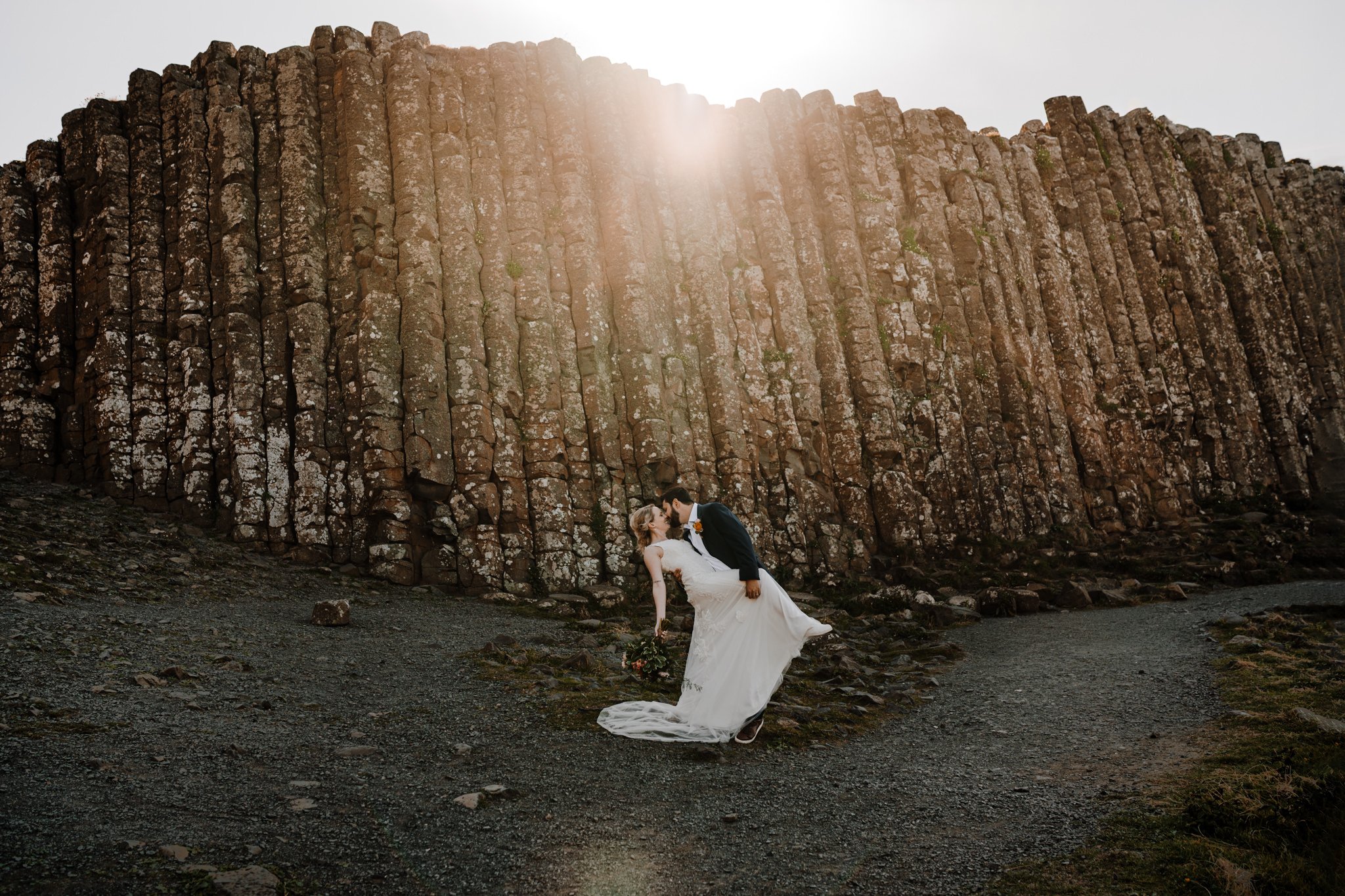
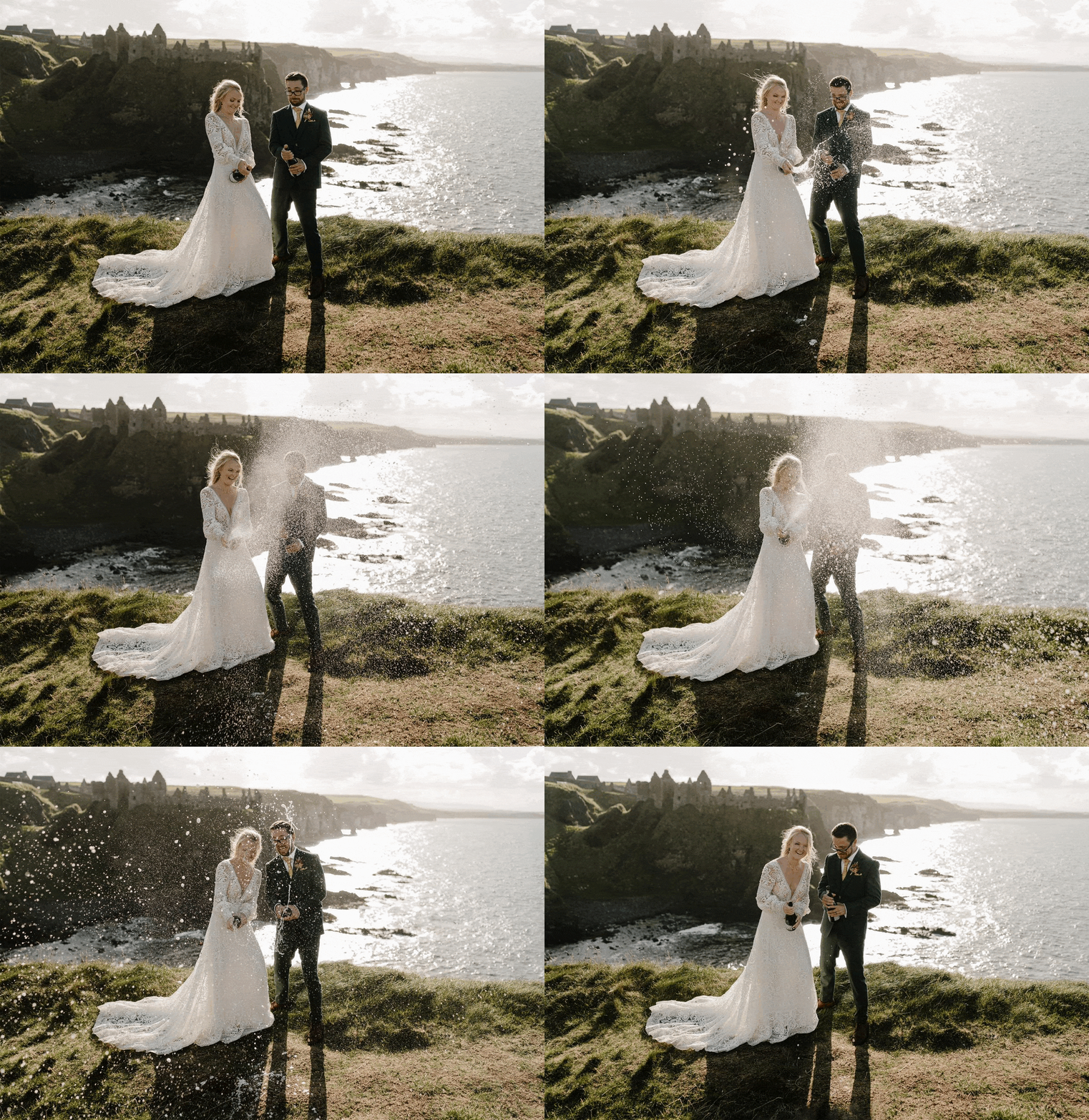
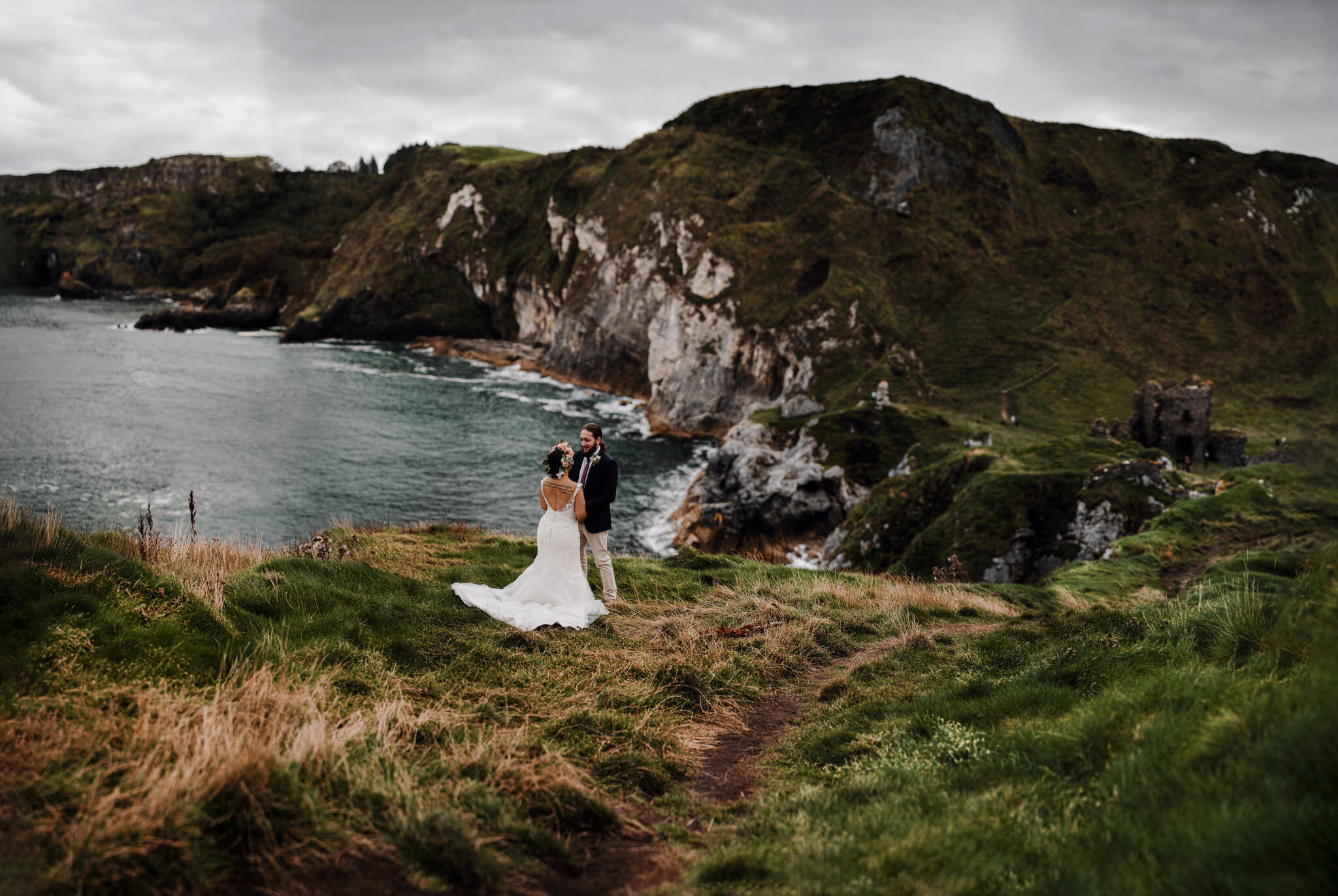
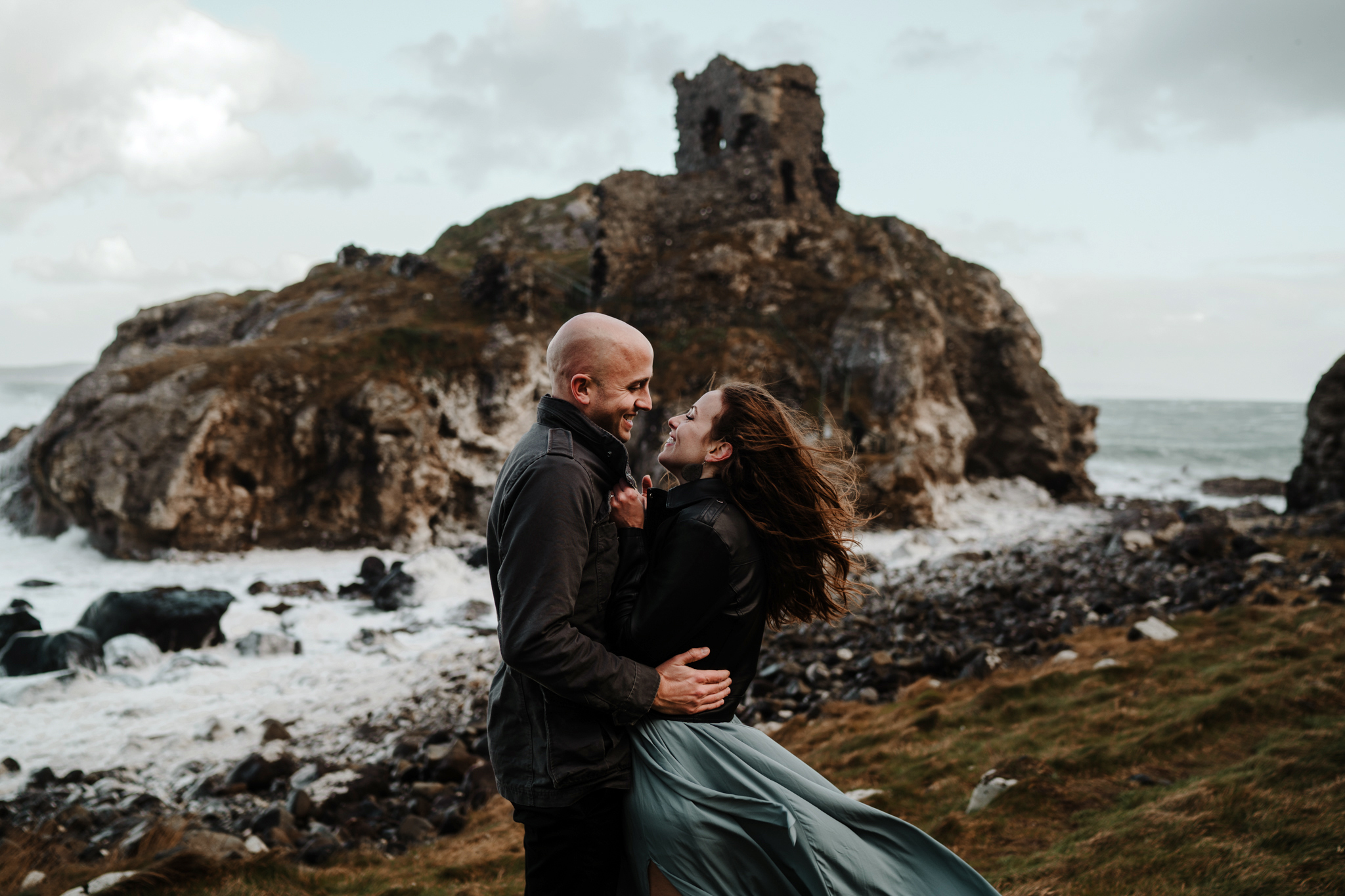
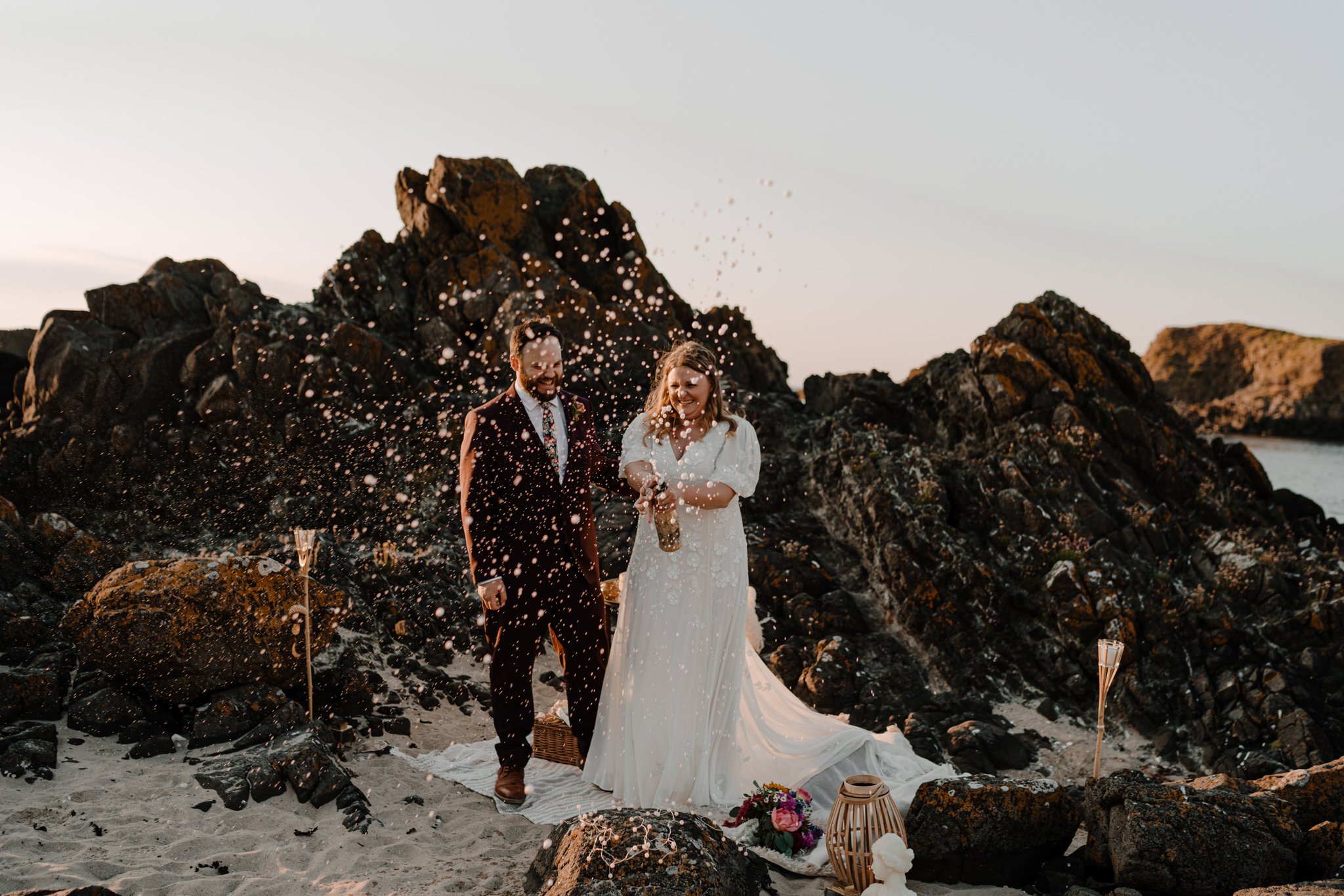
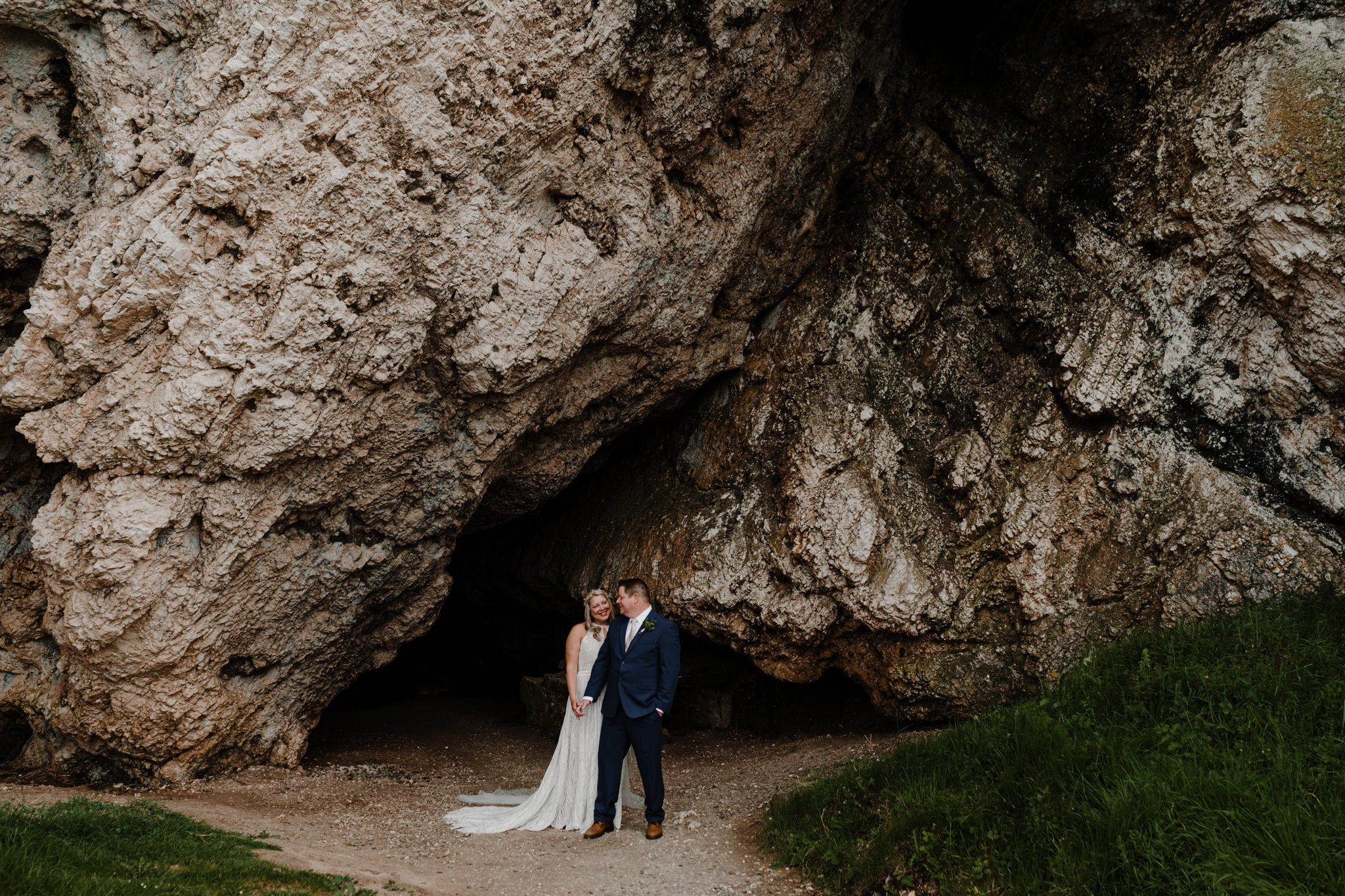
Where to Elope: The Locations
The North Antrim coast has more exceptional elopement locations per mile than anywhere else I’ve worked. These are the ones I know best.
Dunluce Castle
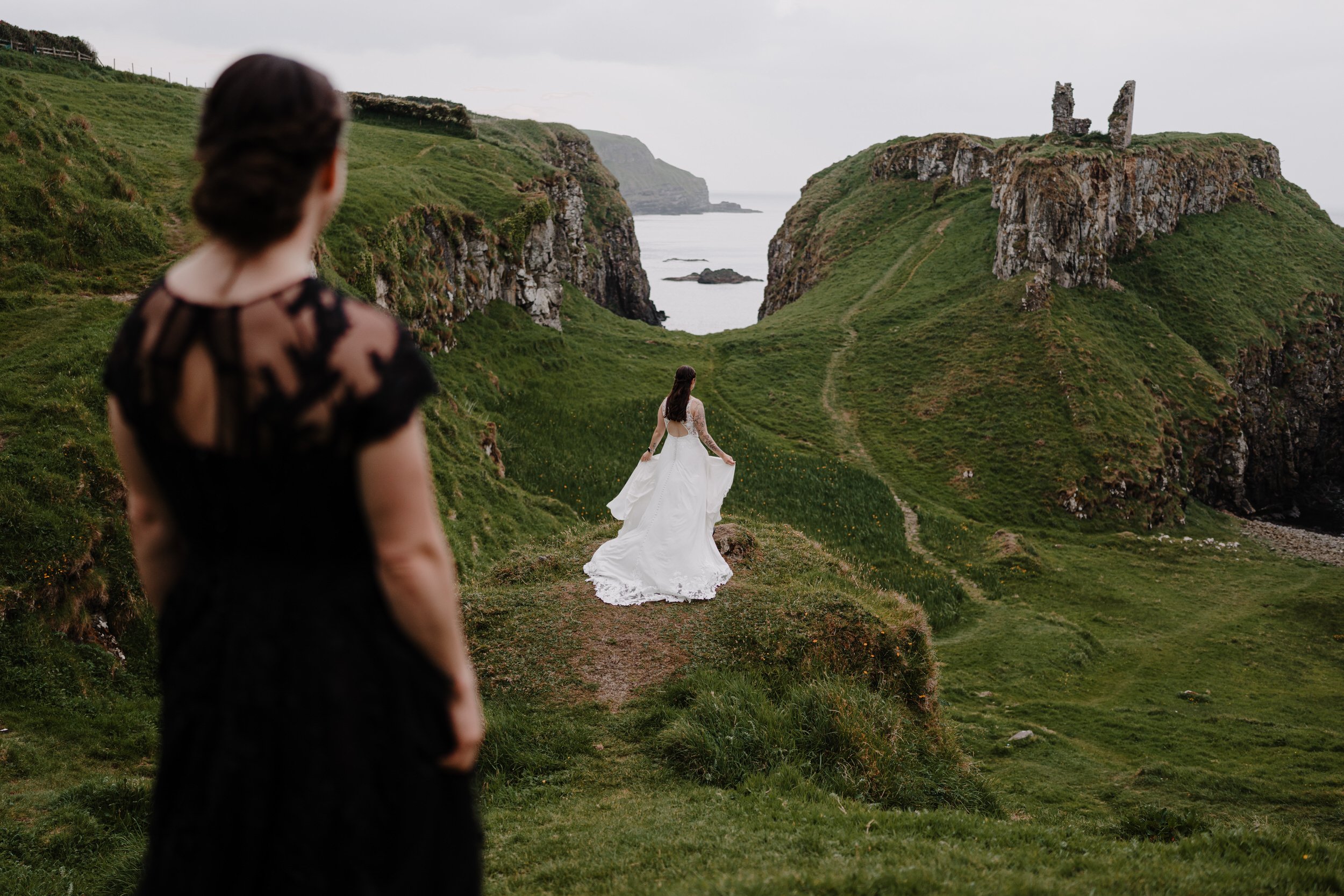
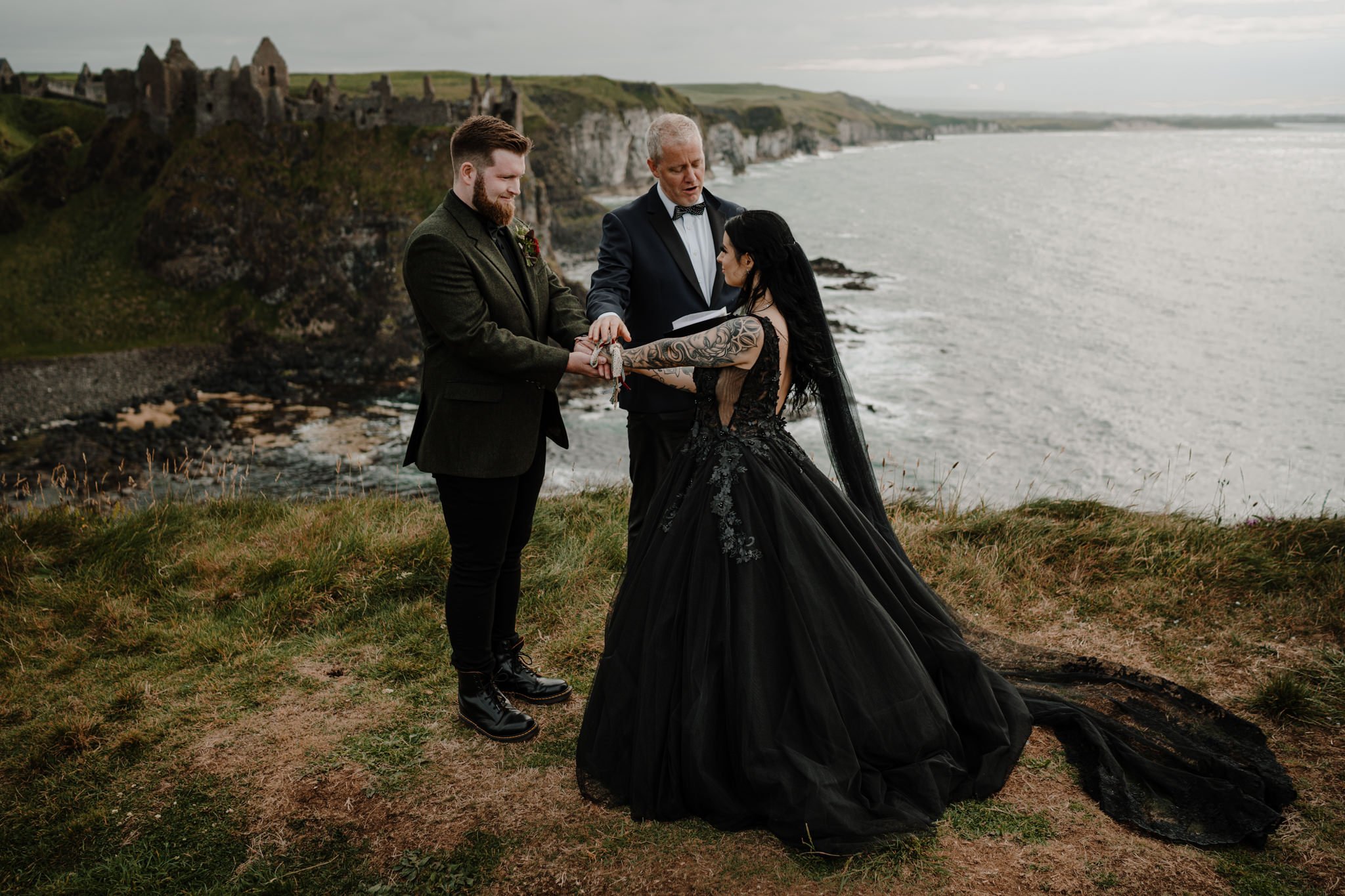
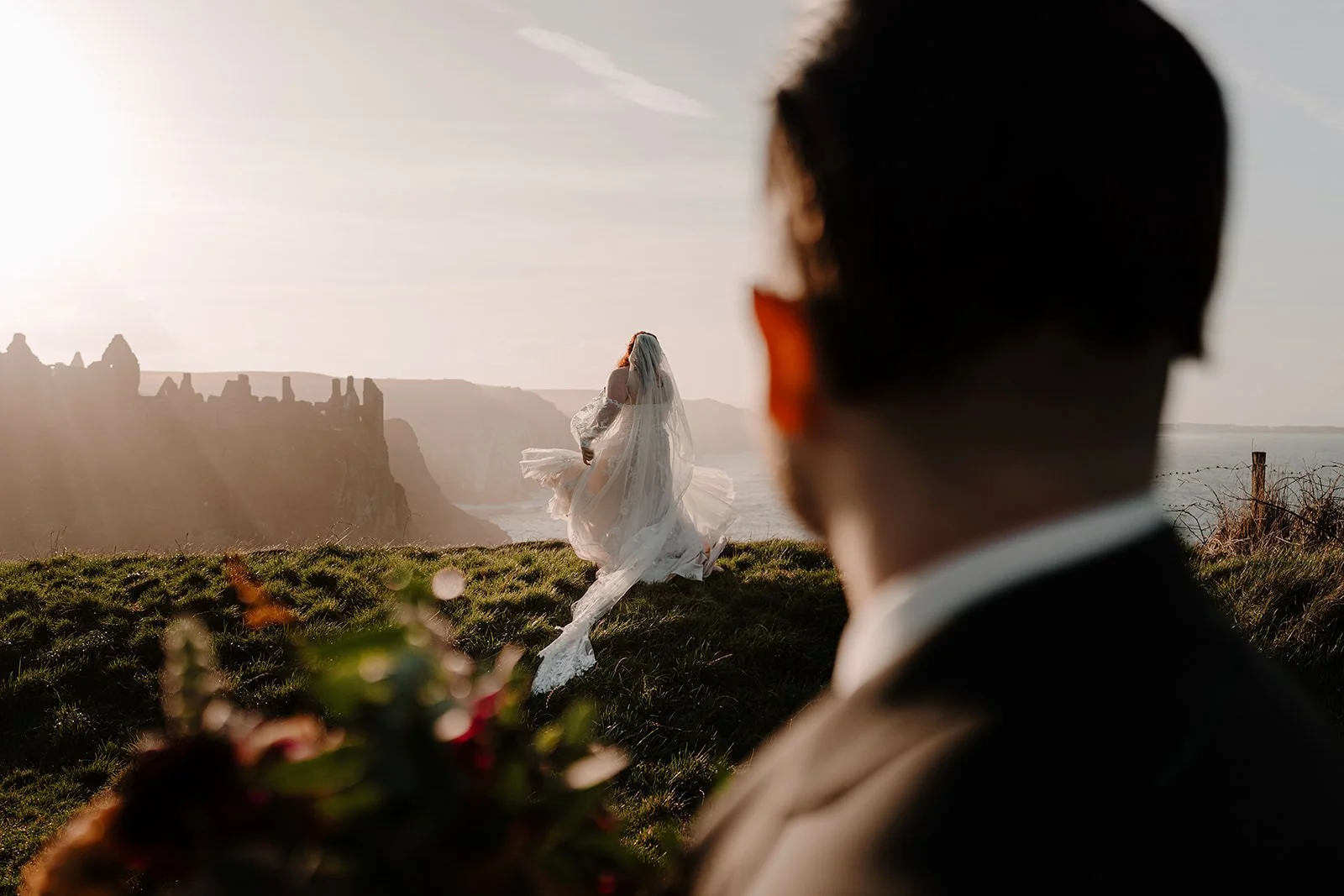
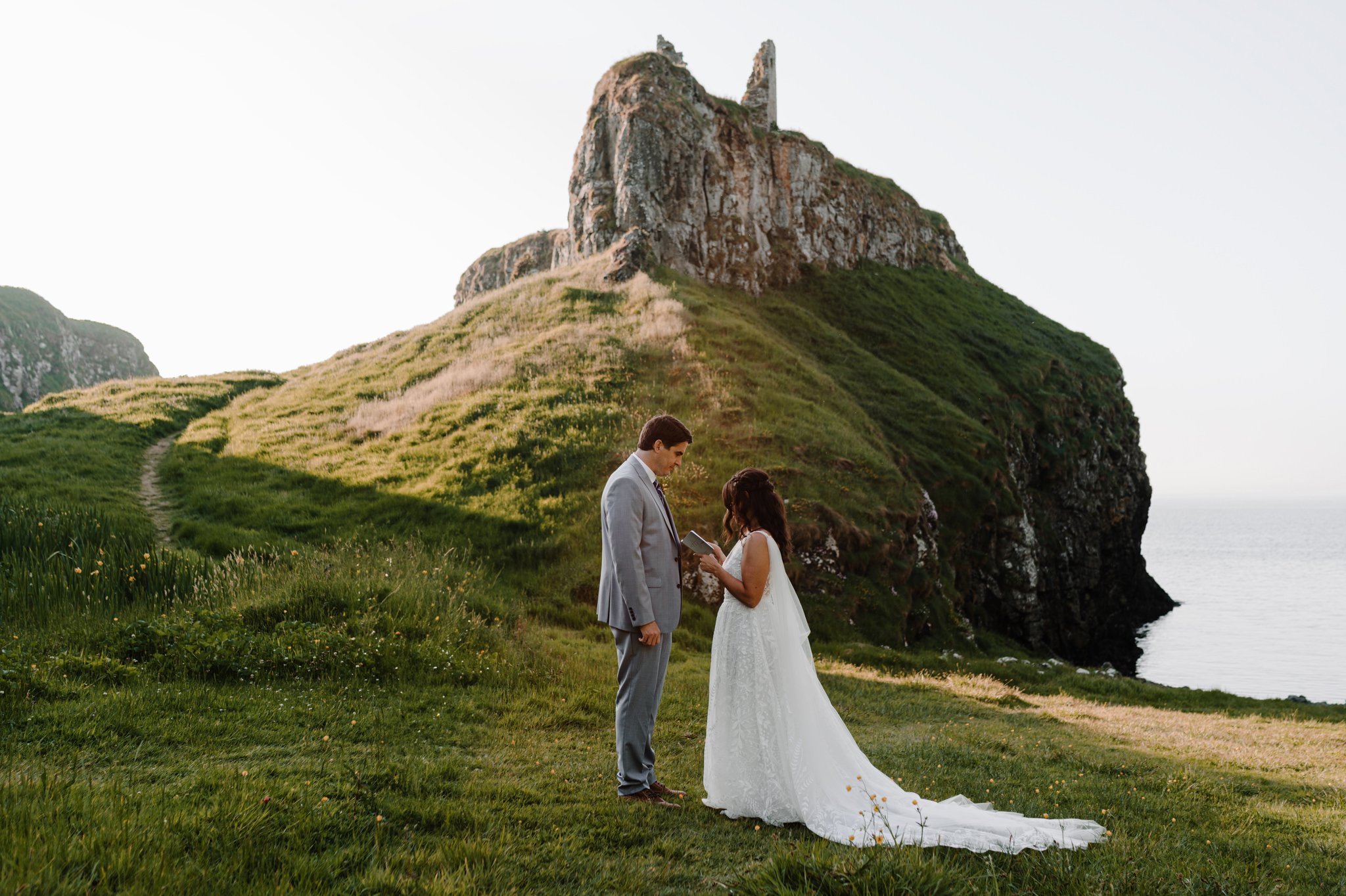
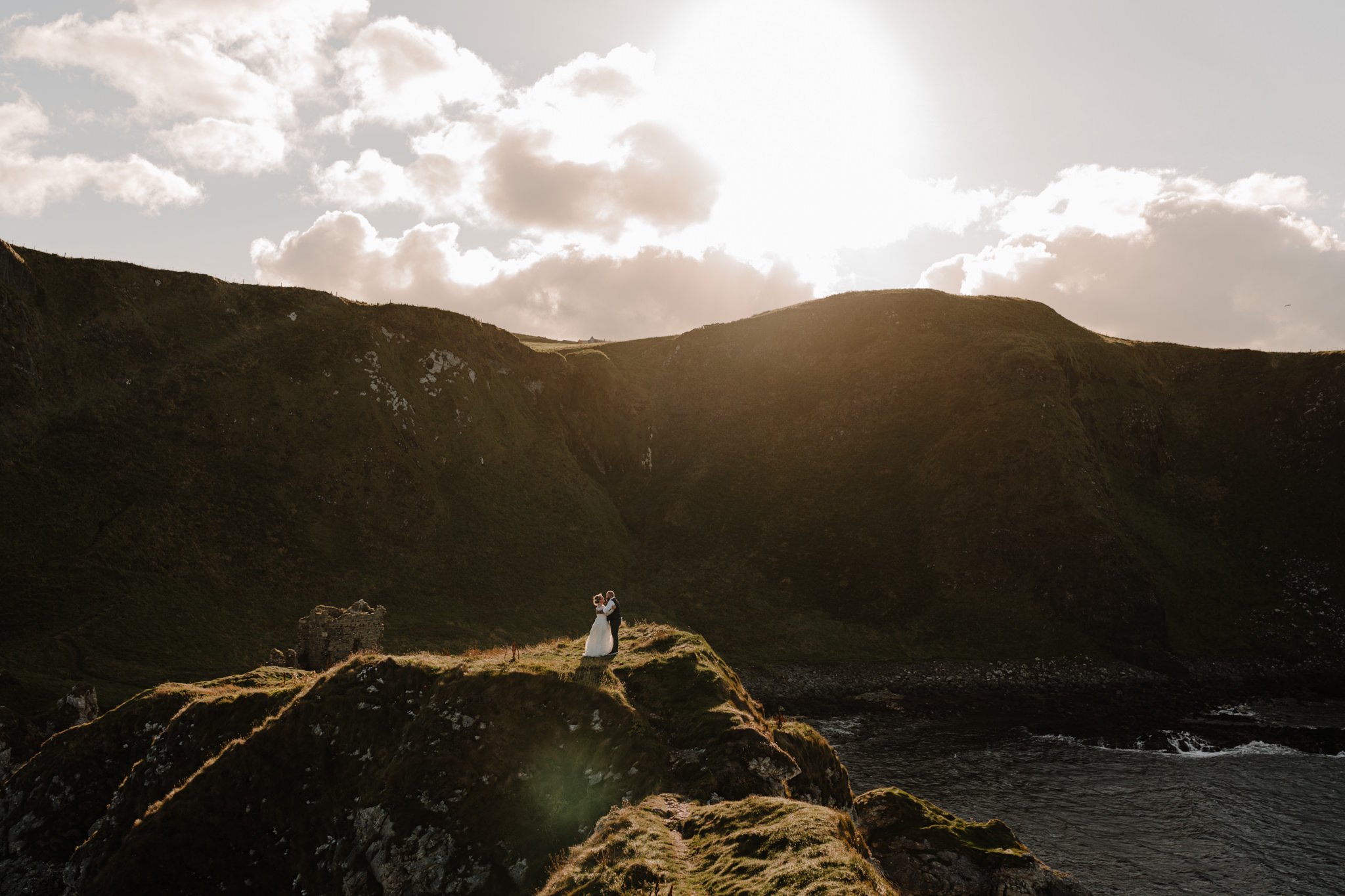
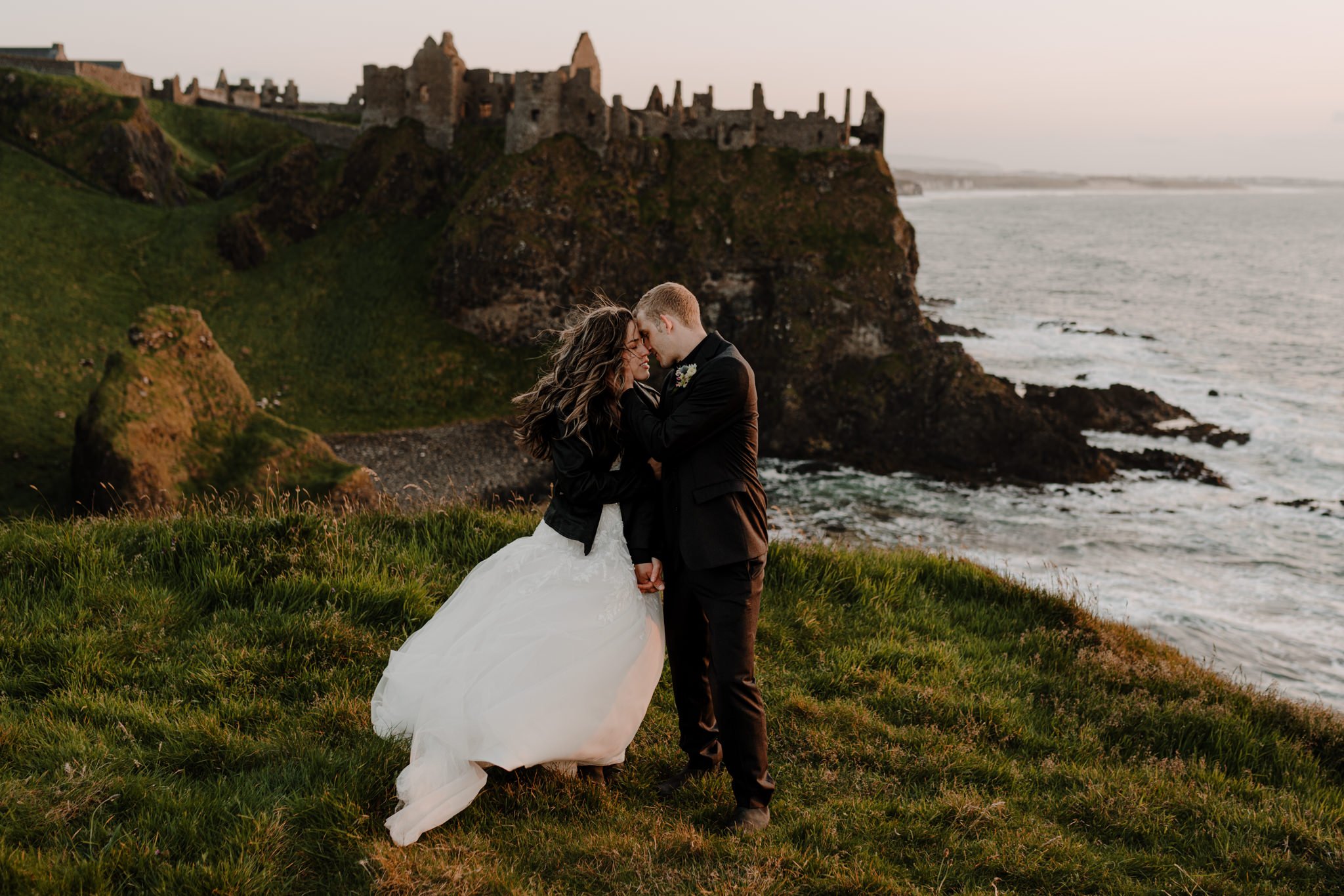
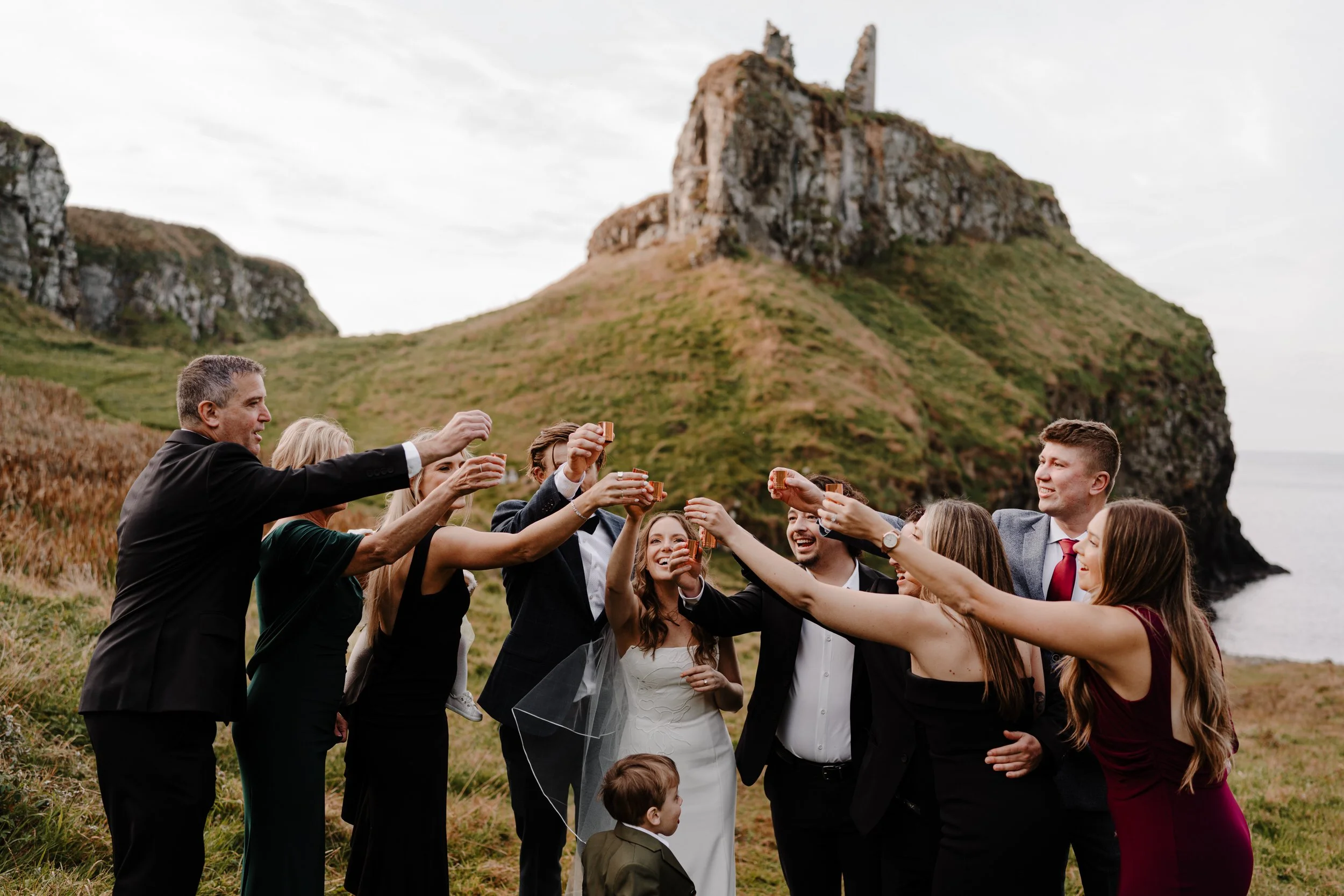
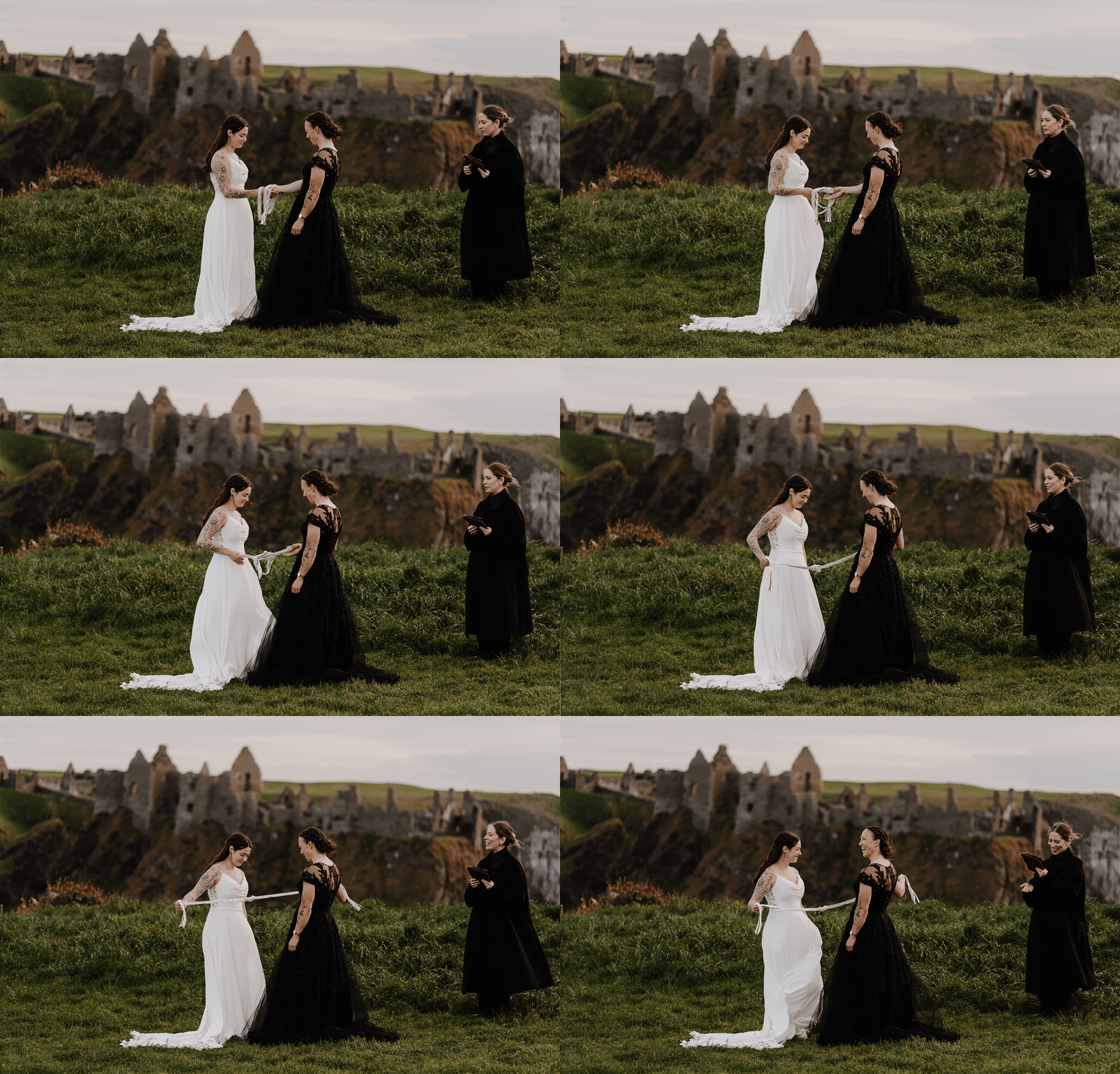
The most dramatic castle ruin in Ireland, sitting on a basalt stack above the Atlantic with the sea visible on three sides. The privately owned field overlooking the castle is available to book for exclusive use and is one of the finest ceremony spots in Northern Ireland.
The field hire starts at £350 for a 2-hour window, which includes transport, toilet facilities, a cottage space for brief preparation, and a whiskey toast after. It’s run by a wonderful farmer, who has been hosting elopements here for years.
Dunluce is theatrical. It photographs like a film set because it practically is one. For couples who want their elopement to look cinematic, this is the location.
Kinbane Castle
A 16th-century tower on a narrow limestone promontory jutting into the Atlantic. Free to visit, no booking, no fee, no permit. You descend 140 stone steps to reach it.
The descent is the beginning of the day. By the time you reach the bottom, something has already happened to you. The sea is on three sides. Rathlin Island and, on a clear day, Scotland are visible across the water. There is almost never anyone else there.
Kinbane doesn’t have ceremony infrastructure. It has something better: genuine, unmanaged wildness. I’d recommend a symbolic ceremony here
Dunseverick Castle
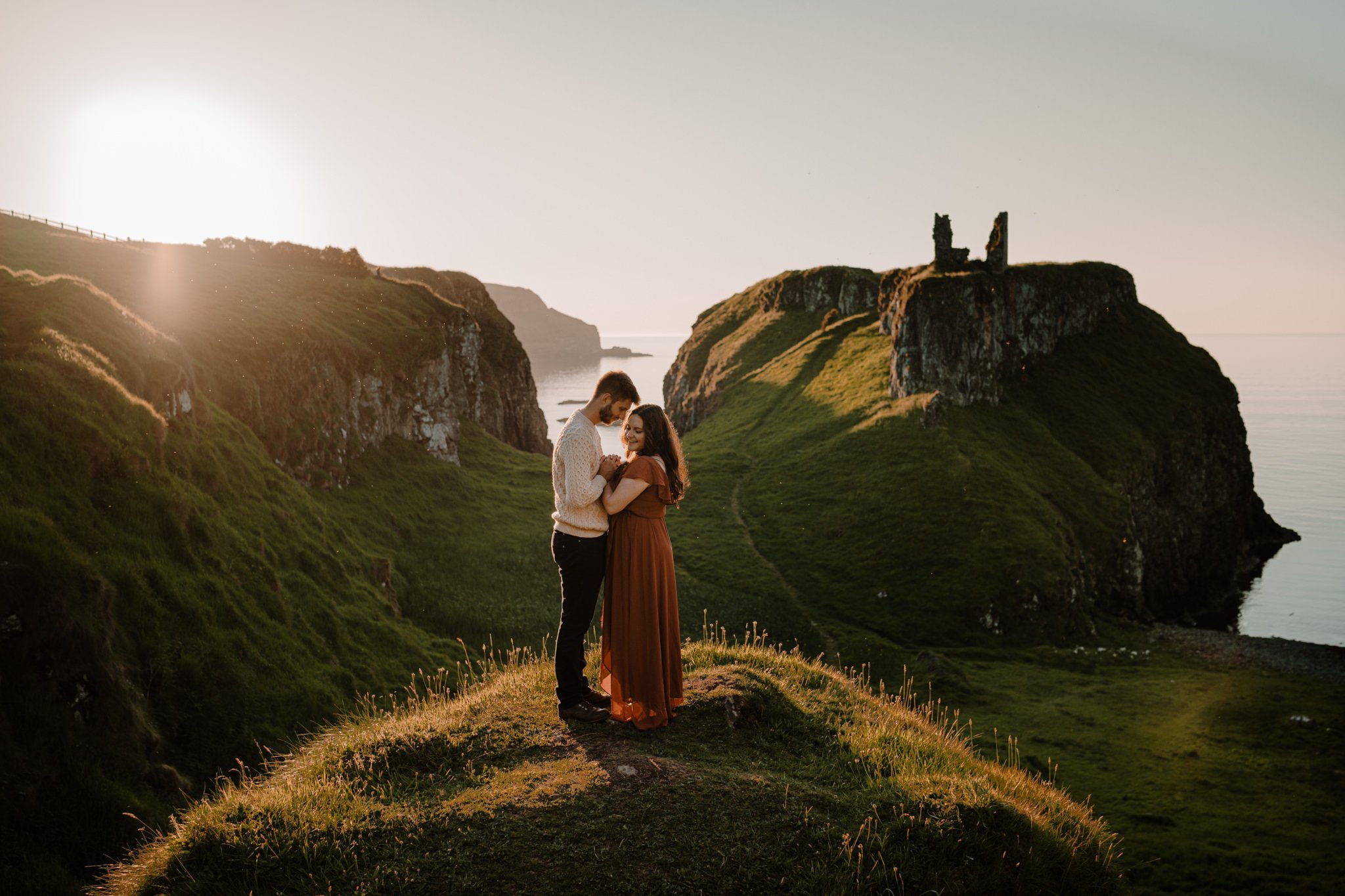
The ruins of one of Ireland’s oldest castles, right at the cliff edge on the North Antrim coast. Free, open, and entirely undervisited. The sea below is loud in any weather. The headland feels like the end of something. For evening portraits or a symbolic ceremony in the iconic valley with nobody else around, Dunseverick is one of my favourite places on the entire coast.
Ballintoy
The harbour, the white limestone coastline, the extraordinary light that falls across it in the afternoon. Game of Thrones fans will recognise it as the Iron Islands. In real life it’s quieter than any of the major sites and more beautiful than most. Walk from the harbour in either direction and you’ll find something. Part of ballintoy is privately owned farming land and this is also bookable for a ceremony or portraits.
The Causeway Coast Path
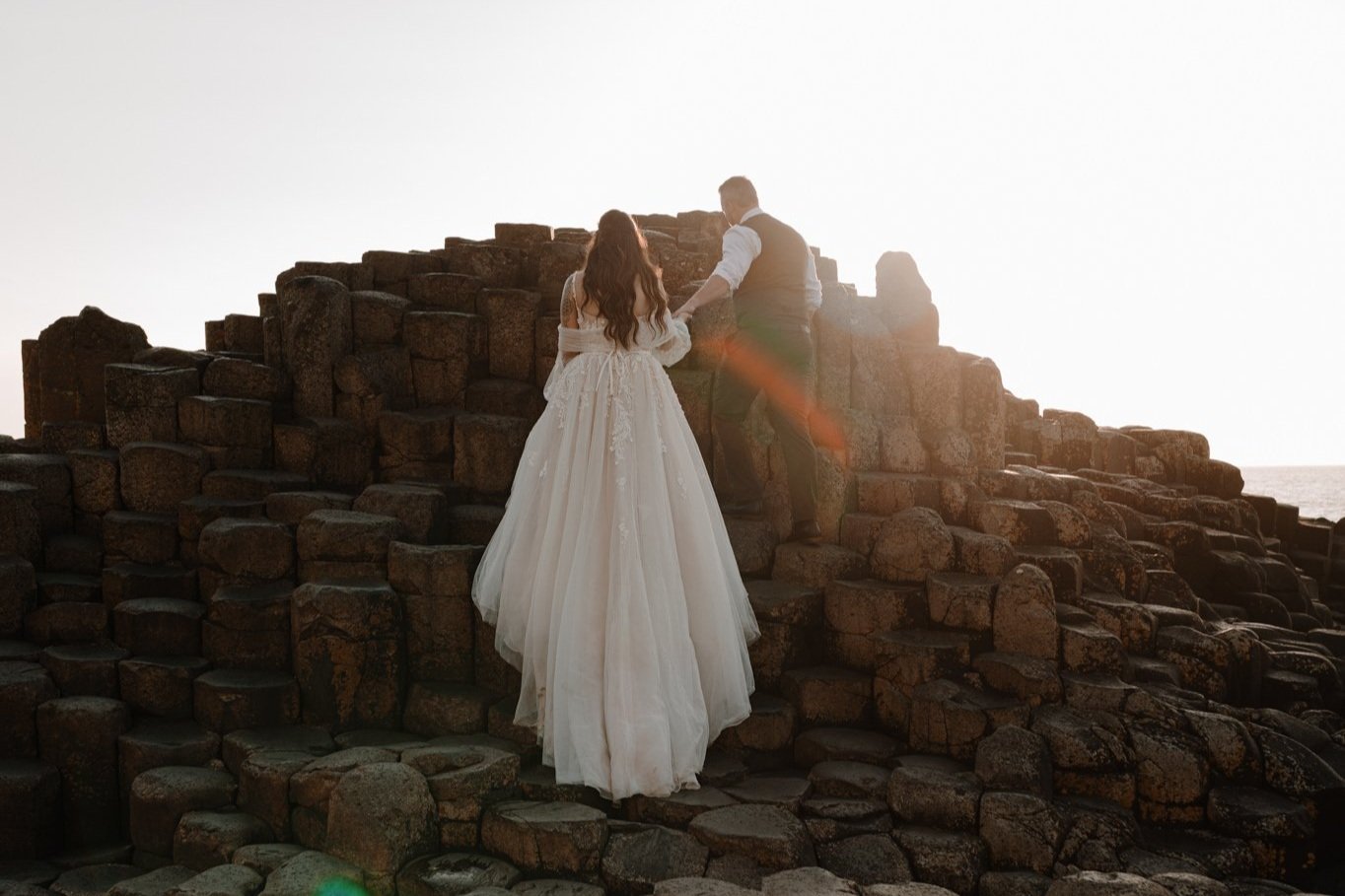
The walking route between Dunseverick and the Giant’s Causeway passes cliff edges, sea stacks, and headlands that most visitors never reach. In spring and early autumn, with the wildflowers out and the coast quiet, this walk as part of an elopement day produces some of the most extraordinary photographs I’ve taken. Allow 2.5 to 3 hours and do it, private access can also be arranged for a fee if the hike isnt your thing!
Game of Thrones locations
If you’re coming partly because of the show, here’s what the locations actually look like in real life.
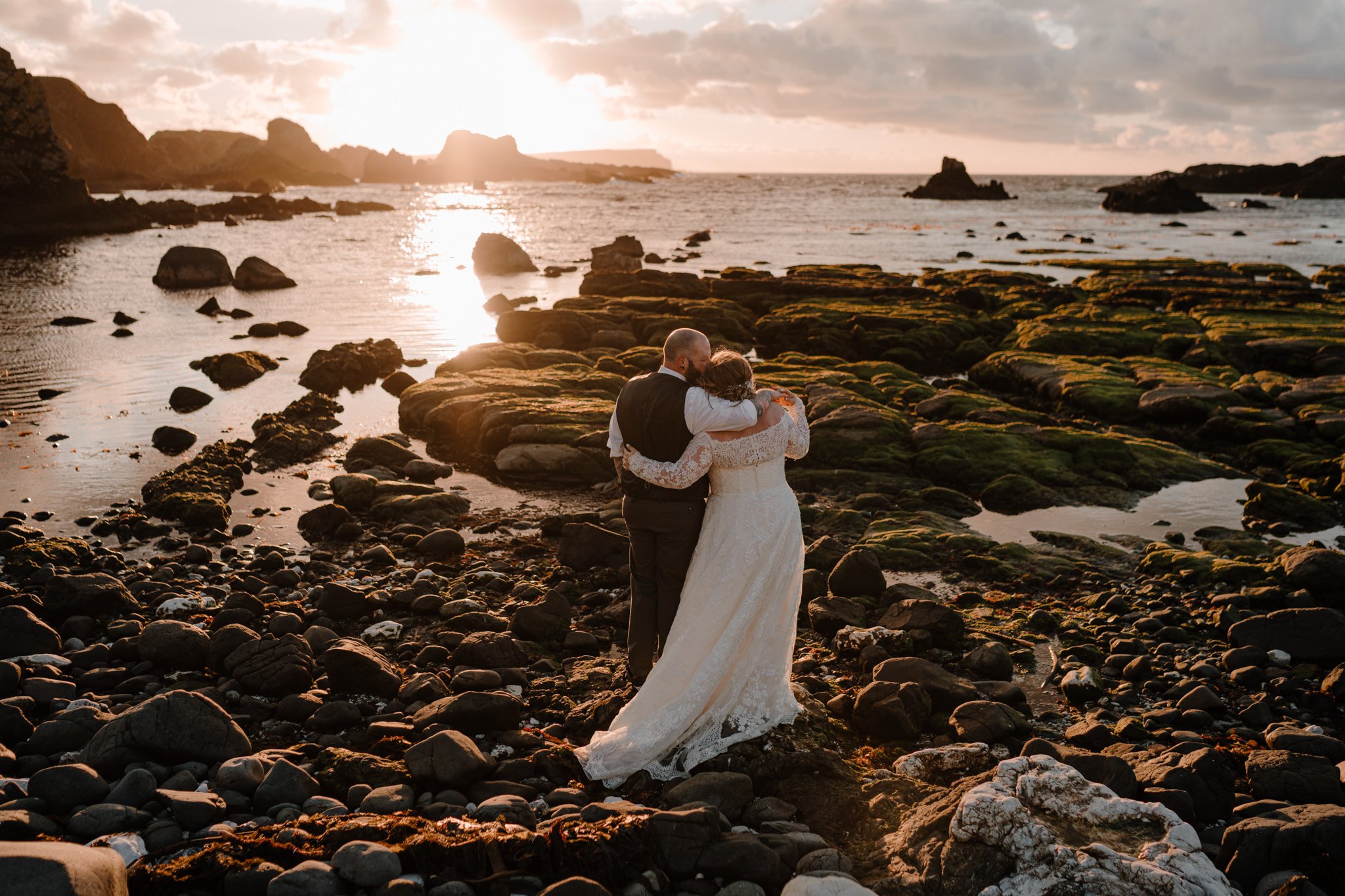
Ballintoy Harbour was the Iron Islands. A tiny working harbour with dramatic sea stacks, black rock, and caves. Extraordinary for portraits as part of a wider Causeway Coast day.
Dunluce Castle appeared as inspiration for House Greyjoy’s stronghold. Also one of the most dramatic castle ruins in Europe, perched on a basalt cliff above the Atlantic.
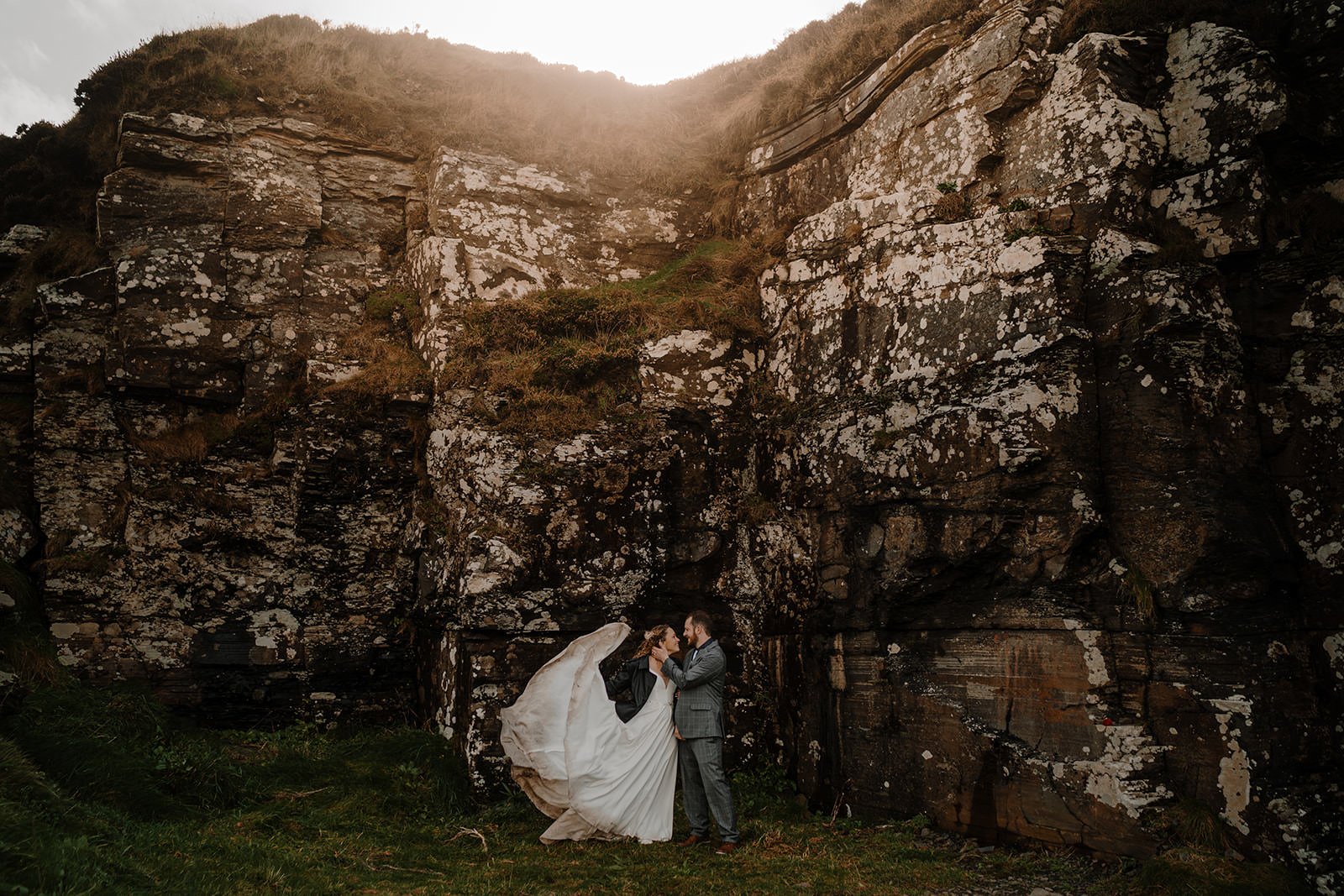
The dark hedges the most iconic GOT location, ill be honest on this one and say its just not worth it on an elopement day. after years of winter storms and rising tourist numbers it doesnt look or feel how it used to.
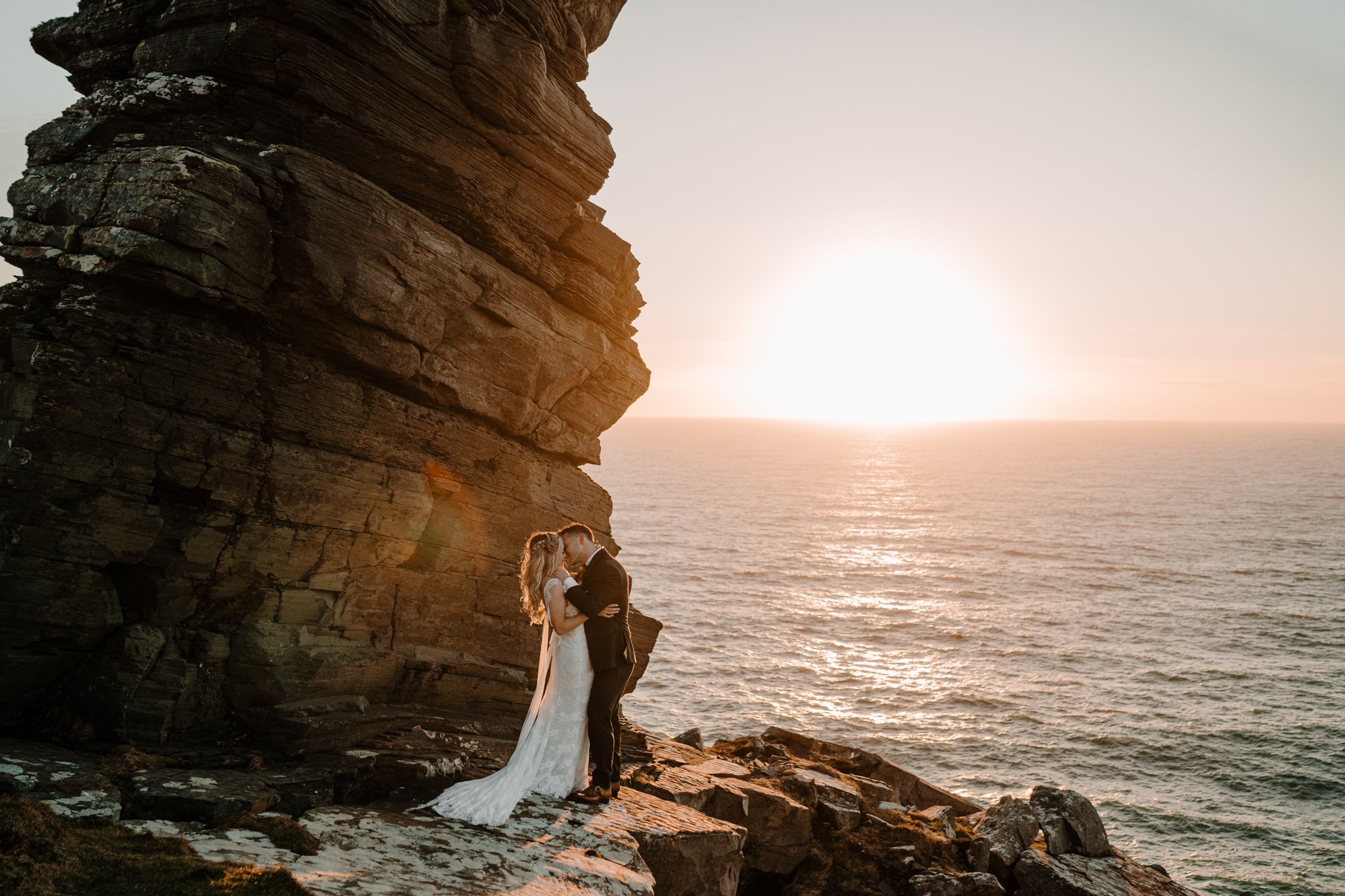

When to Elope: The Seasons
Every season on the Causeway Coast is a genuinely different experience. None of them is wrong. Each has its own dedicated guide with month-by-month detail.
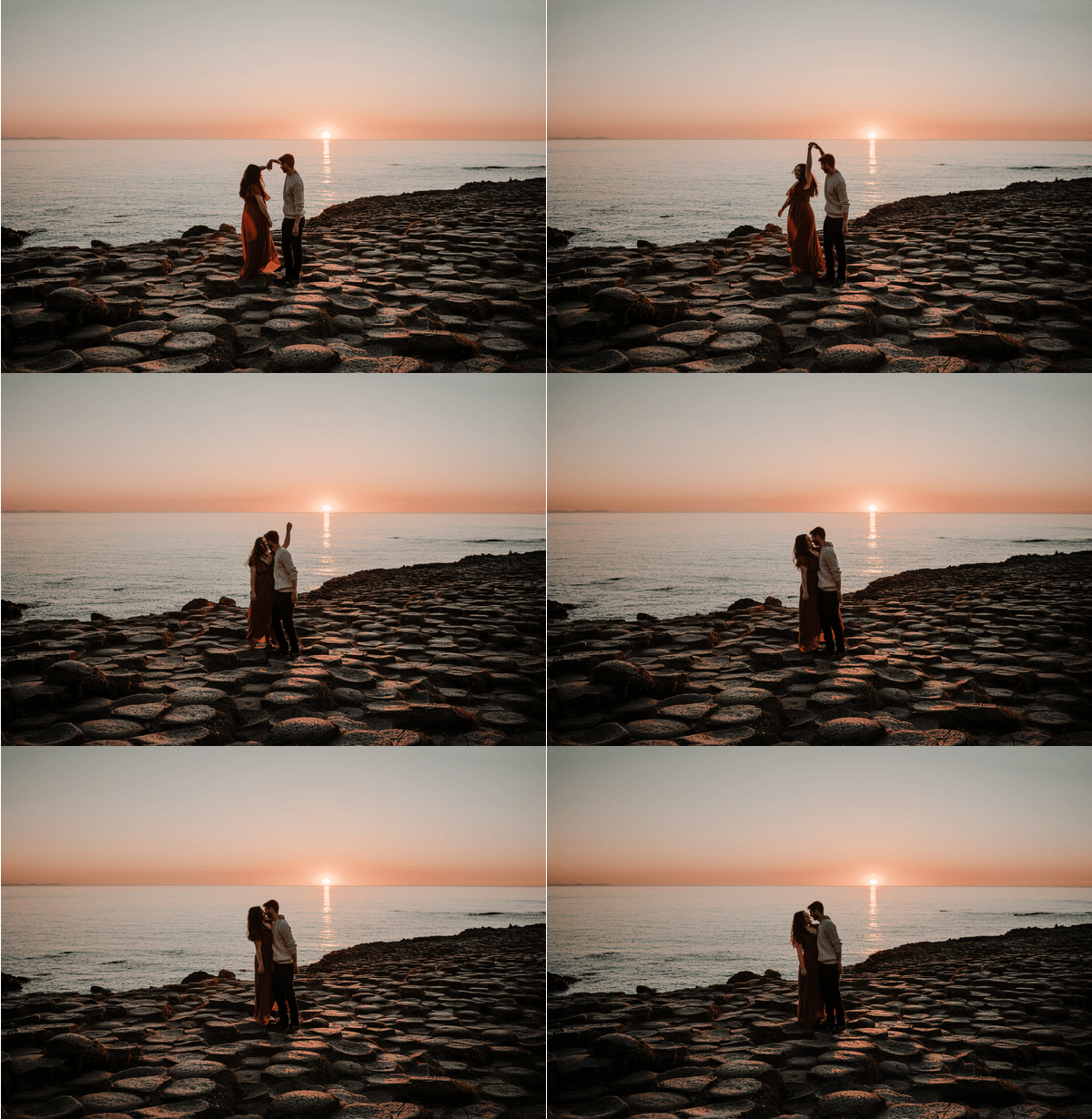
Summer is long light, warm evenings approaching 10pm in June, and the landscape at full saturation. The crowds require timing, not avoidance. Arrive at locations after 7pm and they’re almost empty. Summer rewards the couple who build the day around the evening and chase a sunset.
Autumn is my personal recommendation. October especially. The light is golden and directional from early afternoon through sunset. The coast has emptied from summer. All the atmosphere with none of the crowds. The best value of the year for light, quiet, and price combined.
Winter is for the couple who wants the most dramatic version of this. Short days, but the sun never climbs high enough to lose that golden quality, which means the entire day from roughly 10am is photographically extraordinary. Flights and accommodation are at their lowest prices of the year.
Spring is the season of momentum. The days are lengthening fast and visibly. The gorse blazes yellow on the headlands by April. The coast is still quiet. Everything is coming back to life, and you’re there for it.

How to Build Your Day
The structure of an elopement day is simpler than most couples expect. Here is the rough shape.
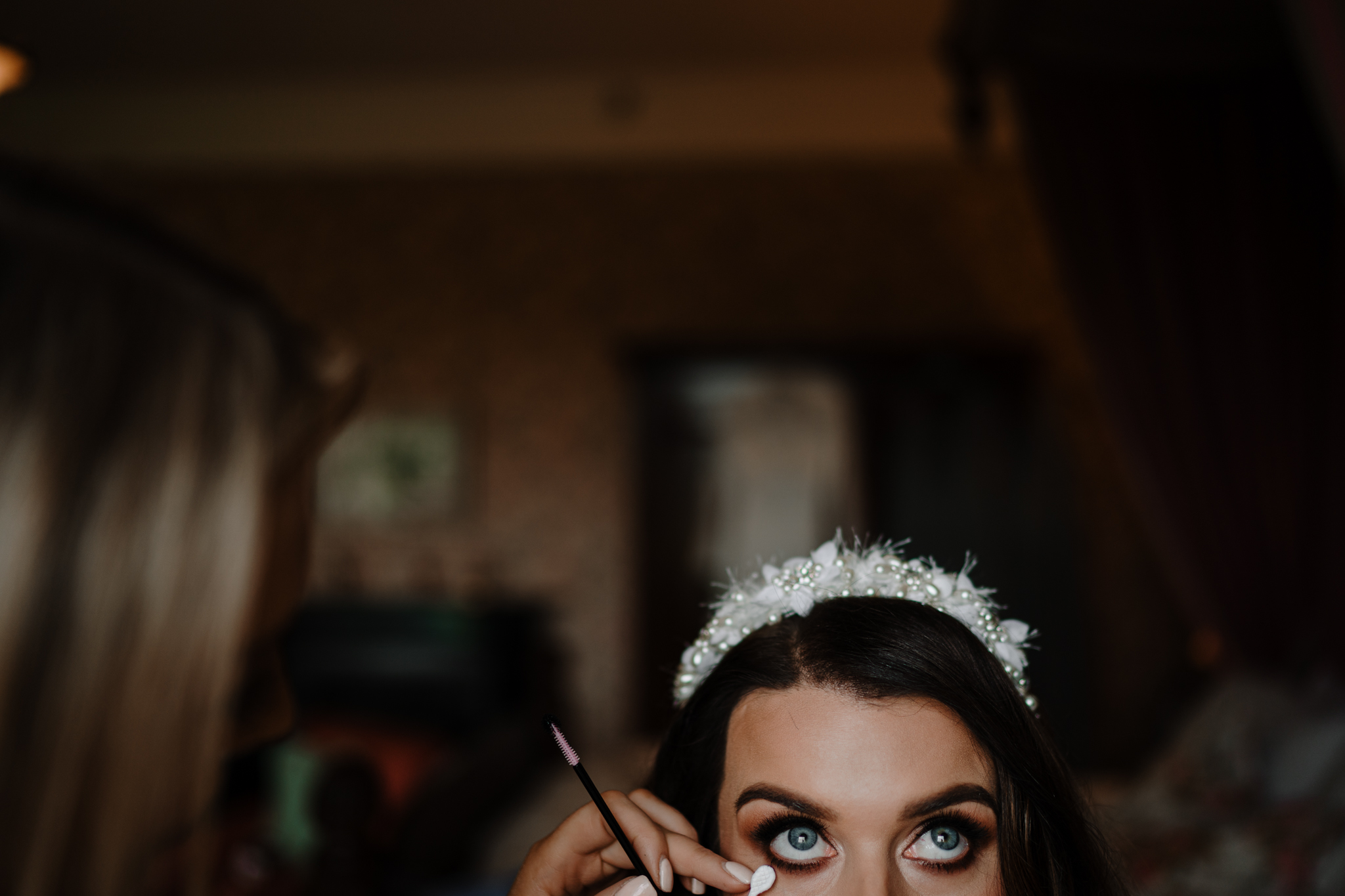
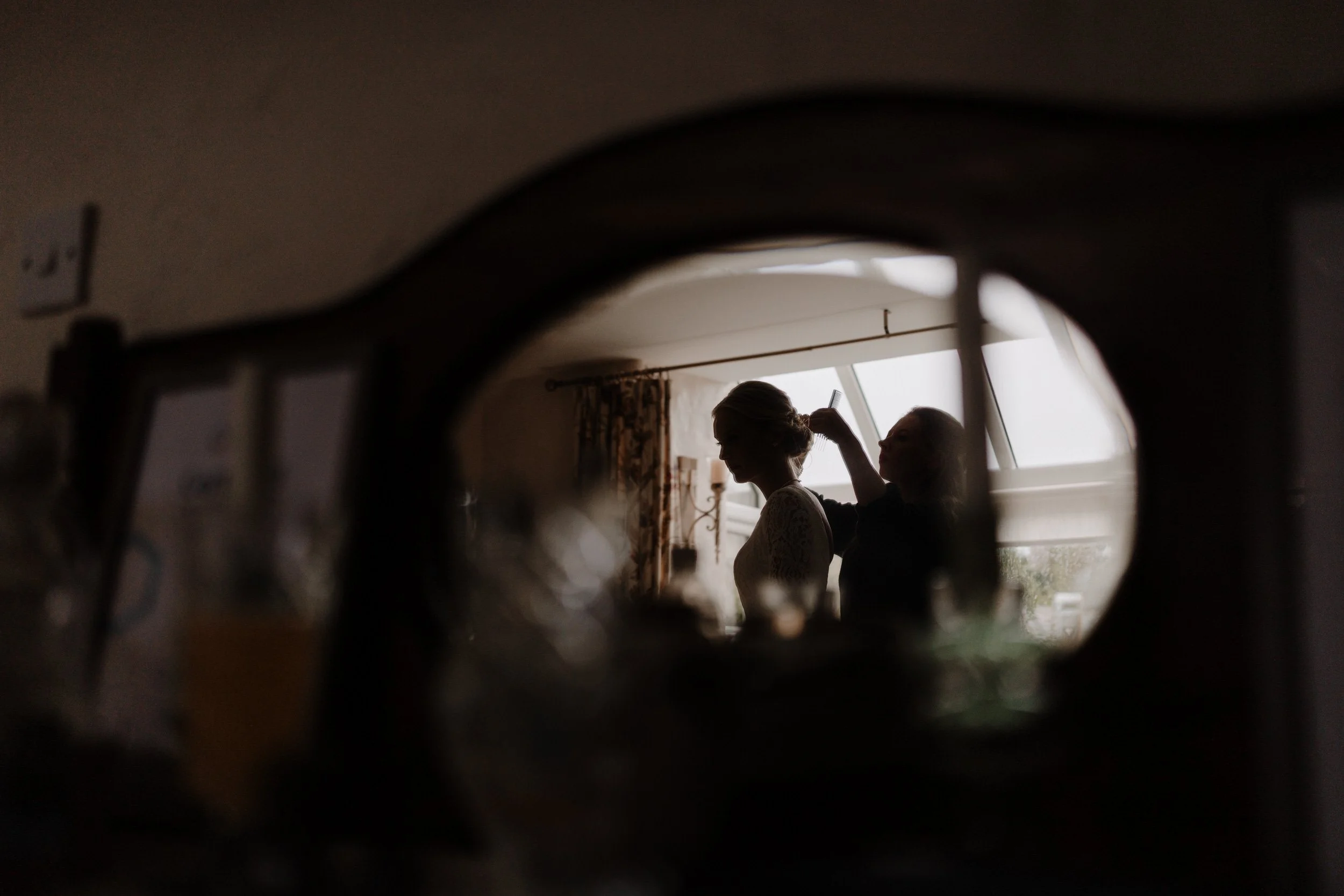
Morning: Get ready somewhere beautiful. A cottage near the coast, somewhere with good light and no rush. The getting-ready time is part of the day. Give it space.
Late morning / early afternoon: A first location. Somewhere to settle into the day together, to start feeling it. Dunseverick or Ballintoy or a coastal walk. No pressure, no ceremony yet.
Afternoon: A proper lunch. This sounds minor. It is not minor. A sit-down meal in the middle of the day, with a glass of something, is the pause that makes the second half feel different from the first. Don’t skip it.
Late afternoon / early evening: The ceremony. Your words. The thing you came for.
Golden hour: Portraits in the last light. This is when the coast does what it does.
Evening: pints. Somewhere that deserves the occasion. Somewhere with a view and a fire and good food.
Who You Need: The Vendors
A celebrant
For a symbolic ceremony, you don’t technically need a celebrant. Some couples write their own words and say them to each other alone. some couples have a friend or family member officiate, That’s valid and completely beautiful.
But a good celebrant is more than someone who reads words off a page. They write a ceremony that sounds like you. They hold the space. They know when to be quiet. They’ve done this enough times to manage the emotional weight and the timing without making it feel managed.
For a legal ceremony, you need a registered humanist celebrant, specifically registered through Northern Ireland Humanists (humanists.uk). Verify the registration. Celebrant fees run from £300 to £600.
A florist (optional but worth it)
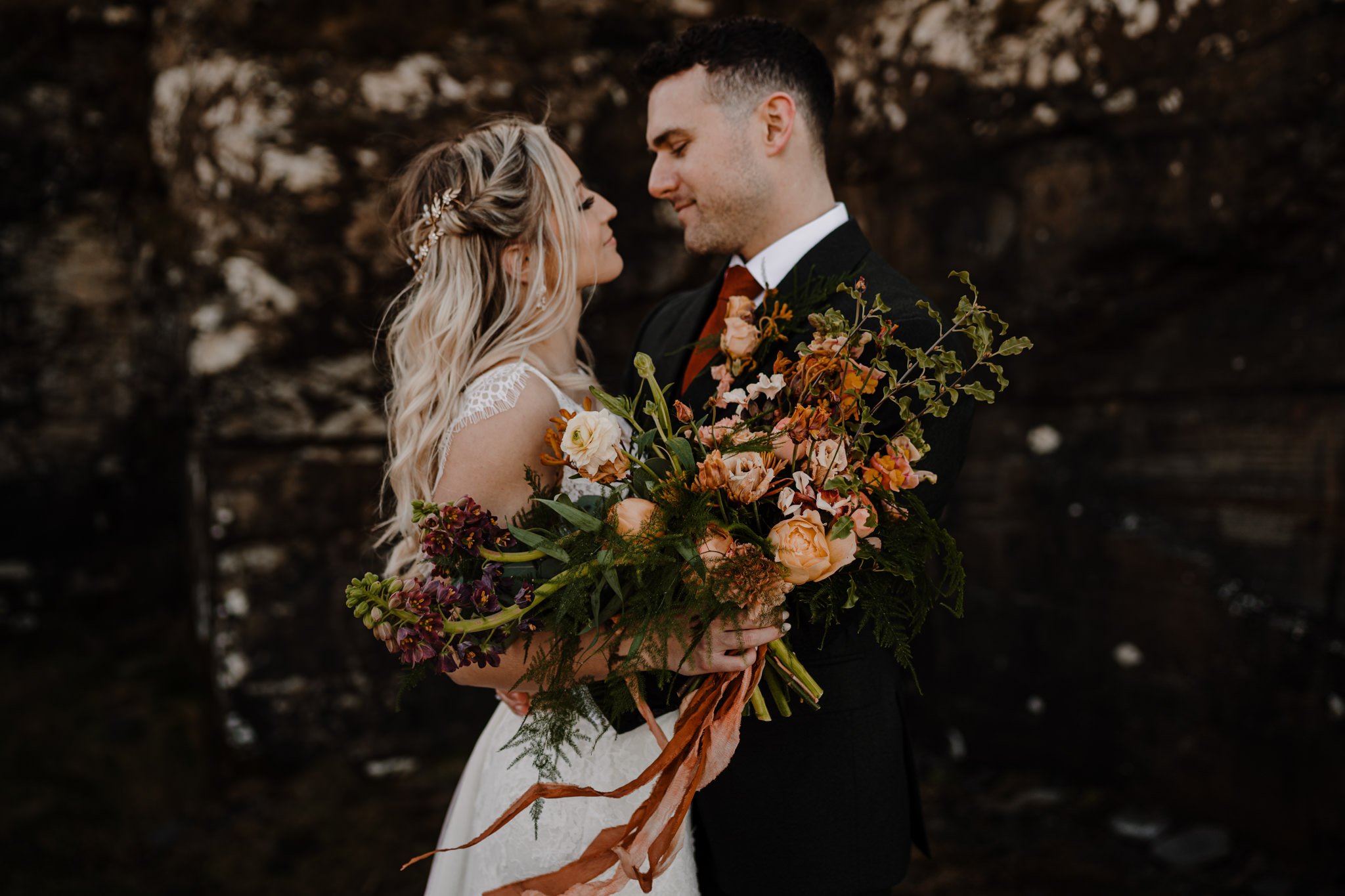
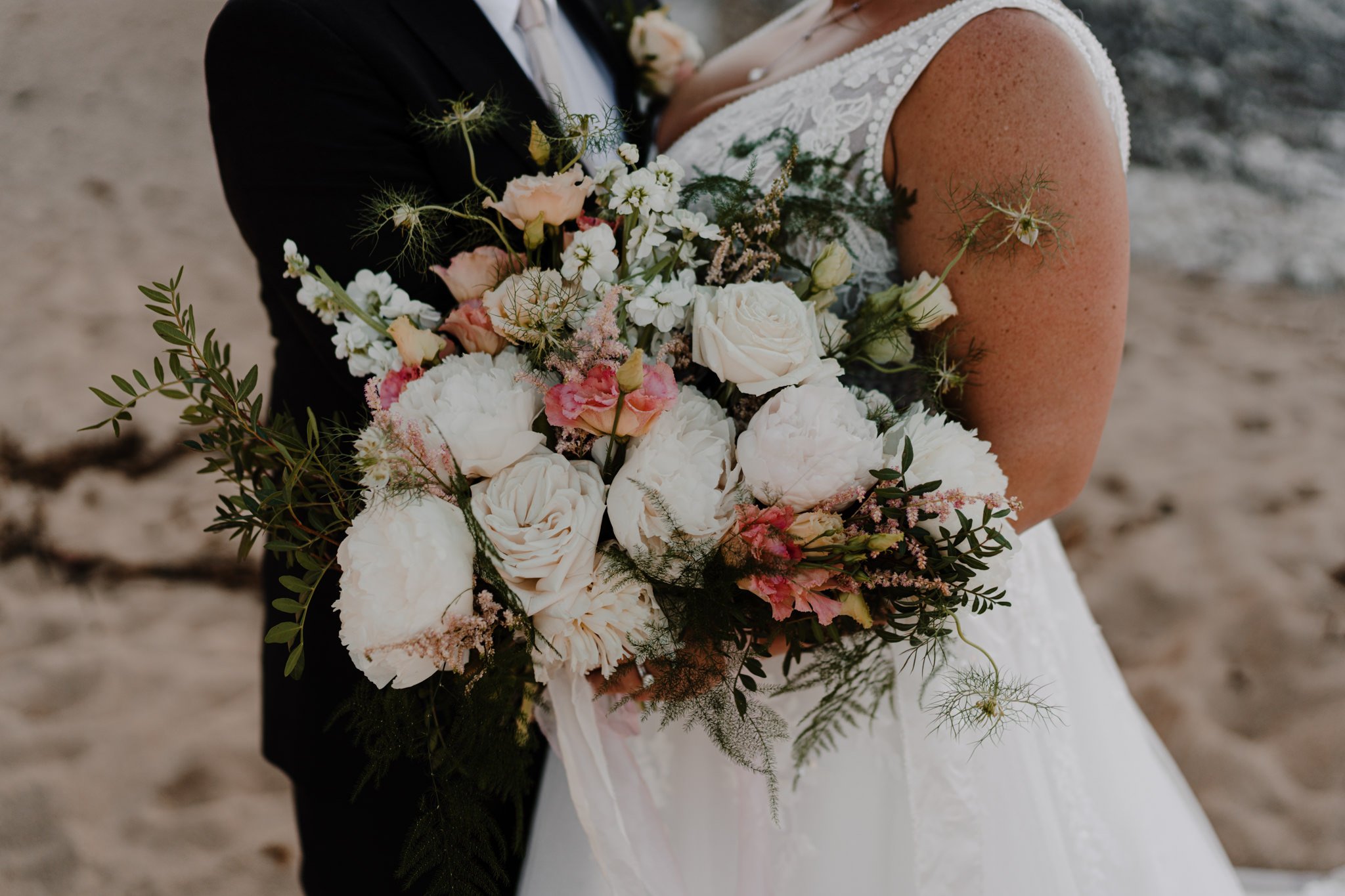
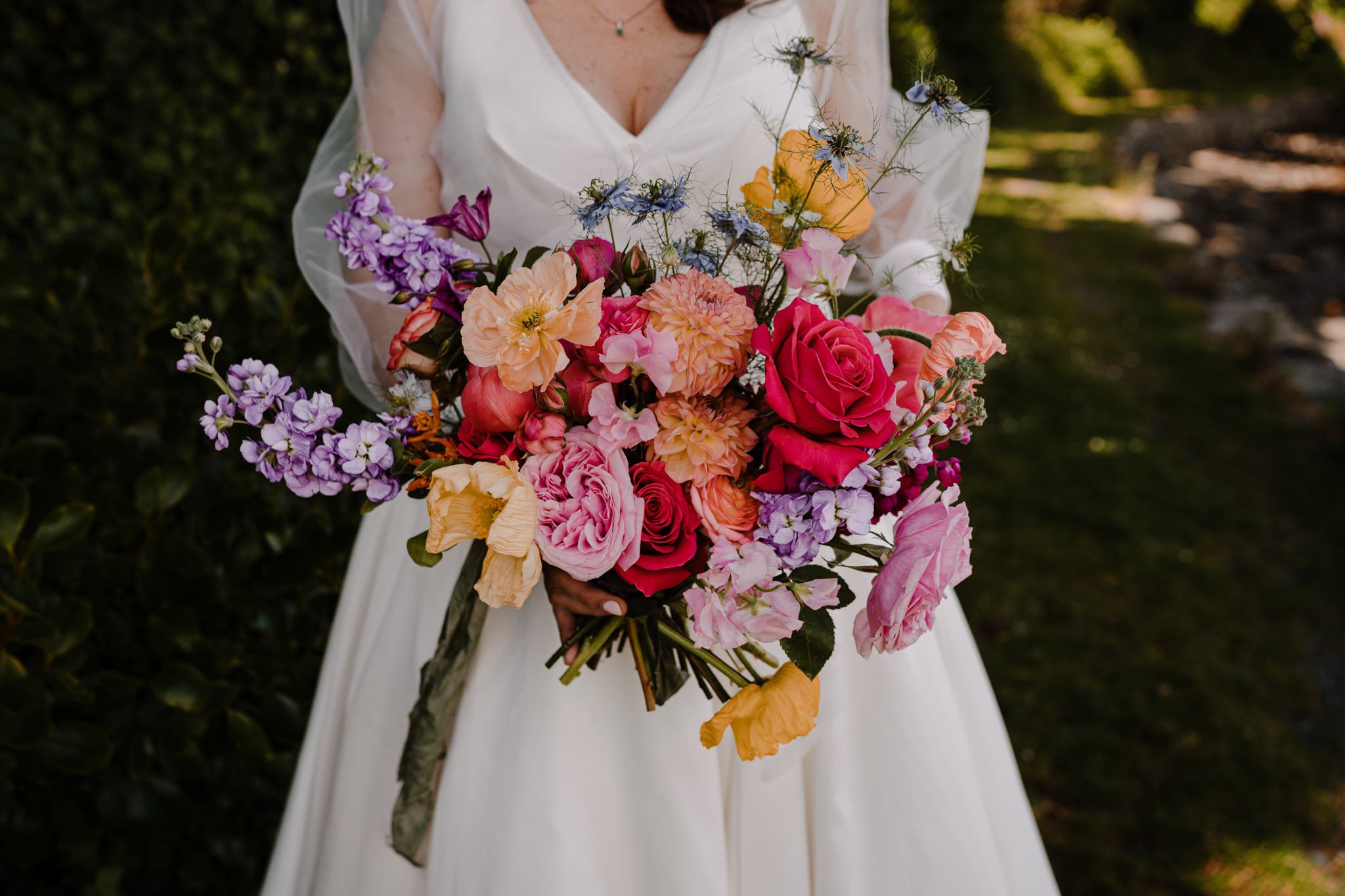
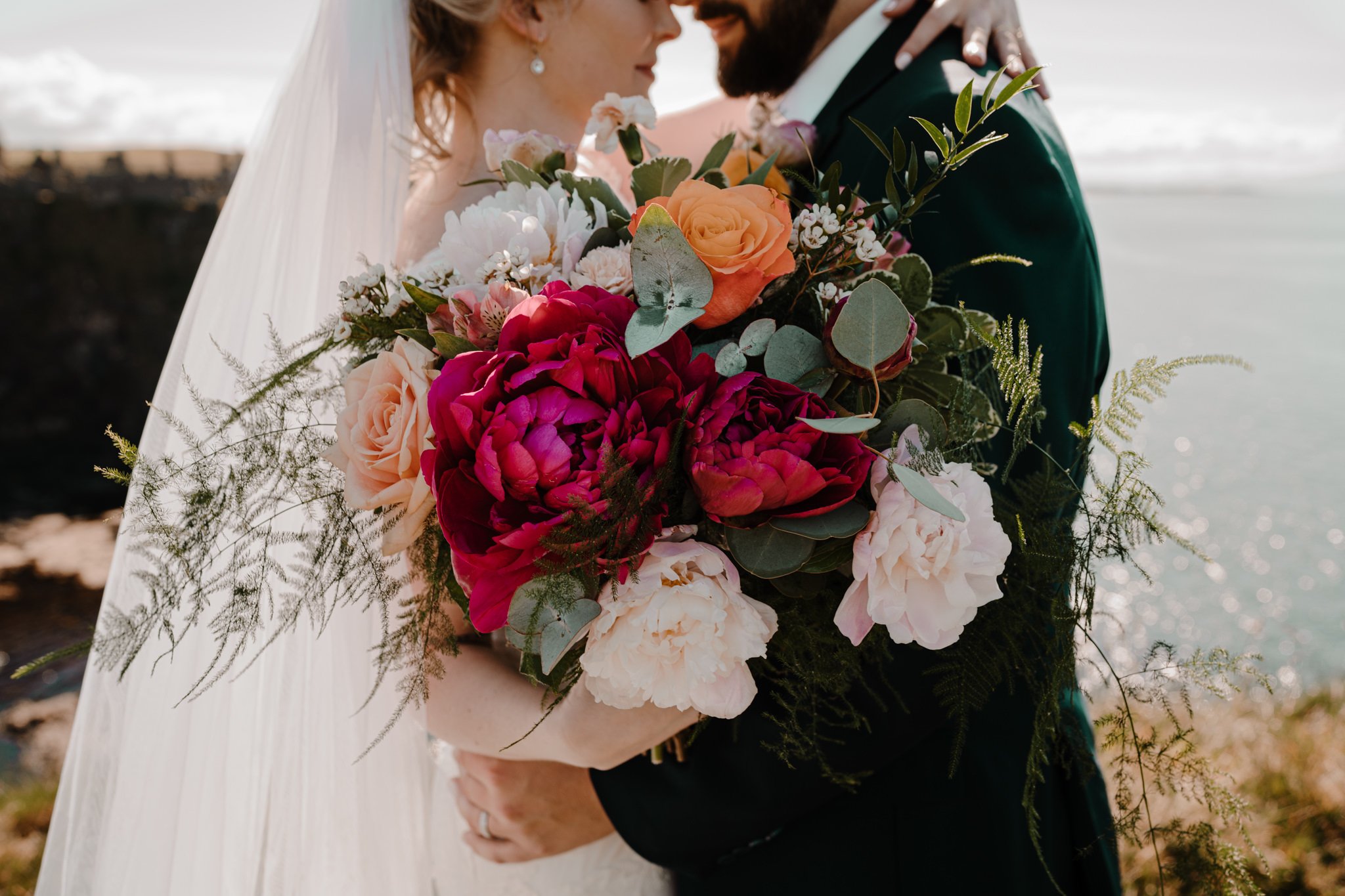
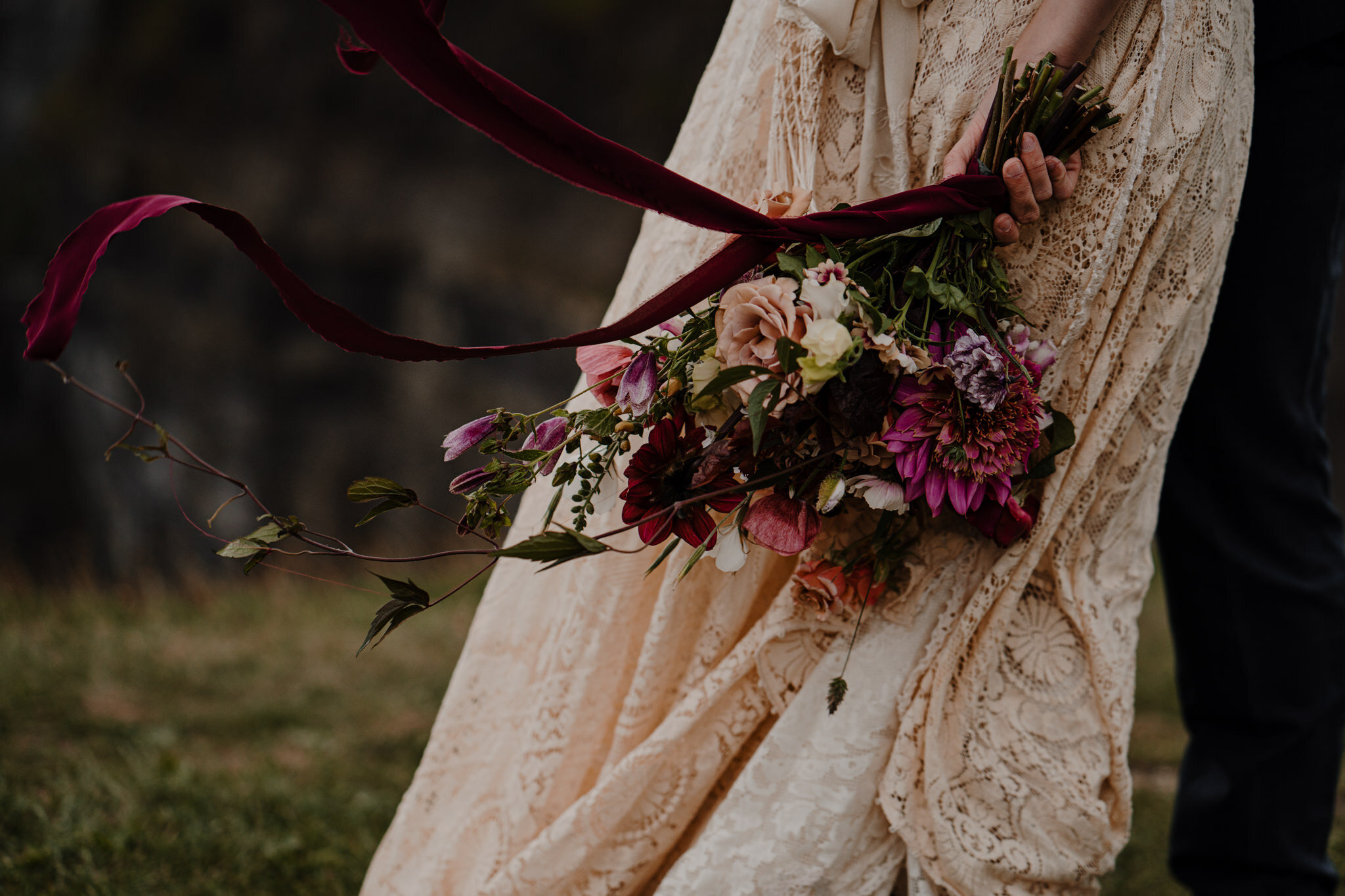
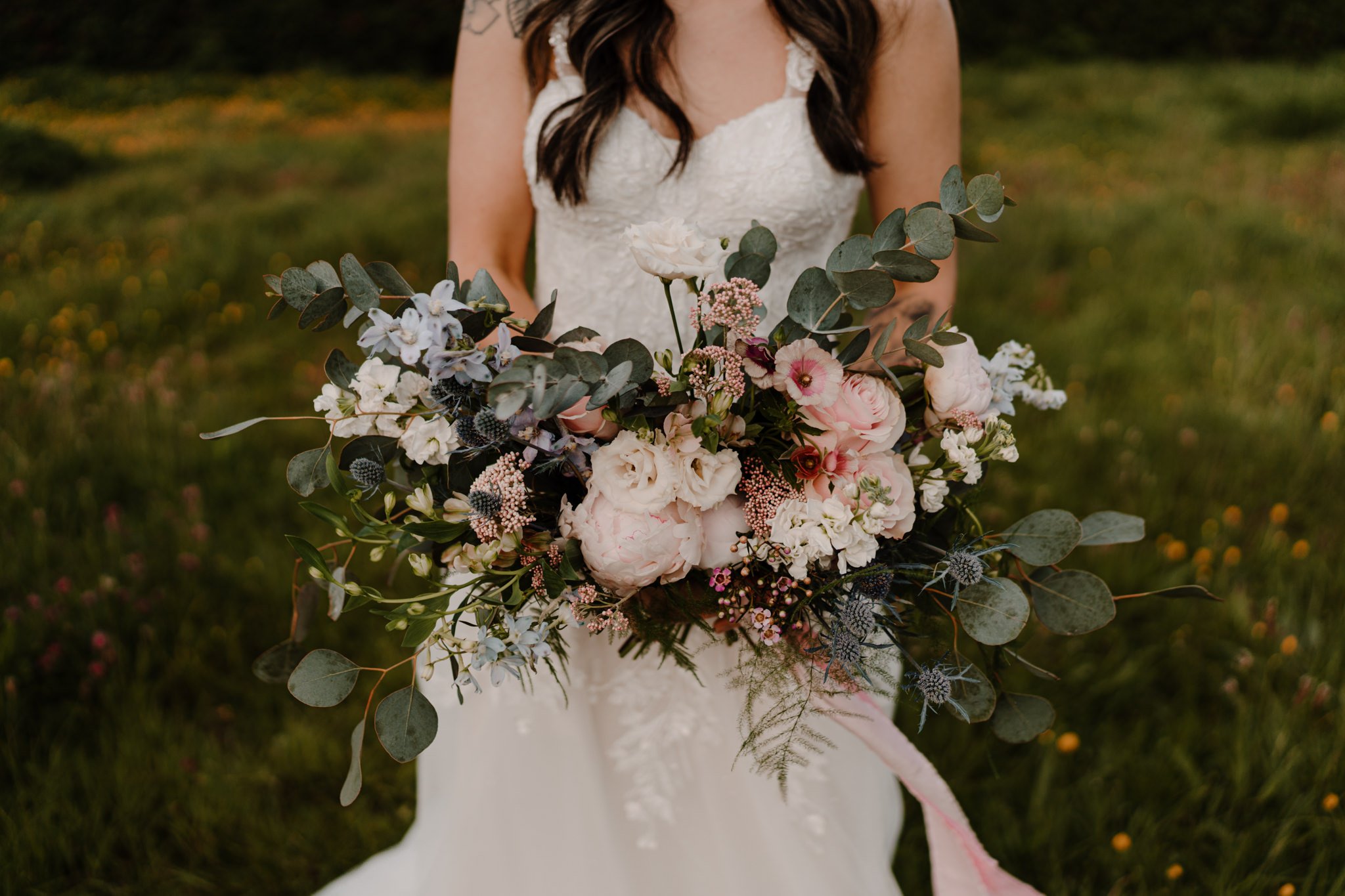
You don’t need elaborate florals. A single well-made bouquet is usually enough, and the wildflowers and grasses on the Causeway Coast clifftops provide a natural context that makes elaborate arrangements look overwrought anyway.
Hair and makeup
The best artists on the North Coast travel to you. Getting ready in your cottage is better than getting ready in a salon, and the cost difference is minimal once you factor in travel fees. Budget £220 to £450 for combined professional hair and makeup. If you’re not sure who to book, ask your photographer: good ones know who photographs well under real coastal conditions.
A photographer
This is the one thing I’d ask you not to economise on. Everything else about the day is experienced and then becomes memory. The photographs are what the day becomes for every year that follows.
Look for a portfolio from the specific locations you want, not just ‘Ireland’ generically. Local knowledge is key, an elopement specialist understands the landscape and locations, the weather, safety, access and how to avoid crowds and curate a memorable experience. they are your guide and come with an unrivaled knowledge of the industy and logistics here in northern ireland. A good photographer will do much more than just take photos.
All of my couples get access to a host of client-only resources to help you plan and book your elopement. from recomened vendors to accomodation suggestions, timeline planning guides and in-depth location guides that cover much more than just the iconic spots!


Where to Stay
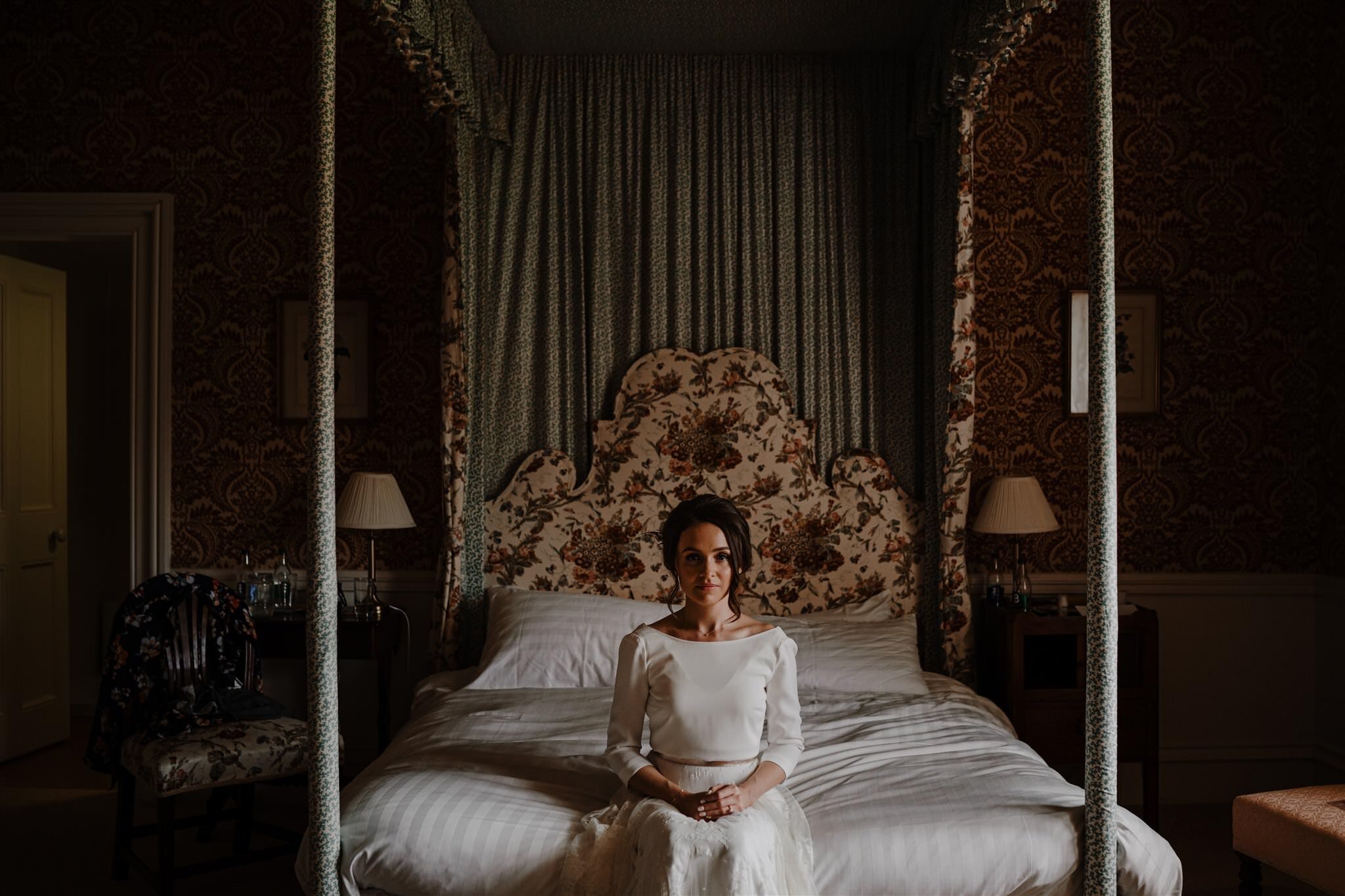
Staying on the coast the night before, ideally the night after as well, changes the whole experience. You wake up there. You’re not rushing from Belfast or further on your elopement morning.
Bushmills is the most central: 10 minutes from Dunluce, 15 minutes from Kinbane, 10 minutes from the Giant’s Causeway. The Bushmills Inn is one of the finest hotels in Northern Ireland: stone walls, open fires, exceptional food, and genuinely good value outside summer. Self-catering cottages around Bushmills and Portballintrae range from £80 to £220 per night depending on season.
Ballycastle suits couples focussing on the eastern section of the coast, close to Kinbane and Murlough Bay. Good selection of Airbnbs and holiday lets. A proper small town rather than a tourist village.
Portballintrae is a small village right on the coast, within walking distance of the beach, with good cottage rental stock and a quietness that suits the kind of elopement day that doesn’t need to perform for anyone.
For a luxury option, Aurora Cabins near Cushendall offer private cabins with hot tubs in a hillside setting above the Antrim coast, genuinely beautiful and worth the slight distance from the main North Coast locations.
Planning Timeline for couples travelling to Northern Ireland to elope
12 or more months out: Decide on Northern Ireland. Research photographers with real portfolios from the actual locations. Make initial contact to check availability.
6 to 12 months out: Book your photographer. Book flights. Begin looking at accommodation. Apply for your UK ETA even if your trip is still months away: it’s valid for two years.
4 to 6 months out: Book a humanist celebrant if having a legal ceremony. Book accommodation. If having a legal ceremony, check whether you need a Marriage Visitor visa.
8 to 12 weeks out: Submit marriage notice forms to the District Registrar (if having a legal ceremony). Gather documents: long-form birth certificates from your state or provincial vital records office (some take 2 to 4 weeks to process). Book hair and makeup. Finalise flowers.
2 to 4 weeks out: Confirm all vendors. Download offline maps for the Causeway Coast (signal is patchy in places). Arrange car hire: confirm Northern Ireland coverage in the rental agreement and book an automatic.
2 to 14 days before ceremony: Collect marriage schedule in person from the registrar (if having a legal ceremony).
What It Costs to elope in northern ireland
Flying two people from New York, renting a car, staying in a Causeway Coast cottage for four nights, hiring a photographer, a celebrant, hair and makeup, and flowers typically runs between $6,000 and $9,000 total. For couples from the West Coast or Canada, add the difference in flight costs. The full cost breakdown goes through every category with three realistic budget scenarios and the hidden costs nobody warns you about.
This is a meaningful amount of money. It is also a fraction of the average American or Canadian wedding cost.
The Questions I Get Most Often
Will our Northern Ireland marriage certificate be recognised at home?
Yes. The US and Canada both recognise foreign marriages that were legal in the country where they took place. A Northern Ireland certificate is a valid UK legal document, accepted by the Social Security Administration for name changes, by USCIS for immigration applications, and by state and provincial vital records offices. No apostille required.
Do we need to contact the US or Canadian embassy?
No. You marry in Northern Ireland, receive your certificate from the General Register Office of Northern Ireland, and use it directly. No embassy registration, no consular notification.
Is it safe? We’ve seen old news about Northern Ireland.
Yes, it’s safe. The Troubles effectively ended with the Good Friday Agreement in 1998. Northern Ireland is now a normal, peaceful part of the UK. Belfast is a vibrant, welcoming city. The Causeway Coast welcomes millions of visitors a year. You will be fine.
Will we understand the accent?
The Northern Irish accent is distinctive and wonderful. If you can’t understand something, ask: people here are accustomed to visitors and nobody minds repeating themselves. The accent is part of the experience.
Can same-sex couples have a legal ceremony here?
Yes. Same-sex marriage has been legal in Northern Ireland since 13 January 2020. Humanist ceremonies for same-sex couples are fully legally recognised. This is an inclusive space, always.
What if we don’t want anyone to know we’re eloping?
The legal notice is posted at the registrar’s office, not online and not in any newspaper. For a ceremony in Ballycastle or Ballymoney, the chances of anyone you know seeing the notice board are very low. Beyond the legal process, eloping means you control the announcement entirely: when you tell people, what you say, how you frame it. All yours.
What if it rains?
It might. But rain here is rarely the relentless all-day kind. Atlantic weather moves fast: what’s grey and heavy at 10am is often clear and dramatic by 2pm. Wet stone, dark skies, the light going silver. This is not a ruined backdrop. It’s an extraordinary one.
What if someone back home thinks we eloped because we were ashamed?
The couples I photograph who elope here are not running away from anything. They’re running toward something: this place, this day, each other, without the weight of other people’s expectations on it. That’s its own kind of statement.
How far in advance do we need to book?
For photography: 6 to 12 months for summer and early autumn dates, 3 to 6 months for winter and spring. Popular dates from may to september can go earlier. For the legal process: give notice to the registrar at least 8 weeks before your ceremony date, and 3 months is better for summer bookings.
Can we elope with a small group?
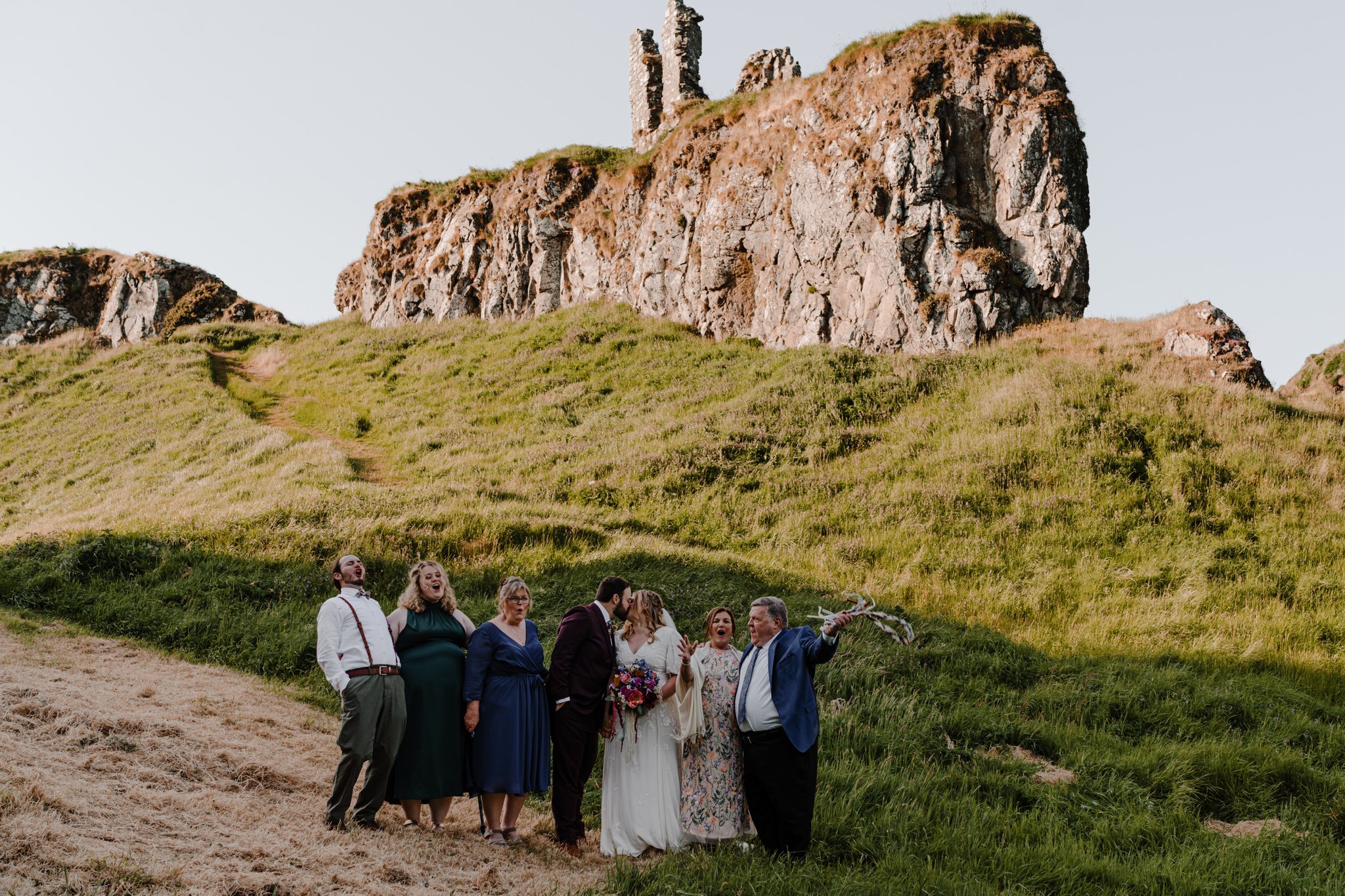
Yes, and many couples do. An intimate elopement with 6 or 8 people, a small gathering at the ceremony followed by dinner, is still an elopement in every way that matters. The spirit of it: your day, your way, with the people who matter most and none who don’t, is unchanged.
How to Start
If you’ve read this far, you’re not browsing anymore. You’re planning.
Here’s what to do next:
Decide on symbolic vs. legal. Both are valid. The legal guide will help you decide which suits your situation, and whether you need a Marriage Visitor visa.
Pick a season and a rough date range. The seasonal guides give you honest detail on light, crowds, and conditions for each month.
Choose your ceremony location. Or let the location choose you. Read the guides, look at the photographs, notice which one makes something in you go yes.
Book your photographer first. Good dates go first. Everything else can flex.
Book your flights and sort the ETA. Gov.uk/eta, £16 per person. Do it when you book your flights.
Find a celebrant. Northern Ireland Humanists keeps a directory at humanists.uk.
Submit your notice if you’re going the legal route: the legal guide tells you exactly how.
Book accommodation near the coast. See the section above.
That’s the whole planning list. It is shorter than a traditional wedding planning list by roughly 200 items.
I’m Christin. I’m local elopement photograher based in Belfast, which means I’ve driven the Causeway Coast in every season and every weather. I know when the light does something extraordinary at Dunluce, where to stand at Kinbane so the sea stacks are in the frame, which direction you approach the Causeway columns from to avoid the tourist shadow.
I’d love to talk to you about your day. Get in touch: tell me your dates, your vision, your questions. I’ll get back to you with what I can offer and whether we’re a good fit.
extra things to make your trip memorable
Northern Ireland is a jewel when it comes to finding things to do, places to see, culture to experience and awesome people to meet! After all, it has been a shooting site of many iconic movies and series, such as Game of Thrones, so you can bet there is a myriad of sights to see! If you wish to feel the urban vibe, visit Belfast and experience the lively nightlife with incredible live music. Also, don’t forget the famous St.George’s Market. There are also many great activity ideas such as tasting and touring the Bushmills Distillery or maybe heading off to Belfast to fully experience the new Boundary Brewery.
More advice and planning info from the blog

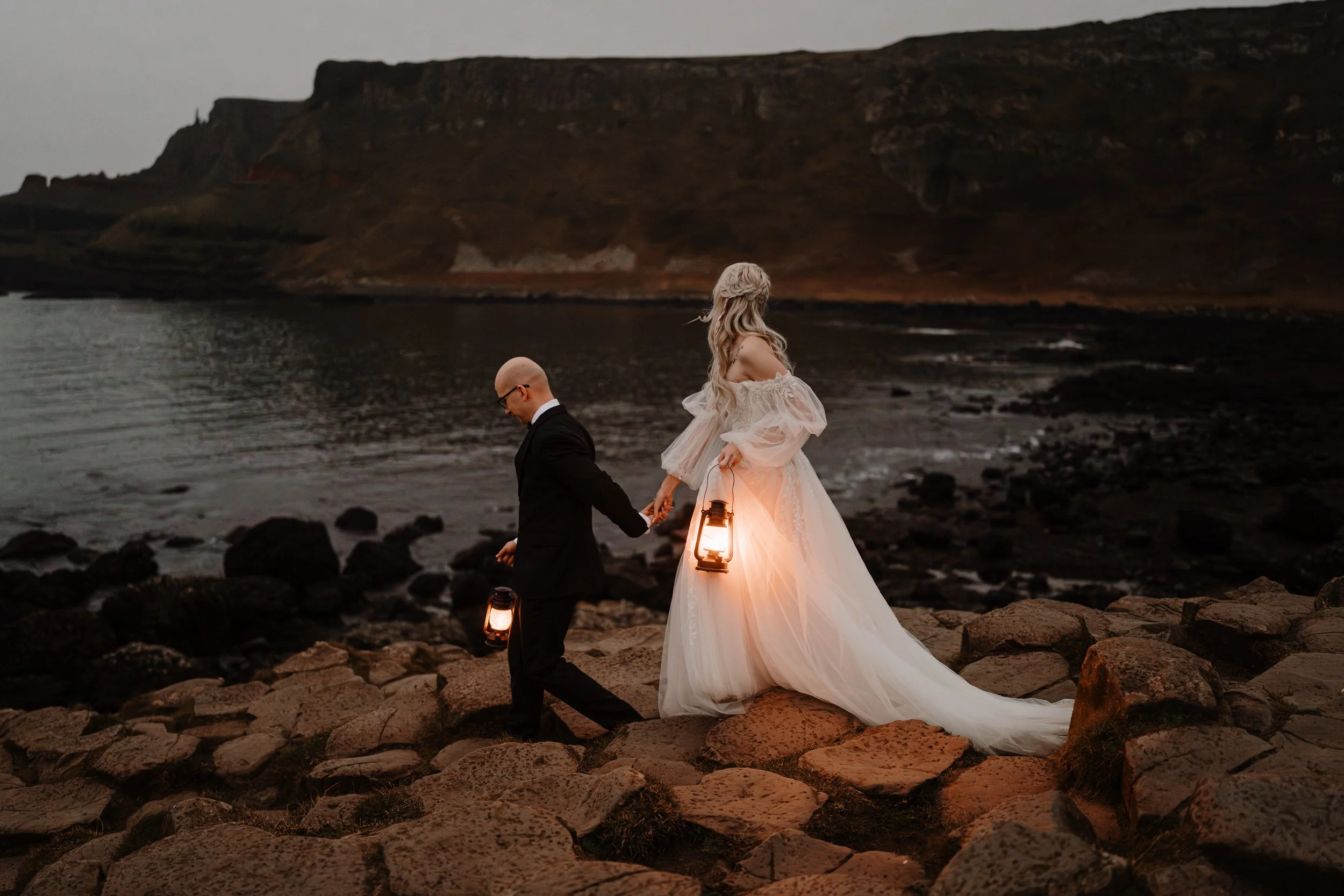
Hi I’m Christin
An elopement Photographer, based in Northern Ireland.
For the last 11 years I’ve been documenting and helping couples plan their dream elopements in Ireland